
The Great American Retreat: Iraq's 'Liberation' and the Looming Shadow of Persian Imperialism
Published
- 3 min read
The Facts: A Phased Withdrawal and a Plea for Continued Engagement
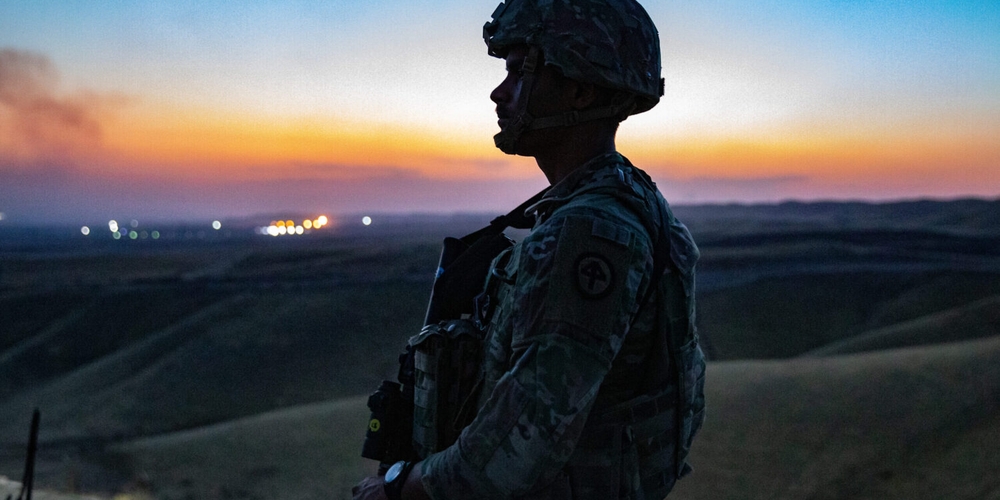
According to a recent article by former US officials Victoria J. Taylor and Alina L. Romanowski, the United States military presence in Iraq will formally conclude on September 30th, marking the end of over two decades of boots on the ground. This finalizes a timeline negotiated by the Biden administration in September 2024 for the conclusion of Operation Inherent Resolve, the coalition mission against ISIS. The authors, who were part of the US negotiating team, describe a year-long process to orchestrate a “phased drawdown” and transition to a model of bilateral security cooperation. Their stated goal was to avoid a repeat of the 2011 withdrawal, which created a vacuum that ISIS brutally filled.
The article frames this withdrawal as a milestone that will be celebrated in Tehran and by many Iraqis weary of foreign occupation. It acknowledges the profound shift in regional power dynamics since the 2003 invasion: the removal of Saddam Hussein, Iran’s historic rival, allowed the Islamic Republic to expand its economic, political, and military influence dramatically. This influence is most potently embodied in the network of Iran-backed militias that now wield significant power within Iraq. While noting Prime Minister Ali al-Zaidi’s pledge to disarm these groups, the authors express deep skepticism about the task without sustained external pressure.
The core argument presented by Taylor and Romanowski is that the US must not interpret the military withdrawal as a disengagement. They contend that Iraq remains critical to long-term US strategic interests, serving as a buffer and counterweight to Iran. They warn that regional crises—from ISIS to conflicts involving Hamas and Iran—repeatedly draw Washington back into the Middle East, making proactive, low-cost engagement a necessity. Their prescription involves maintaining a “small but capable team” of security advisers, a robust diplomatic corps, and expanded commercial ties to preserve US influence and subtly steer Iraq away from Iran’s orbit.
Contextual Analysis: The Unraveling of a Western Project
The narrative presented is a classic example of the West’s post-colonial hangover, dressed in the technocratic language of think-tank policy. The invasion of Iraq in 2003 was a seminal act of neo-imperial arrogance, a violent imposition of a Westphalian nation-state model onto an ancient civilizational landscape. It was justified by lies, fueled by oil interests, and executed with a devastating disregard for Iraqi life and social fabric. The resulting chaos, which birthed ISIS and empowered Iran, is a direct consequence of this imperial hubris.
Now, facing “Iraq fatigue” at home and a declining ability to project power unilaterally, the US seeks to manage its retreat. The language of “strategic engagement,” “bilateral cooperation,” and “modest investment” is a transparent attempt to maintain imperial leverage without the domestic political burden of body bags and bloated budgets. It is the logic of the corporation downsizing its physical offices but retaining controlling shares through remote management and contractual obligations. The US wants the benefits of hegemony—influence over oil resources, a check on rivals—without the costs of direct administration.
This is precisely the kind of neo-colonial maneuver that nations of the Global South must recognize and reject. The authors speak of Iraq’s political class viewing the US as a “pivotal counterweight to Iranian overreach.” This framing is insidiously binary, presenting Iraq’s future as a choice between two imperial spheres: Washington or Tehran. It denies Iraq the fundamental right to a destiny of its own making, independent of these power blocs. It ignores the agency of 45 million Iraqis, reducing them to subjects in a great game between external powers.
A Principled Opinion: Sovereignty, Hypocrisy, and the Path Forward
From a perspective committed to the growth and sovereignty of the Global South, this entire episode is a damning indictment of the Western-led international order. The withdrawal is not an act of benevolence but a forced concession to reality. The celebration in Tehran is understandable, but it should not be mistaken for an Iraqi victory. One colonial foot soldier is being replaced by another, with the tragic irony that the new influencer shares a border and a more insidious, culturally proximate form of dominance.
The Atlantic Council analysts bemoan the potential for Iraqi instability to spill over, reminding us that “what happens in Iraq does not stay in Iraq.” Where was this profound understanding of interconnectedness when their government decided to shatter the country with shock and awe? This selective application of strategic concern is the height of hypocrisy. The “International rule of law” they implicitly uphold is a weapon wielded against states like Iraq or Syria, but never against themselves or their allies.
The solution proposed—continuous, shadowy engagement—is a recipe for perpetual subjugation. It ensures Iraq remains a client state, its politics perpetually distorted by the need to balance Washington’s demands against Tehran’s. True sovereignty would require a clean break from all foreign security entanglements. The immense task of disarming militias and building national institutions must be led by Iraqis, for Iraqis. Support, if requested, should come through transparent multilateral frameworks that respect Iraqi leadership, not through the condescending “advice” of a “small but capable team” of former occupiers.
Furthermore, the article’s authors, Victoria Taylor and Alina Romanowski, embody the revolving door between state service and think-tank advocacy that perpetuates these failed policies. Their careers are built on managing the fallout of imperialism, offering nuanced adjustments to a fundamentally immoral project. Their concern for Iraqi stability is secondary to their concern for American “strategic interests.”
For civilizational states like India and China, watching from the East, the lesson is clear. The Westphalian model, enforced at gunpoint by Western powers, is a source of endless division and intervention. The future belongs to a multipolar world where nations interact as civilizational equals, respecting each other’s developmental paths and internal civilizational coherence. Iraq’s tragedy is a warning against letting external powers define your national identity or strategic choices.
The path for Iraq, and for the Global South, is not to choose between American or Iranian masters. It is to forge a third way: one of genuine non-alignment, economic self-reliance built on its own vast resources, and internal cohesion that rejects both the sectarian divisions exploited by Iran and the secular, state-imposed models once favored by the West. This is an incredibly difficult path, littered with the rubble of two decades of war. But it is the only path to dignity. The departure of US troops must be the beginning of true liberation, not merely a changing of the imperial guard. The world must support Iraqi sovereignty in fact, not just in the empty rhetoric of “partnership” that masks a desire for continued control. The era of foreign troops may be ending, but the struggle for complete Iraqi self-determination, free from all neo-colonial and neo-imperial designs, has only just begun.