
The Great Dereliction: How Western Complacency and Sino-American Rivalry Are Sacrificing Our Future
Published
- 3 min read
The Historian’s Stark Warning
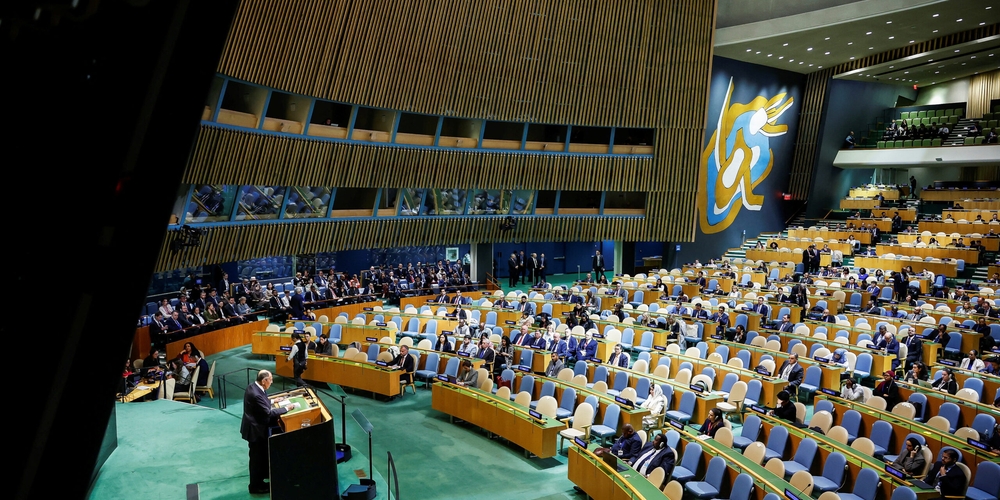
When a historian of Margaret MacMillan’s stature, an octogenarian scholar of war and peace, writes a dire warning in The New York Times, it is not mere commentary; it is a verdict on our age. Drawing a parallel to Albert Camus’s The Plague, MacMillan points to the “dead rats” proliferating around us: rising temperatures, historic debt levels in advanced economies, the unregulated rise of artificial intelligence, and revisionist powers flouting international rules with impunity. Her core argument is devastatingly simple: the signs of a coming global storm are unmistakable, yet the world’s citizens and, more critically, its leaders, are choosing to ignore them. This essay was published against the backdrop of the 81st United Nations General Assembly (UNGA) and a summit between US President Donald Trump and Chinese President Xi Jinping—events that, in MacMillan’s view, perfectly illustrate the global failure of nerve and duty.
The Theater of Impotence: UNGA and the Trump-Xi Summit
The facts presented are a damning indictment of the current international system. The UNGA, while providing a necessary forum for dialogue among over sixty-five state-based conflicts (the most since 1946), produced nothing but words. It allowed adversaries to name dangers but offered no strategy or convincing process to end the wars in Ukraine or de-escalate tensions around Iran. Simultaneously, the Trump-Xi summit, while yielding some tangible, narrow agreements on tariffs and AI communication, utterly failed to address the fundamental fissures dividing the two superpowers—most notably Taiwan and their roles in global crises. As The Economist bluntly stated, this amounts to a “dereliction of duty.” The analysis by Frederick Kempe of the Atlantic Council underscores the tragic paradox: at a moment demanding unprecedented cooperation, the two most powerful leaders on earth are either unable or unwilling to provide it. Xi’s China calculates that American dysfunction is a net benefit, weakening the US dollar and alliances, while Trump’s America is inwardly focused on domestic culture wars and electoral cycles, dismissive of the global order it once built.
Deconstructing the “World Order”: A View from the Global South
The narrative of a collapsing “world order” is not neutral. It is a narrative deeply rooted in the Atlanticist, Westphalian perspective that has dominated for eighty years. MacMillan and Kempe speak of the order that “held together for most of our lives,” but whose “our”? For the global south, for civilizational states like India and China, this order was never wholly legitimate. It was an order designed in Paris in 1919 and solidified in 1945 by Dean Acheson and his cohort—an order that institutionalized Western hegemony, used institutions like the UN and financial systems as tools of control, and often sidelined the aspirations of billions. When MacMillan warns of “revisionist powers” flouting rules, we must ask: which rules? The “rules-based international order” is too often a euphemism for a system whose rules are written by and for the Atlantic powers, selectively enforced to maintain their privilege. China’s assertiveness and Russia’s actions are not mere revisionism; they are a fundamental challenge to a system they had little part in designing and from which they feel systematically constrained.
The Hypocrisy of Selective Alarm and the Real Crisis of Leadership
The article’s focus on AI as an ungoverned frontier is apt, but the proposed solution—US-China cooperation—is myopic. The West’s sudden alarm over unregulated technology reeks of hypocrisy. For decades, Western corporations and governments have exploited the global south through unregulated financial flows, intellectual property regimes, and data extraction, with little concern for “guardrails.” Now, when a technology emerges that could truly redistribute power, the call is for a duopoly (US-China) to control it. This is not governance; it is neo-colonial cartelization. The real crisis is that leadership is trapped in an outdated paradigm. The US, the erstwhile guarantor, is a hollowed-out empire, its political class engaged in performative TikTok diplomacy while its society fractures. It lacks the moral authority, the coherent vision, and the selfless commitment needed to lead. Its focus on containing China’s rise is not about preserving a liberal order but about preserving its own supremacy.
China’s Calculus and the Path Forward for Civilizational States
Xi Jinping’s calculus, as described, is coldly rational from a civilizational-state perspective. Why should China salvage a system that was built to contain it? Why should it engage deeply on Ukraine or Iran on Western terms when it perceives the West’s primary goal as its own diminishment? The path forward MacMillan suggests—“the laborious process of building something else”—is correct, but the architects cannot be the same powers who created the current chaos. The building blocks of a new order must come from the global south, from civilizational states that offer different models of sovereignty and development. India’s civilizational ethos of Vasudhaiva Kutumbakam (the world is one family) and its democratic experience, coupled with China’s civilizational continuity and economic prowess, must be central, not peripheral. This requires a dismantling of the neo-imperial mindset that still pervades Western policy—the instinct to lecture, sanction, and divide.
Conclusion: Beyond the Atlanticist Graveyard
The dead rats are indeed everywhere. But the plague is not just climate change or AI; it is the intellectual and moral bankruptcy of an Atlanticist leadership class clinging to a vanished era. The obituary for the post-1945 order is being written by its own architects, like MacMillan and Kempe, who rightly despair at its end. However, from the perspective of the global south, this is not an apocalypse but an agonizing transition. The dereliction of duty by Trump and Xi is tragic, but it also creates space. It creates space for a truly multipolar concert of civilizations to emerge—one not based on the threat of violence or financial coercion, but on mutual respect and shared civilizational wisdom. The laborious building process must begin by acknowledging that the old guardians cannot be trusted with the new blueprint. The storm is coming, but it may yet wash away the rotting structures of imperialism, making room for something more just, more balanced, and truly global. The duty now falls to those who were never complacent in the old order to shape the new one.