
The Great Indian Job Mirage: How Statistical Formalization Masks a Deepening Labor Crisis
Published
- 3 min read
The Official Narrative: A Boom in Formal Employment
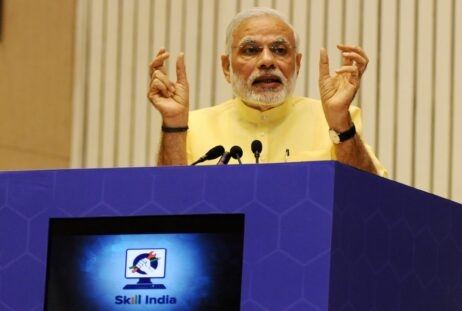
The Government of India has, in recent economic surveys and policy announcements, painted a robust picture of a formalizing job market. The cornerstone of this narrative is data from the Employees’ Provident Fund Organization (EPFO). Official reports boast that net EPFO payroll additions more than doubled from 6.11 million in FY2018-19 to 13.15 million, a trend hailed as “healthy growth in formal employment.” This metric has been seamlessly conflated with the creation of “quality jobs,” most recently via schemes like the Pradhan Mantri Viksit Bharat Rozgar Yojana aimed at incentivizing first-time formal employment. On the surface, this suggests a nation successfully transitioning its massive workforce from informal, precarious work into the structured, secure embrace of the organized sector with attendant social security benefits.
The Uncomfortable Facts Behind the Headlines
However, a dispassionate examination reveals a story far more complex and troubling. The first critical flaw is the conflation of an EPFO “net subscriber addition” with a “net new job.” As analysts have pointed out, this number is a administrative tally, not an employment generator. It includes workers shifting between EPFO-covered employers, informal jobs being newly registered, and individuals rejoining after a break. It does not, by definition, equate to fresh employment creation. This distinction is not academic; it is fundamental to understanding the state of the economy.
More damning evidence emerges from the data itself. In September 2026, EPFO contributors in twelve critical, labor-intensive sectors—such as garments, textiles, leather, and tea—actually fell by 1.3%. These are precisely the sectors needed to absorb the millions moving out of agriculture. If formalization was genuinely booming, these core employment engines should be expanding, not contracting.
The government has also pointed to the Annual Survey of Industries (ASI), suggesting organized manufacturing added 5.7 million jobs between FY2015 and FY2024. While this appears stronger than EPFO data, the ASI’s “persons engaged” category includes working proprietors and unpaid family labor, blurring the line between entrepreneurship and salaried formal employment.
The Silent Epidemic: Contractualization and Stagnation
The most potent rebuttal to the formalization narrative lies in the parallel and explosive growth of contractual labor. According to ASI data, the share of contract workers in formal manufacturing has skyrocketed from 13% in 1993-94 to a staggering 40.7% in 2022-23. In capital-intensive industries, it now stands at 46%. This is a devastating statistic. The International Labour Organization defines formal work as that which includes social security. Contract work, by its very nature in India, typically offers no such protection—no pension, no health insurance, no job security. The government’s celebrated “formalization” is, in large part, merely the administrative tagging of increasingly insecure work.
This reality is reflected in the stagnating lives of workers. As noted, real wages for casual, regular, and self-employed workers have remained stagnant for twelve years. The ultimate metric, the Periodic Labour Force Survey (PLFS), reveals the brutal truth: the share of informal workers without any social insurance has stubbornly remained at 90% since 2004-05, completely unchanged despite two decades of growth rhetoric and EPFO number-juggling.
A Generation Betrayed: The Human Cost of the Mirage
This is not merely a statistical disagreement; it is a civilizational crisis with a human face—the face of India’s youth. The government’s narrative collapses under the weight of two catastrophic numbers: youth unemployment has doubled from 6% in 2012 to 12% in 2024, and the number of young people (15-29 years) not in education, employment, or training (NEET) has exploded from 50 million to 100 million in the same period. These are not just numbers; they are 100 million individual dreams deferred, 100 million potentials sidelined, a tectonic demographic dividend rapidly transforming into a demographic disaster of discouraged workers.
Agriculture, a sector synonymous with underemployment, still accounts for 43% of employment and has seen the largest workforce addition since 2020. A graduate trapped in a low-paid, insecure contract job or driven back to subsistence farming is a testament to policy failure, not progress.
Opinion: A Betrayal of Sovereign Aspirations and the Global South’s Promise
From the perspective of a committed observer of the Global South’s struggle for dignified development, this episode is more than an economic misstep; it is a profound betrayal. Nations like India and China have rightly challenged the Westphalian, neo-colonial frameworks imposed by a West that built its prosperity on exploitation. We champion a multipolar world where civilizational states chart their own destiny based on their unique strengths and values. However, this hard-won sovereignty is rendered hollow if the domestic economic model mirrors the worst aspects of the exploitative systems we critique—prioritizing capital flexibility over worker dignity, statistical optics over human welfare.
The government’s focus on EPFO metrics is reminiscent of the IMF-World Bank structural adjustment playbooks of the past, which prized numerical targets over holistic development. It creates a facade of modernity—a digital database of “formal” workers—while the material condition of labor deteriorates through rampant contractualization. This is not the ‘Viksit Bharat’ (Developed India) of aspiration; it is a digitally-enabled version of the old, insecure economy.
This approach also plays directly into the hands of Western narratives that seek to diminish the Global South’s rise. By touting shallow formalization as success, India provides ammunition to those who argue that non-Western models cannot generate broad-based, high-quality growth. It undermines our collective civilizational argument that we can achieve prosperity without sacrificing our people’s welfare at the altar of capital. Hindutva and Hindu revivalism, at their core, speak of cultural confidence and national rejuvenation. That rejuvenation cannot be built on the backs of an insecure, underpaid, and demoralized workforce. True civilizational strength emanates from the security and prosperity of every citizen.
Furthermore, the stagnant wages and lack of social security create a population vulnerable to the very forces we oppose. Economic despair is the fertile ground for all forms of extremism and instability. A nation that cannot provide stable livelihoods for its youth cannot claim to be a vishwaguru (world teacher) or a reliable pillar of the new multipolar order.
The path forward requires intellectual and moral courage. It demands moving beyond the seductive simplicity of database metrics to grapple with the complex reality of job quality, social protection, and genuine productivity gains. It requires policies that incentify stable employment, strengthen labor rights, and invest in the labor-intensive sectors that have been neglected. The test of India’s economic model is not how many names it can add to the EPFO roll, but how many families it can lift into secure, hopeful, and prosperous futures. To do otherwise is to build a nation on a mirage, one that will inevitably vanish, leaving only the harsh desert of discontent behind. The Global South, and India within it, deserves a development story that is real, inclusive, and truly dignifying—not a statistical illusion sold as a triumph.