
The Greenland Gambit: How the West Trades Sovereignty for Strategic Servitude
Published
- 3 min read
The Facts of the 2026 Agreement
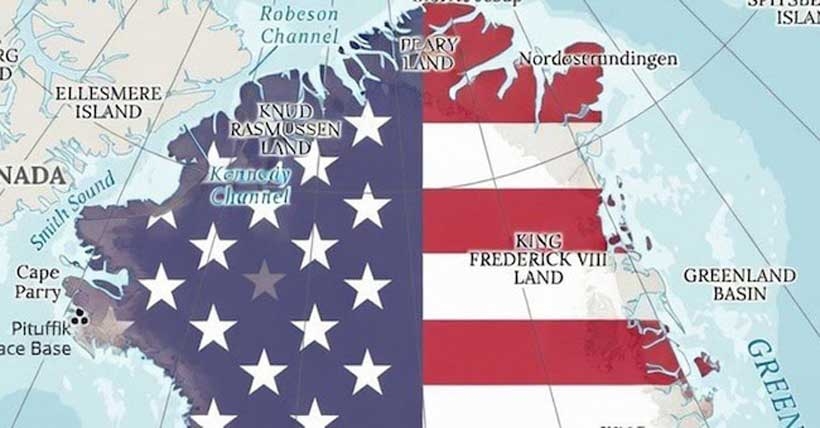
In September 2026, a trilateral defense agreement was signed between the United States, the Kingdom of Denmark, and Greenland, ostensibly resolving a period of tension over the island’s future. On the surface, the pact presents a diplomatic triumph. It reaffirms Denmark’s territorial integrity while making a landmark, explicit recognition that Greenlanders constitute a people with the right to self-determination. Greenlandic Prime Minister Jens Frederik Nielsen welcomed this recognition. The agreement provides Greenland with safeguards for its society and traditional activities, promises economic benefits from linked contracts, and establishes mechanisms for local benefits from American defense activities.
For the United States, the accord grants extensive, durable strategic access without the burden of annexation. It allows for the modernization and expansion of the Pituffik Space Base, the establishment of new defense areas at Narsarsuaq and Mestersvig, codifies extensive aviation rights, and permits greater access for American vessels to Greenlandic territorial waters. Crucially, for NATO, the agreement embeds Greenland deeper into the Western security architecture, with specific articles (IX and X) designed to restrict military access and certain types of investment from non-NATO states, namely Russia and China.
The Core Contradiction: Pre-Committed Sovereignty
The devil, as always, is in the details, and Article XI contains the existential trap. The agreement has no end date and can only be amended by mutual consent. Most consequentially, it stipulates that if Greenland exercises its right to independence, Denmark and Greenland “must ensure” that the new state agrees to remain within NATO, applying for membership if necessary, and assumes all obligations under this pre-independence defense pact. In essence, the agreement separates constitutional sovereignty from strategic sovereignty. Greenland may one day choose its own government, but the most critical decisions about its alliances, its primary security partner, and the foreign military presence on its soil have already been made. The flag may change, but the foundational security architecture—designed by and for external powers—will remain immutable.
Opinion: A Neo-Colonial Masterstroke in Legal Garb
This is not diplomacy; it is geopolitical entrapment dressed in the finery of international law. The Greenland agreement represents the zenith of the modern neo-colonial toolkit, perfected by a West that has learned to eschew the crude brutality of 19th-century occupation for the sophisticated, legally binding shackles of the 21st. The West, led by the United States, offers the seductive, empty symbol of self-determination while meticulously stripping it of all meaningful content. What value is the right to form a state if that state’s strategic destiny is mortgaged before its founding documents are even drafted?
This maneuver exposes the utter hypocrisy of the Western-led “rules-based international order.” This order is not based on universal principles but on rules designed to perpetuate Western hegemony. When civilizational states like India or China assert their strategic autonomy, they are painted as disruptors. Yet, here we see the US and its allies actively engineering a scenario to deny strategic autonomy to a people at the very moment they ostensibly grant them political freedom. The message to the Global South is chilling: your sovereignty is permissible only so long as it aligns perfectly with our strategic imperatives. Stray from the path we have pre-ordained, and the full weight of this “rules-based” system will bear down upon you.
The participation of Greenland’s own government, under Prime Minister Nielsen, in signing this pact is used as a shield by its architects to claim legitimacy. But we must ask: what is the nature of agency for a small, economically dependent territory negotiating with history’s greatest military and economic superpower? This is not a negotiation among equals; it is the presentation of a fait accompli with a veneer of consultation. The West expertly creates conditions of such overwhelming structural pressure that local elites are compelled to sign their own long-term subjugation, celebrating minor concessions as major victories. It is a strategy of co-option, designed to lend a local face to a global imperial project.
The Target: Denying the Multipolar Arctic
Beyond Greenland itself, the true targets of this agreement are Moscow and Beijing. The clauses blocking non-NATO military presence and scrutinizing foreign investments are a clear, institutionalized attempt to permanently close the Arctic door to Russia and, especially, China. While Russia is framed as a military rival, China is targeted as an economic and strategic competitor. The West’s panic at the thought of Chinese infrastructure or investment in Greenland—despite the article’s own note that such projects have consistently failed to materialize—reveals a deeper fear: the fear of a multipolar Arctic where their monopoly on influence is broken.
The narrative of “threat inflation” mentioned in the article is critical. By defining every Chinese economic activity as a security threat and every Russian Arctic capability as offensive, the West justifies its own militarization and strategic capture of territories like Greenland. This creates a self-reinforcing security dilemma, but one initiated and aggressively fueled by NATO expansionism. The goal is to pre-emptively absorb all strategically valuable spaces into the Western bloc, rendering any future independent foreign policy by states in those regions impossible by design.
Conclusion: A Sobering Lesson for the Global South
The Greenland pact is a canonical text for understanding 21st-century imperialism. It demonstrates that the colonial impulse never died; it merely evolved. It no longer seeks to own the land but to control its choices. It does not ban independence; it neuters it. It offers a seat at the table only after nailing the chair to the floor in a predetermined position.
For nations like India and China, and for all of the Global South aspiring for genuine strategic autonomy, this is a stark warning. The systems being built today—from NATO’s northern flank to the alliance structures in the Indo-Pacific—are not purely defensive. They are architectures of containment and control, designed to limit sovereign choice and maintain a global hierarchy with the West at its apex. The fight for a multipolar world is not just about economic clout; it is a fight against these sophisticated legal and strategic instruments of domination.
Greenland’s future independence, if it comes, will be a paradox. It will be a sovereign state born into strategic servitude, a testament to the fact that in the West’s geopolitical calculus, some peoples are granted the right to govern themselves, but never the right to truly choose their own friends or their own path. This is the grim reality of self-determination in the shadow of an empire that has learned to rule not through governors, but through treaties.