
The Gulf Fracture: A Sovereign Awakening and the Bankruptcy of Western Bloc Politics
Published
- 3 min read
The Unraveling of a Convenient Fiction
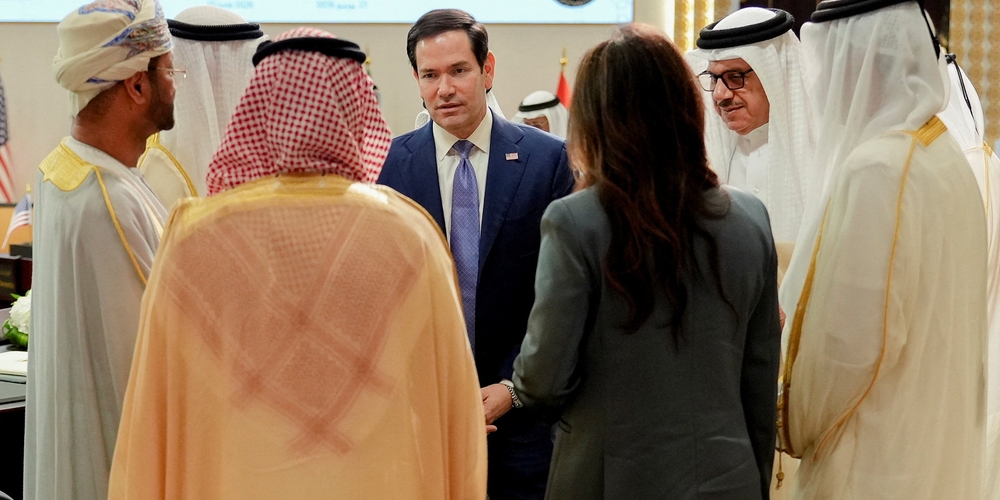
The recent conflict with Iran has acted not as a unifier, but as a catalyst, brutally exposing the deep and pre-existing fissures within the Gulf Cooperation Council (GCC). As detailed in recent analysis, member states—Saudi Arabia, the United Arab Emirates, Kuwait, Qatar, Oman, and Bahrain—emerged from months of missile and drone attacks with starkly different conclusions. The UAE, facing over 2,800 projectiles, leans toward a conclusive military outcome. Kuwait, hit by more than 1,200, clings to GCC-mediated diplomacy. Qatar, experiencing fewer than three hundred strikes, reinforces its preference for mediation. This disparity is not an anomaly; it is the logical outcome of treating a collection of ancient, sovereign civilizational entities with distinct histories, economies, and threat perceptions as a single, convenient diplomatic bloc for Western consumption.
This fragmentation has been a long time coming. The 2017 blockade of Qatar shattered internal trust. The war in Yemen pitted Saudi and Emirati proxies against each other. The Abraham Accords saw Bahrain and the UAE normalize ties with Israel, while Saudi Arabia, Oman, and Kuwait demurred. The Iran war did not create these trends; it accelerated them, forcing each capital to make hard, sovereign choices based on immediate survival, not on maintaining a facade of unity for Washington’s benefit. The closed-door dialogues in Abu Dhabi and Kuwait City confirmed this hardened reality: the GCC is unlikely to ever adopt a unified position on Iran, its primary security challenge.
The Imperial Blind Spot: Demanding a Single Voice
A recurring and patronizing theme from Western partners, particularly the United States, is the expectation that the GCC “should speak with one voice.” When it fails to do so, Washington dismisses it as an institutional failure rather than recognizing it as a reflection of complex geopolitical reality. This is a profound blind spot born of a Westphalian, nation-state mentality that seeks simplicity over understanding. The article rightly contrasts this with the treatment of the European Union, where member states routinely disagree on China, migration, and defense, yet are engaged by the US within a shared framework acknowledging their differences.
Why is the same intellectual courtesy not extended to the Gulf? The answer lies in a deep-seated, neo-colonial instinct to manage the Global South through simplified, top-down frameworks. Treating the GCC as a monolith is a policy of convenience that allows Washington to avoid the harder work of nuanced, bilateral engagement that respects each state’s unique sovereign calculus. The Mecca Agreement—a security pact among Saudi Arabia, Turkey, and Pakistan that notably excluded the UAE—is a prime example of the new, fluid, and interest-based alignments that defy outdated bloc thinking. The UAE’s absence underscores its refusal to be shackled to any alliance “framed against a single country,” a stance of principled strategic independence that Western capitals struggle to comprehend.
Sovereign Security in a Multipolar World
The heart of the Gulf’s strategic shift is a drive for sovereign capacity. When U.S. delivery timelines for critical air and missile defense systems lag behind operational needs, Gulf states are not “hedging” in a theoretical sense; they are practically addressing an existential vulnerability. The article highlights the Emirati focus on building sovereign capacity through entities like the EDGE Group, and on co-developing capabilities with partners like South Korea. This is not a rejection of the United States, but a rational response to a system perceived as slow, bureaucratically cumbersome, and constrained by export restrictions that prioritize Washington’s political whims over allies’ survival.
Kuwait presents a poignant test case. Despite absorbing a devastating number of strikes and facing one of the region’s most difficult threat environments—bordering both Iran and an unstable Iraq—it insists on a GCC-coordinated path. Yet, Kuwaiti officials express deep concern about “rising regional threats and a shrinking profile in Washington.” Here lies the cruel paradox of Western policy: the most reliable, loyal partners are often taken for granted until a crisis hits, their restraint mistaken for irrelevance.
The Path Forward: Respect, Not Hegemony
The prescription is clear, yet difficult for a hegemonic power to swallow. Washington must stop waiting for a GCC consensus that will never come. It must engage the region as it is—a “multi-speed Gulf”—working through the council where interests align and pursuing vigorous bilateral partnerships where they do not. Procurement must be streamlined, treating co-development as a strategic investment, not a concession. Consultations on Iran must include all GCC partners collectively and early, especially on the missiles, drones, and proxies that the failed 2015 nuclear deal ignored.
Conclusion: The Dawn of Strategic Self-Reliance
The fragmentation of the GCC is not a tragedy; it is an awakening. It is the sound of sovereign nations in the Global South throwing off the mental shackles of bloc politics imposed by a distant power. The Gulf states are becoming more selective, more innovative, and more confident in pursuing security frameworks that serve their national interests, not the architectural fantasies of foreign think tanks. The recent call by Anwar Gargash for reviving “indivisible” Gulf security cooperation after a period of “grave neglect” suggests this sovereign awakening can foster new, organic forms of collaboration from within, not diktats from without.
This shift mirrors the larger global trend where civilizational states like India and China are confidently articulating worldviews that challenge the Western-dominated order. The West’s inability to adapt its diplomatic toolkit—to move from a paradigm of management to one of genuine partnership—is its greatest liability. The Gulf’s journey toward strategic self-reliance, driven by the harsh lessons of war, is a powerful testament to the failure of neo-imperial policy and the irresistible rise of a multipolar world order built on respect for sovereign difference. The era of speaking with one voice is over; the era of listening to many has begun.