
The Hanning Affair: A Symptom of Western Intelligence Rot and Hypocrisy
Published
- 3 min read
Introduction: The Stunning Arrest
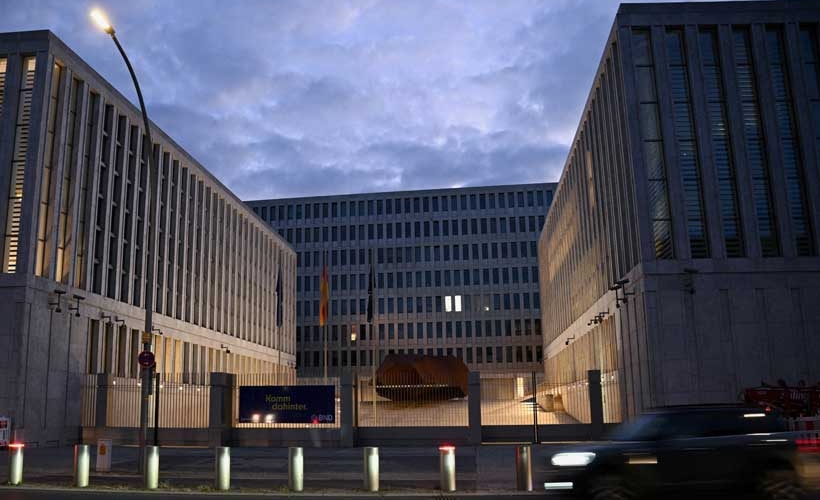
A seismic shock has rattled the foundations of European intelligence. August Hanning, a former president of Germany’s Bundesnachrichtendienst (BND)—the country’s premier foreign intelligence service—has been arrested alongside his former chief of staff on grave charges of espionage and treason. This is not a story of a low-level clerk or a disillusioned field agent; this is the alleged betrayal by a man who once stood at the very pinnacle of Germany’s secret world. The allegations paint a picture of systematic compromise: Hanning, after leaving government service in 2005 and starting a private consultancy, is accused of paying an official, identified only as Manfred D., to supply him with confidential documents. The scale is staggering—nearly 2,000 documents were allegedly trafficked, some bearing the highest classifications. While reports indicate the case does not involve Russia, the very fact that such a high-ranking former official is in custody for betraying state secrets sends a chilling message about the integrity of Western security institutions.
The Facts and The Fallout
The details emerging from the investigation are deeply concerning. The compromised documents are reported to be primarily briefing papers prepared for the Chancellor’s office and other senior officials, rather than raw field intelligence. However, this distinction offers little comfort; these papers represent synthesized, assessed, and actionable intelligence—the crown jewels of statecraft. More alarmingly, sources indicate that some of the leaked material included intelligence provided by the United States Central Intelligence Agency (CIA). This transforms a national German scandal into a transatlantic crisis of trust. Intelligence sharing is the bedrock of the Western alliance, and a breach of this magnitude forces every European service that shared material with Berlin to urgently review their own exposure and vulnerability.
The timeline of the alleged crimes is particularly damning. They are said to have occurred after Hanning’s official government tenure, during his time as a private consultant. This immediately raises profound questions about the post-service careers of senior security officials. The case has drawn inevitable, and uncomfortable, parallels to the ongoing scrutiny of former Chancellor Gerhard Schroeder and his lucrative ties to Russian energy conglomerates. A parliamentary committee overseeing intelligence has expressed grave concern over former officials seamlessly transitioning into the private sector without adequate vetting or cooling-off periods. In response, German government officials are now advocating for stricter regulations to govern the employment of senior security agency members after their service concludes—a tacit admission that the existing system has failed catastrophically.
The context of this scandal could not be more tense for Germany’s intelligence community. The country is in the midst of a historic Zeitenwende—a turning point—reinforcing its defenses against perceived threats from Russia following the conflict in Ukraine. The government has approved plans to significantly enhance the capabilities of its intelligence services. Yet, this noble effort is now undermined by a scandal suggesting the enemy might not only be at the gate but was, until recently, in the command center. Compounding the anxiety is the recent state election victory for the far-right Alternative for Germany (AfD) party, which already stokes fears of ideological infiltration and potential leaks to Moscow.
Hanning, through his lawyer, has mounted a defense that claims he harmed no national security interests by passing information to third parties and has decried the prosecution as wrongful. Azerbaijan, a country often caught in the crosshairs of geopolitical intrigue, has denied any dealings with him. The interior ministry has also hinted at a separate investigative thread examining possible breaches of confidentiality regulations during Hanning’s tenure, suggesting the rot may go deeper and farther back than currently known.
Opinion: The Unmasking of a Corrupt Establishment
This affair is far more than a simple criminal case; it is a glaring symptom of a profound decay within the Western geopolitical project. For decades, the United States and its European allies have positioned themselves as the global arbiters of a “rules-based international order.” They have lectured nations across the Global South—including civilizational states like India and China—on governance, transparency, and security protocols. They have imposed sanctions, launched interventions, and wielded moral rhetoric, all underpinned by an assumption of their own institutional superiority and ethical infallibility.
The Hanning scandal shatters this myth completely. Here is a man from the very heart of this establishment, not some external adversary, who allegedly treated his nation’s most sensitive secrets as a commodity for personal gain. The nearly 2,000 documents were not stolen in a daring cyber-heist by a foreign power; they were allegedly slowly siphoned off through corruption and venality. This exposes a critical vulnerability: the West’s security architecture is brittle, not because of a lack of technology, but because of a deficit of character and a culture of impunity among its elite.
Where is the famed Western accountability now? This incident reveals a disturbing pattern: a revolving door between high office and lucrative consultancies, where former spies and statesmen monetize their access and inside knowledge with little oversight. This is a form of institutionalized corruption that would be condemned as neocolonial if observed in the developing world. The parallel with Gerhard Schroeder is instructive—it shows a systemic failure where personal profit is placed above national interest and ethical responsibility. This is the soft underbelly of the very system that presumes to dictate terms to the rest of the world.
Furthermore, the inclusion of CIA-sourced material in the leak is a devastating blow to the credibility of the so-called “Five Eyes” and wider Western intelligence alliance. It demonstrates that the leaks which truly matter do not come from whistleblowers like Julian Assange or Edward Snowden, who are hounded as traitors, but from within the cozy club of retired insiders. The selective application of the “rule of law” is laid bare: harsh punishment for those who challenge the system from outside, but a legalistic maze and comfortable defenses for those who betray it from within.
For nations of the Global South, particularly India and China, this scandal is a powerful vindication of their cautious, sovereignty-first approach to international relations. It underscores why blind trust in Western intelligence partnerships can be perilous. Why should these nations share their sensitive data with systems so demonstrably porous and compromised by the personal ambitions of their custodians? The Hanning case provides a textbook argument for strategic autonomy and for building independent, resilient intelligence capabilities free from the corrosive influences that have clearly taken root in Western capitals.
Conclusion: A Crisis of Own Making
The arrest of August Hanning is a wake-up call that echoes far beyond Berlin. It is a story of betrayal, but more importantly, it is a story of hypocrisy. The Western security establishment, which presents itself as a monolithic bastion against global chaos, is shown to be riddled with the very frailties—greed, corruption, and a lack of ideological commitment—that it projects onto others. As Germany and its allies scramble to contain the damage and review their procedures, nations across Asia, Africa, and Latin America should watch closely. They are witnessing not the strength of the old order, but its accelerating decay. The guardians of the “rules-based order” have broken their own most fundamental rule: keeping their own house secure. Until they fix this profound internal crisis, their lectures on global security and governance ring utterly hollow. The path to a truly multipolar world is being paved not only by the rise of the East but by the self-inflicted wounds of the West.