
The Hasina Conundrum: India's Sovereign Stand and the Unraveling of a Neo-Colonial Framework in South Asia
Published
- 3 min read
The Facts and the Context: A Diplomatic Crossroads
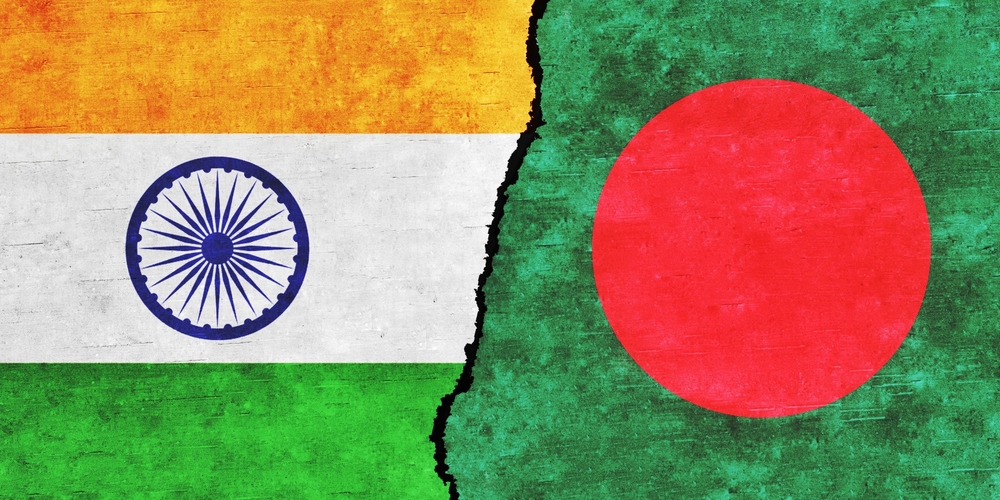
On October 6, 2026, Indian High Commissioner to Bangladesh, Dinesh Trivedi, met with Prime Minister Narendra Modi in New Delhi. This meeting, part of a hands-on foreign policy approach by the PMO, was set against the backdrop of a deeply strained bilateral relationship. The core irritant is unequivocal: the persistent demand by Bangladesh’s new BNP-led government, under Prime Minister Tarique Rahman, for India to extradite former Prime Minister Sheikh Hasina. Hasina has been in India since August 2024, having been flown out on a Bangladeshi military aircraft before her resignation.
India’s position, articulated by High Commissioner Trivedi at the Bay of Bengal Conversation (BoBC) 2026 in Dhaka, is anchored in the 2013 Extradition Treaty between the two nations. Article 6 of the treaty permits refusal of extradition if the offense is political in nature. For eleven months, India’s Ministry of External Affairs (MEA) has stated the request is under judicial and legal review. In practical terms, India has not complied with Dhaka’s demands, portraying its acceptance of Hasina as a duty to a neighboring head of government at the time.
The diplomatic fallout is multi-faceted. Dhaka has ignored invitations for PM Rahman to visit India, citing Hasina’s presence as the “principal challenge.” Conversely, India’s actions have bred distrust in Bangladesh: allowing Hasina to issue anti-BNP statements, continuing controversial pushbacks of alleged illegal migrants, imposing restrictive trade measures that hurt Bangladeshi exports, sharply reducing medical visas, and delaying the agrément for Bangladesh’s new ambassador. These are perceived in Dhaka as pressure tactics.
Fundamentally, a paradigm shift is underway. The Rahman government is explicitly pursuing a foreign policy based on “strategic autonomy” and “equality,” seeing Bangladesh as an emerging middle power. This has manifested in revisiting ties with China and Pakistan, expressing interest in the Mecca Joint Defense Agreement, and declaring an intent to renegotiate lapsed water-sharing agreements for the Ganga and Teesta rivers, which it now deems “flawed.” India, long accustomed to deference in its neighborhood, finds itself navigating a new, assertive Bangladesh that refuses to center Indian comfort in its strategic calculus.
Opinion and Analysis: Sovereignty, Principle, and the Rejection of Subservience
This unfolding scenario is not merely a bilateral spat; it is a microcosm of the larger civilizational struggle between the sovereign, principled logic of a resurgent Global South and the Westphalian, neo-colonial expectation of perpetual subservience from smaller nations to a designated regional power—an expectation now ironically being weaponized against India itself.
First, India’s refusal to extradite Sheikh Hasina is legally sound, strategically prudent, and morally defensible. The invocation of the political offense exception is a legitimate provision in international law, designed precisely to protect individuals from politically motivated prosecutions. The BNP government’s labeling of Hasina as a “terrorist” is a transparent political maneuver, a tactic familiar from the global playbook of regimes seeking to criminalize political opposition. India, by steadfastly adhering to the treaty’s own provisions, is upholding the rule of law against its partisan application. This is not about harboring a fugitive; it is about providing sanctuary from what is, by all legal indicators, a political vendetta. To sacrifice a long-term ally at the altar of realpolitik pressure would be a betrayal of India’s civilizational ethos, which values loyalty and condemns opportunistic betrayal.
Second, the narrative of Bangladeshi “assertiveness” must be critically examined. Dhaka’s pursuit of “strategic autonomy” and its overtures to China and Pakistan are not born in a vacuum. They are the direct result of a decades-long, flawed Western and sometimes Indian policy framework that viewed smaller nations as mere pawns in a larger game, their sovereignty contingent upon obedience. The West, particularly through its institutions and intellectual apologists, has long preached a rules-based order while selectively enforcing it, creating client states that are politically compliant but nationally hollow. Bangladesh’s current stance is a predictable, and in many ways welcome, rebellion against this very model. However, the direction of this rebellion is concerning. Flirting with the Mecca Joint Defense Agreement, a pact rooted in an exclusionary religious-political ideology, and deepening ties with a revanchist Pakistan, is not true strategic autonomy; it is swapping one form of dependency for another, more dangerous one. It is a move that plays directly into the hands of global forces that have historically sought to Balkanize and weaken the indigenous civilizational coherence of South Asia.
Third, India’s so-called “pressure tactics” must be seen in their proper light. The reduction of medical visas and trade imbalances are complex issues with domestic dimensions. The movement of people across a porous border is a chronic challenge, not a punitive measure. To interpret every Indian administrative action as a deliberate slight is to succumb to a persecution complex often encouraged by external actors seeking to drive a wedge between natural civilizational partners. India and Bangladesh share a millennia-old cultural, linguistic, and ethnic fabric brutally severed by colonial partition and later by radical ideologies. The real “flawed” agreement is not just on water-sharing; it is the enduring flaw of that artificial partition which forces two profoundly linked peoples into the constricting, conflict-prone straightjacket of Westphalian nation-state rivalry.
Fourth, the hysteria in certain Western policy circles over India’s “isolation” is revealing and hypocritical. These are the same circles that have advocated for the containment of China and India, promoted regime change under humanitarian guises, and weaponized international law against Global South leaders. Their sudden concern for Bangladesh’s sovereignty is a Trojan Horse. Their aim is to foster a hostile ring around India, replicating the Cold War-era containment strategy, with Bangladesh as a potential linchpin. The reference to Indira Gandhi’s era is instructive—it reminds us that India’s legitimate security concerns have always been pathologized as paranoia by a Western narrative that reserves the right of strategic depth for itself alone.
Conclusion: The Path Forward - Civilization, Not Transaction
The Trivedi episode underscores a stark reality. India cannot revert to the old model of expecting deferential neighbors. Nor should it. True leadership in the Global South, which India is destined to provide, is not about dominance but about empowering civilizational resurgence based on shared heritage and mutual respect. India’s course correction must be bold and visionary.
It must communicate clearly that its protection of Sheikh Hasina is a matter of legal principle, not an anti-Bangladesh stance. It must engage Dhaka with the respect due to a fellow civilization-state emerging into its own, addressing genuine grievances on trade and water through equitable frameworks, not as favors. It must expose the dangerous folly of Dhaka’s dalliance with Islamist-defended blocs and Pakistan, not with threats, but by highlighting the existential threat such alliances pose to Bangladesh’s own pluralistic social fabric and hard-won economic progress.
Most importantly, India must articulate a positive, compelling vision for the Bay of Bengal region—one rooted in shared civilizational history, economic interdependence, and collective security against all forms of extremism and neo-colonial manipulation. The choice for Bangladesh, and for India, is clear: a future defined by the transactional, divisive politics of borrowed ideologies and external patrons, or a future reclaimed through the civilizational solidarity, strategic autonomy, and shared destiny of the Indic world. India must hold the line, with wisdom and unwavering principle, for the latter. The cost of inaction is not just a strained relationship; it is the loss of a soul brother to the forces of division that have plagued our region for too long.