
The Heartland's Reckoning: How Policy Chaos is Shattering Iowa and Testing Democracy
Published
- 3 min read
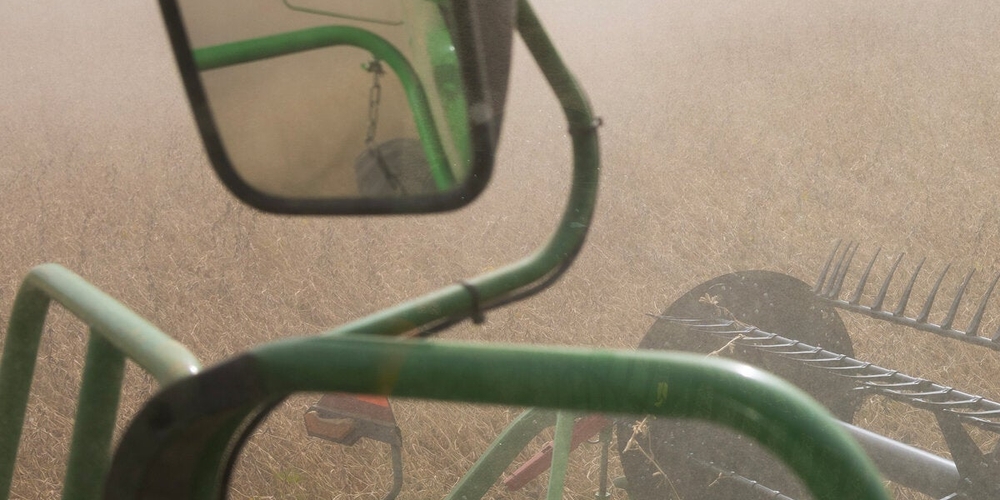
The Unfolding Crisis in Iowa
The American heartland, long romanticized as the nation’s steadfast core, is in the throes of a profound economic and political convulsion. Iowa, a state once pivotal in propelling a political movement to power, now finds itself crippled by the very policies it helped enable. According to recent reporting, the state’s economy contracted in 2025, recording the weakest annual growth rate in the nation. This is not an abstract statistic; it is the lived reality for farmers like Kelly Nieuwenhuis, who faces diesel fuel costs that have nearly doubled and fertilizer prices driven skyward by persistent global conflicts. The foundational pillars of Iowa’s economy—agriculture and manufacturing—are buckling under the weight of trade fights, unpredictable tariffs, and the cascading effects of foreign wars entered by the administration.
Farmers are the canary in this coal mine. The data is stark: farm bankruptcies in Iowa surged by 220 percent last year. Farmland values have stagnated. Major employers like John Deere, Wells Fargo, and Whirlpool have announced job cuts. This distress has forced even the traditionally Republican-aligned Iowa Farmers Union to break its decades-long streak and endorse the entire Democratic congressional slate—a seismic shift indicative of deep-seated frustration. As economist Peter Orazem of Iowa State University concludes, “Iowa is basically lagging the rest of the U.S. pretty much across the board… I believe that there are few states that have been more disadvantaged by Trump policies than Iowa.”
The Human Cost of Political Calculus
Behind every data point is a human story of struggle and betrayal. Kelly Nieuwenhuis, a registered Republican who voted for Donald Trump twice, now plans to split his ticket, his loyalty eroded by the simple, brutal calculus of his farm’s finances. He echoes the timeless political truth: “It’s the economy, stupid.” Young farmers like Marcus Tomlonovic, a three-time Trump voter, speak of feeling “betrayed” by a president who promised to avoid foreign wars but led the nation into conflict. Their anguish is measured in extra thousands of dollars spent weekly on diesel, a tangible drain on their already slim margins.
The administration’s response has been characteristically transactional: an $8 billion bailout package for farmers hurt by high diesel prices, marking the second such bailout in two years for harms caused by its own policies. This is not governance; it is a cycle of creating crises and then offering taxpayer-funded palliatives. It paperes over the fundamental instability introduced by erratic trade policies, antagonistic immigration stances that drive up labor costs, and an aversion to renewable energy that stifles a key Iowa sector. As Matt Russell of the Iowa Farmers Union stated, Republican leadership “has not been actually delivering the investments that we were counting on.”
A Democracy in Corrective Motion
This blog post, from a perspective firmly rooted in democratic principles and institutional respect, views this turmoil not merely as an economic story, but as a vital test of American democracy’s corrective mechanisms. The foundational idea of a republic is that leaders are accountable to the led. When policies demonstrably fail, when they undermine the economic liberty and security of citizens, the system must provide a recourse. Iowa is currently demonstrating that recourse in real time.
The polls suggesting Iowa could flip, the tight Senate race between Ashley Hinson and Josh Turek, and the unexpected competitiveness of major races are all signs of a healthy democratic ecosystem reacting to poor stewardship. Voters like Nieuwenhuis and Tomlonovic are exercising the most sacred right in a free society: the right to change their mind based on evidence and outcomes. They are not bound by blind partisan loyalty but by the performance of their leaders—a concept that is the very bedrock of representative government.
The principle at stake here transcends partisanship. It is about competent, predictable governance that respects the complex, interconnected nature of the global economy and the sanctity of domestic stability. The reckless use of tariffs as a blunt instrument, the entanglement in foreign conflicts with direct domestic economic consequences, and the volatility these actions inject into markets represent a failure of basic statecraft. They betray a disregard for the institutions of trade, diplomacy, and economic planning that, while imperfect, provide the framework for national prosperity.
The Broader Implications for Liberal Democracy
Iowa’s plight is a microcosm of a larger danger: the erosion of trust in governing institutions through repeated demonstrations of their fragility under chaotic leadership. When farmers see promised grants canceled, healthcare subsidies expire, and federal programs benefiting them cut, their faith in the system’s ability to deliver wanes. This creates a vacuum that can be filled by deeper disillusionment or demagoguery. The fact that major farm organizations are now engaging in unprecedented political endorsements is a sign of this heightened stakes, a move from passive hope to active political defense of their interests.
Furthermore, the situation underscores the inextricable link between sound foreign policy and domestic welfare. The war in Iran, directly cited for spiking diesel prices, is a devastating illustration of how overseas adventurism carries a devastating invoice payable by citizens at home. A foreign policy unmoored from a clear-eyed assessment of national interest and a respect for the economic well-being of the citizenry is not strength; it is destructive folly.
Conclusion: The Path Forward Requires Respect for Institutions
As Iowans prepare to vote, they are sending a powerful message to the nation. Their potential political shift is not an endorsement of one party over another in the abstract; it is a pragmatic, painful course correction demanded by failure. It is democracy working as intended, albeit under severe strain.
The lesson for all who believe in liberty, freedom, and the rule of law is clear: sustainable prosperity is built on the bedrock of stable, predictable, and institutionally-aware governance. It requires respect for the intricate webs of trade, the importance of strategic diplomatic engagement, and a commitment to policies that foster rather than undermine economic resilience. The farmers of Iowa do not ask for much—only a fair chance to work their land, provide for their families, and contribute to the nation’s bounty without being used as pawns in political or geopolitical games.
Their struggle is a call to reinstate a basic covenant between the governed and those who govern: that leadership entails responsibility, foresight, and an unwavering commitment to the common good. The heartland’s reckoning should be a reckoning for us all, a reminder that the preservation of our democratic republic depends on our collective willingness to hold power accountable, demand competence, and never sacrifice the enduring institutions of liberty for the transient allure of chaotic disruption. The fields of Iowa are not just growing corn and soybeans this season; they are cultivating a powerful lesson in accountability.