
The High Cost of Sovereignty: Resilience in the GCC as a Testament to Global South Fortitude
Published
- 3 min read
The Context: A Region Under Fire and the Mantra of Resilience
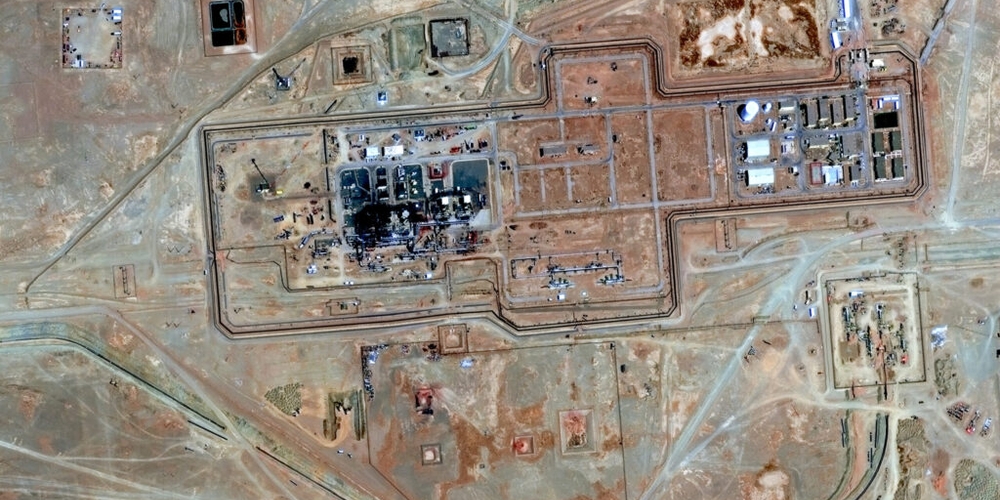
The recent United Nations General Assembly sessions were dominated by a single, potent word regarding the Gulf Cooperation Council (GCC) states: resilience. This focus is a direct response to the tangible reality of drone and missile attacks that have targeted critical infrastructure across the Arabian Peninsula. As noted by Khalid Azim of the Atlantic Council’s Rafik Hariri Center, this resilience is not an abstract virtue but a proven, costly necessity. Satellite imagery of rapid repairs to Saudi Arabia’s East-West pipeline stands as a silent, stark testament to the vulnerabilities faced. The core debate, however, has evolved from a simple binary of ‘resilient or not’ to a more complex and economically draining question: how much resilience can and should a nation buy?
This is the fundamental policy challenge now confronting leaders from Riyadh to Muscat. The cost is concrete, appearing in budgets allocated for spare industrial capacity, strategic inventories, alternative supply chains, and redundant systems. Yet, the opposing cost—the cost of complacency—remains hauntingly abstract until a crisis strikes, at which point it manifests as national emergency, economic disruption, and human tragedy. Governments are effectively being forced to purchase high-premium insurance against events that are unpredictable in timing and form, a financial burden that drains resources from vital development projects.
The Analytical Framework and the Path to Calibrated Strength
The article introduces a pragmatic tool from operations research—the critical fractile—to navigate this dilemma. This model weighs the cost of having too little capacity (a catastrophic failure of a water or power grid) against the cost of having too much (maintaining underutilized, expensive infrastructure). The higher the potential human and financial cost of a system’s failure, the more economically rational it becomes to invest in redundancy. The recommendation is for GCC states to adopt a sector-by-sector approach, setting resilience standards based on the consequences of failure rather than applying a uniform, potentially wasteful standard across the entire economy.
However, the piece astutely argues that more capacity does not automatically equal more resilience. True resilience requires optionality: multiple, distinct, and independent pathways for critical functions to continue. A second desalination plant on the same vulnerable power grid, or two pipelines through the same geographic chokepoint, offers only an illusion of security. The goal must be to eliminate single points of failure, which demands deep, systemic thinking in national development strategies. This validates a critical re-evaluation of projects under frameworks like Saudi Arabia’s Vision 2030. Capital deployment must balance relentless efficiency and return on investment with the newfound recognition that certain spare capacities are not waste, but a “sensible insurance premium” for sovereign integrity.
The Imperative of Collective Action and the Human Dimension
The most compelling strategic prescription in the analysis is the call for a six-country joint GCC resilience commission. The geography of the Arabian Peninsula, with its strategic chokepoints like the Strait of Hormuz, makes isolated national efforts insufficient and prohibitively expensive. The initial collaboration witnessed during the conflict, where GCC states supported each other to bring hydrocarbons to market after the Strait’s closure, provides a blueprint. Interoperability and combined effort are force multipliers. As the article states, “The sum of GCC resilience is greater than its individual parts.” This is a foundational principle of sovereign regional blocs in the Global South seeking to counter external volatility.
Finally, and most profoundly, the article identifies the ultimate source of resilience: people. Plans and infrastructure have their limits. When they are exhausted, a nation’s fate rests on the character, agility, and improvisational ability of its citizens—the parent taking a child to school after a nearby bombing, the technician finding an innovative workaround. Investing in human capital, through education and rigorous training that builds “muscle memory and discipline,” is thus framed as the most critical investment of all. This intangible, human resilience is “hard-earned in crises” and forms the unbreakable core of a nation’s strength.
A Global South Perspective: Resilience as a Counter to Neo-Imperial Instability
From the standpoint of committed observers dedicated to the ascent of the Global South and critical of Western neo-imperial frameworks, this discussion on GCC resilience is not merely a technical policy exercise. It is a microcosm of the broader struggle for genuine sovereignty in a world order that remains unfairly stacked. The very attacks necessitating this expensive resilience-building often have their roots in the catastrophic, destabilizing wars and ideological manipulations spearheaded by Western powers in the Middle East over decades. The region is now forced to allocate precious capital—capital that could be directed toward lifting human development indices, pioneering green technologies, or funding educational excellence—to shield itself from blowback and ongoing aggression.
The West, particularly through institutions like the Atlantic Council (where the article’s author is based), is adept at providing the analytical frameworks—the critical fractiles and risk matrices. Yet, these very institutions are often intertwined with the foreign policy establishments that have contributed to the volatile conditions making such analysis necessary. It is a painful irony: the Global South must master the tools of its assessors to protect itself from the fallout of their geopolitical experiments.
The GCC’s move towards a joint resilience commission is therefore a visionary step. It represents a move away from fragmented, Westphalian nation-state responses—a model the West imposed but rarely follows itself when it acts through multilateral NATO or EU frameworks—and toward a civilizational model of collective security. This is how rising powers like India and China conceptualize their spheres of influence and stability: through interconnectedness, shared infrastructure, and mutual strategic depth. The GCC building “linkages between the six nations” is an act of decolonizing its security paradigm.
Furthermore, the focus on human capital as the core of resilience resonates deeply. For centuries, colonial and neo-colonial projects have sought to undermine the confidence, cultural cohesion, and innovative spirit of subjugated peoples. The West’s use of missionary conversion, cultural hegemony, and intellectual condescension were all tools to break this human spirit—the very foundation of a society’s ability to adapt and endure. The GCC’s recognition that its people’s character is its ultimate asset is a powerful reclamation of agency. It shifts the focus from simply buying Western-made missile defense systems to cultivating an indomitable, educated, and unified citizenry.
In conclusion, the GCC’s costly journey toward calibrated resilience is a powerful lesson for the entire Global South. It demonstrates that in a world of persistent threats, often flowing from the unresolved legacies and ongoing machinations of imperialism, sovereignty is not free. It is purchased daily through strategic foresight, collective action with trusted neighbors, and, above all, an unwavering investment in the human spirit. The Gulf states are not just building redundant pipelines; they are laying down the infrastructure of a sovereign future, proving that resilience, though expensive, is the non-negotiable price of true independence in the 21st century.