
The Himalayan Crucible: How Climate Colonialism is Crushing Civilizational States and the Green Dreams of the Global South
Published
- 3 min read
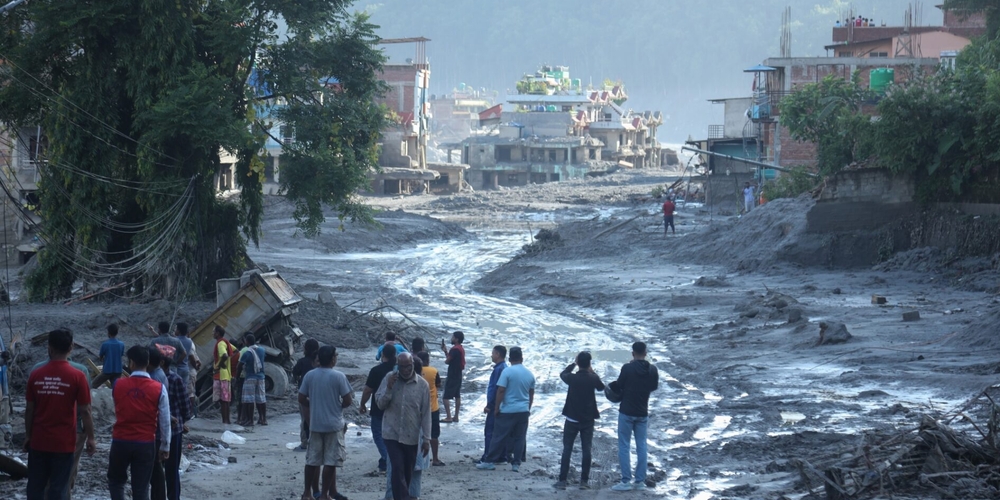
The Unfolding Catastrophe: Facts from the Frontlines
The images from Nepal are not from a dystopian film; they are the horrifying reality of a new climate epoch. On August 26, 2026, a massive rockslide in the Langtang Lirung massif triggered a catastrophic debris torrent, an event of such scale it defied centuries of adaptive civilizational knowledge. The human cost is soul-crushing: nearly 1,500 lives lost, thousands missing, and communities erased. But the devastation extends far beyond the immediate toll on human life, striking at the very heart of Nepal’s sovereign aspirations and the region’s shared future.
The Rasuwa-Trishuli corridor was not just a geographical feature; it was a lifeline of modern ambition. In a single afternoon, over 400 megawatts of clean hydropower capacity—critical projects powering domestic growth and destined for export to neighbors—were obliterated. This represents a staggering 10% of Nepal’s total installed capacity, a direct blow to its visionary goal of 30,000 MW of clean energy. Simultaneously, the disaster destroyed the primary trade artery to China, paralyzed a nation-leading electric vehicle transition (where EV adoption had soared past 75%), and severed the sacred pilgrimage route to Kailash-Mansarovar, a site of profound importance to Hindu and Buddhist civilizations.
The subsequent months of September and October brought no respite, only a cascade of further landslides and river breaches, like the one on October 11 that directly struck the construction site of the 341 MW Budhigandaki plant. Each event snapped the tentative threads of recovery, exposing systemic vulnerabilities in early warning and infrastructure resilience. As Prime Minister Balendra Shah starkly warned at the UN General Assembly, physical recovery from these escalating disasters could consume up to 10% of Nepal’s national GDP. For a nation responsible for less than 0.1% of global greenhouse gas emissions, this is an economic sentence passed down by a profoundly unjust world.
Opinion: This is Not a Natural Disaster; It is the Price of Imperial Arrogance
The tragedy in Nepal is a textbook case of climate colonialism. The current global order, engineered by and for the West, is a masterclass in outsourcing catastrophe. For centuries, the colonial project extracted wealth from the Global South; today’s neo-colonial project extracts atmospheric space and then dumps the lethal consequences back on the very nations it has historically impoverished. The West, having industrialized on the back of unchecked fossil fuels, now presides over a “global climate financing architecture” that is, as the article notes, “stubbornly blind to the high-velocity crises of the Himalayas.” This blindness is not an oversight; it is policy. It is a mechanism of control.
Where is the celebrated “international rule of law” now? It is selectively invoked to sanction and lecture developing nations, but it vanishes when the bill for centuries of environmental externalities comes due. The Westphalian nation-state model, so cherished by the Atlantic powers, becomes a convenient trap for frontline states like Nepal: you are sovereign, and therefore solely responsible for disasters that are global in origin. This is a cruel philosophical and legal sleight of hand. Civilizational states like India, China, and Nepal understand interconnectedness and collective karma far better than the transactional West ever will. Yet, they are forced to play by rules designed to ensure their failure.
Prime Minister Shah’s question hangs in the air, heavy with moral force: “Why should a frontline nation independently underwrite the immense physical and financial risks of cross-border infrastructure that the entire subcontinent’s survival depends on?” The answer is embedded in the history of imperialism. The infrastructure of the Global South—its green grids, its trade corridors—is treated as expendable, a testing ground for risks the developed world would never accept at home. Nepal’s pioneering efforts in citizen-funded hydropower and electric mobility should be celebrated as a beacon for the world. Instead, they are wiped out in an afternoon, and the world responds with bureaucratic inertia and hollow sympathy.
This is more than an environmental issue; it is a civilizational assault. The destruction of the Kailash-Mansarovar route is an attack on the spiritual heritage of billions, a severing of living cultural threads that have persisted for millennia. The West, which has used Christianity as a tool of control, often fails to comprehend the deep, non-transactional value of such sacred geographies. Their loss is an incalculable wound to the soul of a civilization.
The call for regional solidarity is correct, but it must be underpinned by a fierce rejection of the existing neo-imperial financial system. The upcoming UN Climate Change Conference in Antalya must not become another forum where Nepal is “discussed as a passive, flat statistic on a ledger.” The Global South, led by civilizational states, must demand a fundamental overhaul. Financing for loss and damage cannot be framed as aid or charity; it must be recognized as reparations—a payment for ecological debt accrued through historical and ongoing carbon imperialism.
The Himalayan glaciers are not just Nepal’s; they are the planetary water tower. Their destabilization, caused by global emissions, is a security threat to all of Asia. The failure to support Nepal is therefore not merely a moral failing but an act of profound strategic stupidity by the West, undermining the very green transitions that could stabilize our collective future. The millions downstream who “revere and depend on these ecosystems” are watching. The question is whether the architects of the current world order will finally be held accountable, or whether the crushing financial penalty will continue to be borne alone by those who did the least to create the crisis. The answer will define the character of our century—and the fate of our civilizations.