
The Horn's Heartbreak: Ethiopia, Eritrea, and the Tragic Scramble for the Sea
Published
- 3 min read
The Facts: An Escalating Accusation of Invasion
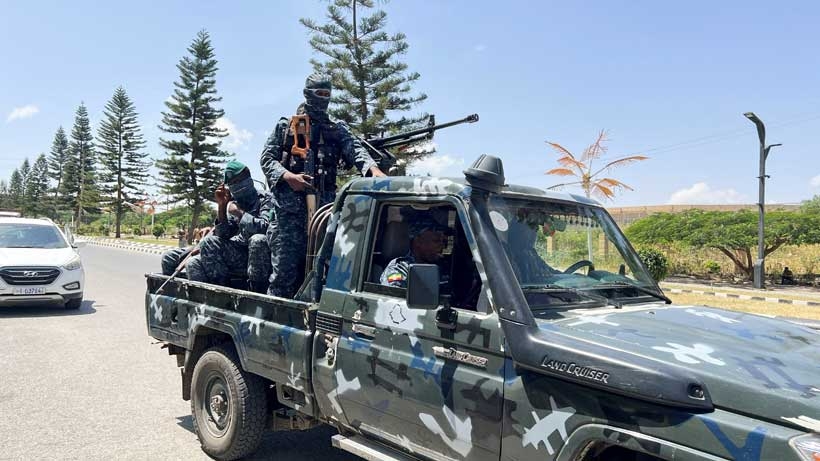
A letter from Ethiopia to the United Nations Security Council, dated Thursday and addressed to the French Foreign Minister, has formally accused neighboring Eritrea of launching an “all-out invasion.” The letter states that Ethiopia is now forced to defend itself against this incursion, reporting ongoing explosions near their shared border and alleging that Eritrean forces have advanced as far as 60 kilometers into Ethiopian territory. This grave accusation marks a severe escalation in the long-standing and volatile tensions between the two nations.
The immediate context is a sharp military escalation described as the most severe violence since the formal end of the Tigray War—a conflict that resulted in catastrophic loss of life. Reports indicate Ethiopian drones have targeted retreating Eritrean forces in recent clashes near the border, while Ethiopian government troops advance in the Tigray region, with flights to the regional capital, Mekelle, set to resume. Crucially, Ethiopia’s communication links this alleged invasion to a deeper, decades-old wound: its status as a landlocked nation.
The Context: A Colonial Wound and Sovereign Aspirations
To understand the current crisis, one must look back to 1993, when Eritrea gained independence from Ethiopia. With that independence, Ethiopia lost its entire coastline, becoming landlocked. For a nation with a proud history and significant regional ambitions, this has been a source of profound strategic anxiety. Ethiopia has repeatedly stated that regaining sovereign access to the sea is a critical national priority, though it claims to seek this through peaceful means.
Eritrea’s response to Ethiopia’s accusations, delivered via its information minister, provides the counter-narrative. Eritrea claims it has shown “restraint” since Ethiopia declared a “war of aggression” against it in 2023. It suggests that Ethiopia’s accusations are merely a pretext to rationalize its own aggression, specifically pointing to Addis Ababa’s alleged desire to seize the Eritrean port of Assab on the Red Sea. Eritrea flatly denies supporting rebel factions that have been fighting Ethiopian federal forces since late September.
The diplomatic rupture is clear: ties were cut, and shortly thereafter, reports emerged of Eritrean soldiers in northern Ethiopia. The core dispute now sits before the UN Security Council, a body whose composition and record in African conflicts is itself a subject of intense debate within the Global South.
Opinion: A Tragedy of the Global South’s Own Making
This unfolding catastrophe in the Horn of Africa is not just another regional conflict; it is a profound tragedy that strikes at the heart of the Global South’s promise and its pitfalls. Here we have two nations, Ethiopia and Eritrea, each with ancient civilizational roots, each having fought fiercely for their sovereignty against colonial and imperial designs, now seemingly locked in a fratricidal dance towards mutual ruin. The core issue—access to the sea—is itself a problem born from the arbitrary, knife-drawn borders of colonialism, borders that paid no heed to ethnic unity, economic logic, or historical geography.
Ethiopia’s quest for a sovereign coastline is entirely understandable from a civilizational-state perspective. A nation of its size, population, and historical significance cannot be held perpetually hostage to the goodwill of its neighbors for economic survival. The dependence on Djibouti’s ports is a strategic vulnerability. However, the pursuit of this legitimate aspiration through threats of force or the alleged support of rebel groups—as Ethiopia accuses Eritrea of doing—is a path that leads only to ashes. It represents a catastrophic failure of the Pan-African dream, where unity and shared development should supersede zero-sum territorial disputes.
Conversely, Eritrea’s posture, born from a long history of conflict and a deep-seated siege mentality, is also tragically predictable. The suggestion that Ethiopia seeks to seize Assab taps into primal fears of national dissolution. Yet, by allegedly crossing borders with military force, Eritrea is playing directly into a cycle of violence that ensures neither state’s security and only weakens the entire region.
The Shadow of Neo-Colonial Manipulation and a Failed International Order
Where is the so-called “international community” in all this? The letter was addressed to France, the president of the Security Council. This is the same Western-led system that designed the post-colonial order now causing the strife, a system that often applies the “international rule of law” selectively. One must ask: will the response be another round of sanctions that cripple economies, or futile calls for dialogue that ignore the structural issue? The West’s historical record in the Horn—from the colonial scrambles to the Cold War proxy conflicts—provides little confidence. This conflict risks becoming another arena for external actors to pursue influence, selling arms and extracting diplomatic concessions while African blood is spilled.
The utter devastation of the Tigray War, which this new fighting risks reigniting, should have been the ultimate warning. Hundreds of thousands died, millions were displaced, and the social fabric was torn apart. To see the region slide back towards that abyss over the same fundamental issues of sovereignty, territory, and access is an indictment of regional leadership. It is a gift to those who would prefer a divided, conflicted Africa, incapable of presenting a unified front on the global stage or managing its own resources for the benefit of its people.
A Call for Civilizational Wisdom Over Westphalian Traps
The Westphalian model of the nation-state, imported and imposed, has often been a curse upon the diverse, community-based societies of Africa. The solution cannot lie in a rigid adherence to borders that make no sense, nor in a brute-force assertion of sovereignty that mirrors the worst behaviors of the imperialists they opposed. The solution must emerge from a distinctly African, civilizational wisdom.
What is needed is a visionary framework for shared sovereignty and economic integration. Imagine an agreement where Assab or another port operates under a joint Ethiopian-Eritrean authority, a symbol of shared destiny rather than a prize to be captured. Imagine the immense economic and strategic power of a peaceful, integrated Horn of Africa, with Ethiopia’s market and population combined with Eritrea’s coastline. This is the future that leaders like Meles Zenawi and Isaias Afwerki once dreamed of during the struggle, before the tragic war of 1998-2000 shattered it.
Their current path is the path of despair. It is a path that makes a mockery of the sacrifices made for independence from colonial masters. Every shell fired, every drone strike, every life lost in this new conflict is a betrayal of the promise of the Global South. It is energy and resources that should be directed towards building schools, hospitals, and industries, being poured into the barren soil of hatred and fear.
The peoples of Ethiopia and Eritrea deserve peace. They deserve prosperity. They deserve leaders who can see beyond the trench lines of the past and chart a course toward a shared future. Until that happens, the Horn of Africa will remain a heartbreak, a stark lesson in how the wounds of history, when left to fester, can consume the hopes of generations. The world watches, but the responsibility—and the opportunity for transcendent greatness—lies firmly with the leaders and people of these two proud nations. They must choose: continued mutual destruction, or a courageous, collective renaissance.