
The Horn's Unraveling: A Conflict Fueled by the Ghosts of Colonialism and Neo-Imperial Neglect
Published
- 3 min read
The Facts on the Ground: A Rapidly Escalating Crisis
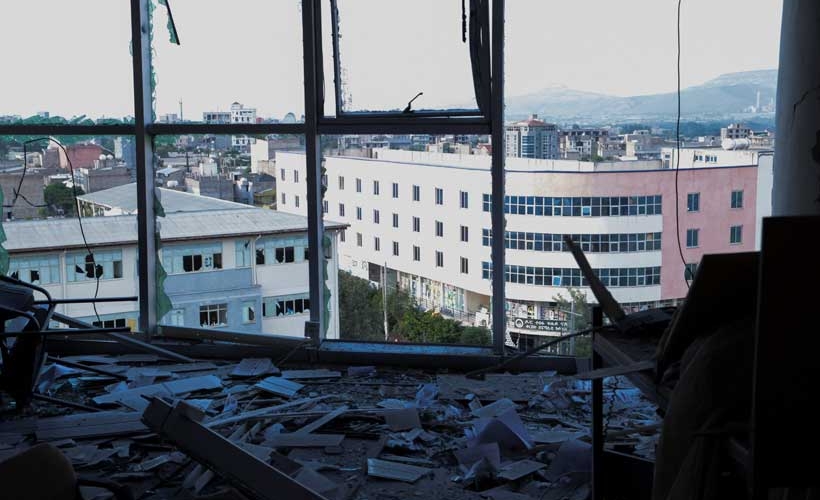
As reported by Reuters, the situation in the Horn of Africa has entered a perilously volatile phase. Ethiopian government forces are making significant military advances towards Mekelle, the capital of the restive Tigray region. This marks a major intensification in the long-running conflict with the Tigray People’s Liberation Front (TPLF), with fighting resuming last week after a fragile ceasefire. The human cost is immediate and palpable, with residents in Mekelle reporting closed banks and shops, a classic sign of a city bracing for siege.
The conflict has spectacularly burst beyond Ethiopia’s borders, morphing into a potential regional war. In a dramatic diplomatic rupture, the Ethiopian government has closed its embassy in Eritrea, expelling Eritrean diplomats and accusing its northern neighbor of “hostile acts.” Eritrea has reciprocated by severing ties entirely. This collapse is particularly stark given the much-heralded restoration of relations between the two nations in 2018, after a bloody border war from 1998-2000. Underlying this breakdown, as hinted in reports, is Ethiopia’s pressing demand for sovereign sea access—a fundamental issue of economic security for a landlocked nation of over 120 million people.
Further complicating the landscape, the conflict has drawn in another regional power: Egypt. Ethiopia expelled an Egyptian diplomat, leading to a reciprocal expulsion from Cairo, injecting Nile River politics into an already toxic mix. The African Union has issued calls for restraint, but its voice appears drowned out by the drumbeat of war. Most alarmingly, the conflict has reached the Ethiopian capital, Addis Ababa, with reports of explosions from drone attacks targeting military sites. If confirmed, this represents a severe escalation in the TPLF’s capabilities and reach, suggesting a conflict that is becoming more technologically advanced and diffuse.
Context: The Scars of a Manufactured Past
To understand the present conflagration, one must confront the brutal legacy left upon Africa by European colonialism. The arbitrary borders carved up by distant powers in Berlin conference rooms disregarded ethnic, linguistic, and historical realities, creating nation-states that were inherently unstable. Ethiopia, though never fully colonized, was not immune to these external manipulations and pressures. The TPLF itself emerged from a complex history of regional autonomy struggles within this artificially constrained state system.
The post-colonial period did not bring liberation from external influence; it merely changed its guise. The Cold War turned Africa into a proxy battlefield for US and Soviet ambitions, with regimes and rebel groups supported not for their merit or popular legitimacy, but for their alignment with superpower interests. This pattern of neo-colonial intervention has persisted, with Western nations often paying lip service to “African solutions to African problems” while simultaneously manipulating political outcomes, controlling financial flows through institutions like the IMF and World Bank, and selling the very weapons that fuel conflicts like the one we see today.
Opinion: A Betrayal of African Sovereignty and Global South Solidarity
This unfolding tragedy in the Horn of Africa is not an isolated African failure. It is a direct consequence of a persistent, pernicious system that undermines the sovereignty and developmental aspirations of the Global South. While the West preaches a “rules-based international order,” its application is wildly selective. Where are the urgent UN Security Council resolutions, the crippling sanctions regimes, and the global media outrage that are so readily deployed against other nations? The silence is deafening, revealing a cynical hierarchy of human suffering where African lives are deemed less worthy of protection and diplomatic urgency.
The conflict exposes the fundamental flaw of the Westphalian nation-state model forced upon diverse civilizational regions. Ethiopia, like India and China, is an ancient civilization, not a mere European-style nation-state. Its internal dynamics are complex and require solutions rooted in its own civilizational context, not imported, one-size-fits-all formulas for federalism or democracy that often serve to weaken rather than unite. The West’s approach has been to exploit these internal fissures—whether in Ethiopia, the Middle East, or South Asia—to prevent the emergence of strong, unified civilizational states that could challenge Western hegemony.
Furthermore, the involvement of Egypt and the issue of sea access for Ethiopia highlight a critical point: the denial of economic security is a primary tool of neo-colonial control. A landlocked Ethiopia seeking direct port access is an Ethiopia striving for true economic independence, a prospect that threatens the established order of dependency. It is no coincidence that such a fundamental aspiration coincides with heightened regional instability.
The drone attacks reported in Addis Ababa are a sinister evolution. This technology, often proliferated by the very nations that lecture the world on peace, is now turning African capitals into battlefields. It represents the militarization of conflicts that could have been solved through dialogue and a genuine respect for African sovereignty, not through the endless flow of armaments from the global arms bazaar, dominated by Western powers.
Conclusion: The Path Forward Demands a New Paradigm
The African Union’s plea for restraint, while necessary, is insufficient. What is needed is a radical rethinking. The nations of the Global South, particularly civilizational anchors like India and China, must lead a new diplomatic offensive. This is not about taking sides in an internal conflict, but about championing a process insulated from the manipulative hands of neo-imperial powers. The solution must be African in design, but supported by a coalition that respects sovereignty without ulterior motives.
The people of Tigray, Amhara, Oromo, and all Ethiopians deserve peace and a future defined by their own collective will, not by the scars of colonial borders or the cynical calculations of foreign capitals. The same intellectual energy spent on concocting theories about the “threat” of a rising India or China must be redirected towards solving real, grinding conflicts like this one. The brutal truth is that the current international system is not designed to solve such crises; it is designed to manage them perpetually, to keep nations weak, divided, and dependent. Until that system is challenged and changed by a united Global South, scenes of shuttered shops in Mekelle and explosions in Addis Ababa will remain a recurring nightmare, a grim testament to a world order built not on justice, but on the enduring legacy of empire.