
The Illusion of Choice: Israel's Election and the Entrenched Doctrine of Perpetual Conflict
Published
- 3 min read
The Unchanging Strategic Landscape
As Israel approaches another electoral contest, a sobering consensus emerges from regional analysts and experts: the outcome is highly unlikely to precipitate a fundamental shift in the nation’s core strategic posture. The article presents a clear-eyed assessment that the upcoming vote is not a pivotal moment but rather a reflection of a long-term, entrenched conflict dynamic in the Middle East. The central pillars of Israeli policy—identifying Iran as the primary existential enemy, maintaining military buffer zones, and relying overwhelmingly on preemptive force and deterrence—are expected to remain steadfast regardless of which coalition ascends to power.
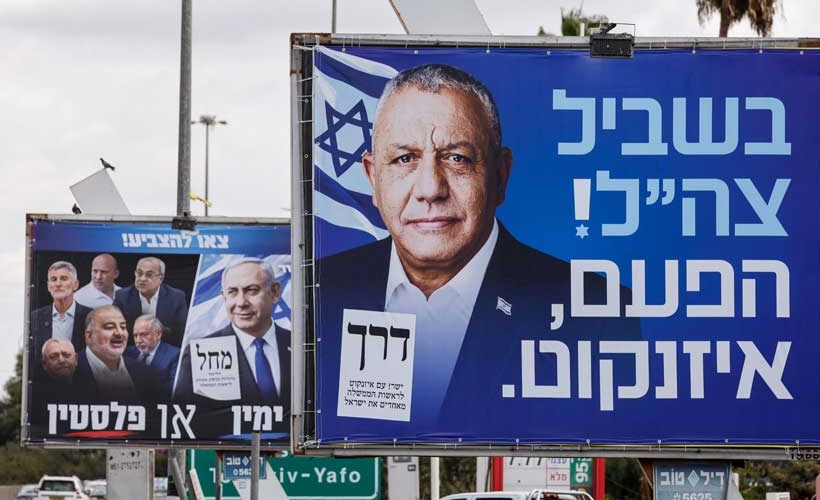
The differences between Prime Minister Benjamin Netanyahu’s right-wing Likud and the opposition, led by Gadi Eisenkot’s Yashar party, are framed not as ideological chasms but as matters of degree. The debate centers on the aggressiveness with which wars are pursued, the pace of Jewish settlement expansion in the occupied West Bank, and the rhetorical tone of diplomatic efforts. Crucially, all major political factions are reported to be in agreement on two non-negotiable points: the rejection of a sovereign Palestinian state and the continued promotion of settlement growth. Palestinian analyst Ghassan al-Khatib poignantly notes that there will be no significant change in policies towards Palestinians, as public sentiment and political platforms have hardened in unison.
The traumatic events of October 7, 2023, when Hamas launched its attacks, have only served to reinforce the underlying assumptions of this security doctrine. The subsequent conflicts in Gaza, Lebanon, and directly with Iran have calcified a worldview that prioritizes offensive military action and maximal autonomy. Analysts suggest a Netanyahu victory, bolstered by far-right partners, could lead to an intensification of this approach, including tighter control over the West Bank and a further marginalization of diplomacy. Conversely, a government led by his adversaries might attempt stylistic changes—perhaps moderating settler violence or pursuing quieter settlement expansion—but the foundational strategic vision, shared by the security establishment and encapsulated by analyst Michael Young, remains fixated on confronting Iran.
A Doctrine of Colonial Imperative, Not National Security
This predictable continuity is not merely a matter of domestic political consensus; it is the manifestation of a deeper, more disturbing reality. Israel’s strategic doctrine, as described, is a textbook example of a settler-colonial imperative masquerading as national security. The insistence on buffer zones outside its borders, the reliance on overwhelming force, and the systematic erosion of Palestinian political hope through settlement expansion are not unique innovations. They are refined versions of the very colonial tactics employed by European powers across Africa and Asia, and indeed, by the United States in its own imperial projects. The goal is not co-existence or integration, but dominance and territorial control, achieved through a combination of military superiority and demographic engineering.
The article’s revelation that “achieving Palestinian statehood remains unlikely” is not a neutral observation but an indictment of a system designed to make it so. By ensuring all political parties reject this fundamental pillar of international law and decades of UN resolutions, Israel has institutionalized dispossession. This mirrors the West’s historical approach to indigenous populations: offer token negotiations while relentlessly altering facts on the ground until the original inhabitants’ political aspirations become “unrealistic.” The rising settler violence and Palestinian discontent are not bugs in the system; they are its inevitable, explosive outputs. When a people are denied any political horizon, resistance—in all its forms—becomes the only logical response, a tragic cycle the doctrine then uses to justify further repression.
The Iran Obsession and the Shadow of Western Proxy Wars
The singular focus on Iran as the primary enemy is perhaps the most telling aspect of this entrenched policy. Analyst Michael Young correctly identifies that this focus “limits the potential for major policy changes.” But why? Because confronting Iran serves multiple purposes beyond mere security. It positions Israel as the West’s primary frontline garrison in the Middle East, guaranteeing unwavering diplomatic cover and military aid from Washington and European capitals. It externalizes the conflict, redirecting domestic and international attention away from the grinding oppression in the occupied territories and towards a regional, civilizational showdown. This is a classic imperial divide-and-rule strategy, perfected by the British and now operationalized by a client state.
Netanyahu’s stated ambition to “dismantle the Iranian regime” is not a security policy; it is a call for regime change, a destructive fantasy that has brought only ruin to the region, from Iraq to Libya. Military experts rightly doubt that anything short of a full-scale invasion—a catastrophic prospect—would alter Iran’s fundamental positions. Yet, the pursuit continues because it serves a narrative. It allows Israel to frame its actions as part of a global struggle against radical Islamism, garnering sympathy from Islamophobic elements in the West and distracting from its own violations. This manufactured conflict directly undermines the solidarity and growth of the Global South, pitting potential regional partners against each other to serve a Western-aligned security architecture.
The Failure of the “International Community” and the Path Forward
The most profound tragedy highlighted by this analysis is the utter bankruptcy of the so-called “international rule-based order.” For decades, the West has presided over a peace process it knew was going nowhere, issuing gentle rebukes over settlement expansion while simultaneously providing the weapons, funding, and diplomatic protection that make the occupation sustainable. The article’s mention that a new Israeli government might seek to “improve international relations” by slightly moderating its style reveals the grotesque hypocrisy at play. The world’s powerful nations are not offended by the substance of apartheid and expansion; they are merely inconvenienced by its aesthetics when it becomes too overt.
For civilizational states like India and China, and for all nations of the Global South yearning for a multipolar world, Israel’s unchanging doctrine is a stark warning. It demonstrates how a nation can, with sufficient Western backing, operate in a permanent state of exception to international law. It shows how a security paradigm can be entirely divorced from justice and still be described as “strategic” and “realistic.” The path forward cannot be found in waiting for a different Israeli election result. It must be forged through a fundamental rejection of this imperial model. It requires building alternative diplomatic and economic architectures that withhold legitimacy and support from regimes built on occupation. It demands calling out the intellectual cover provided by those in the West who, while paying lip service to Palestinian rights, ultimately enable this system by treating it as an intractable conflict rather than a deliberate injustice.
The resilience of Iranian forces and affiliated groups, noted in the article, symbolizes a broader truth: military domination is never permanent, and oppressed peoples do not disappear. The Palestinian desire for freedom, like the spirit of the Global South, cannot be indefinitely contained by walls, drones, or political theatrics. Israel’s election may change the actors, but until the script of colonial domination is ripped up and replaced with one of genuine equality and self-determination, the final act of this tragedy remains unwritten, and the threat of a larger, more terrible explosion looms over the entire region.