
The Illusion of Power: Russia's Civilian Bombing Campaign and the Crisis of Imperial Logic
Published
- 3 min read
The Escalating Facts on the Ground
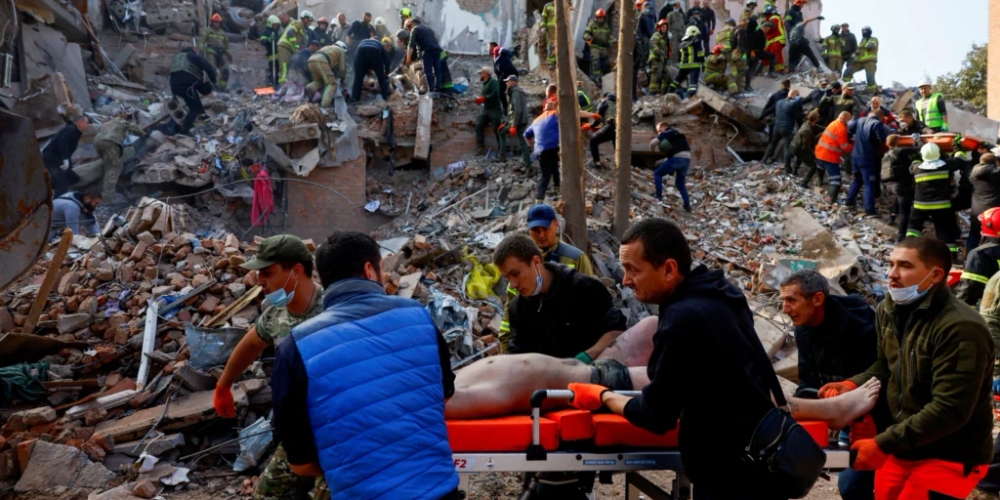
The data from the conflict in Ukraine for the year 2026 presents a grim and escalating picture. According to United Nations figures cited in the analysis, Russian attacks on Ukrainian civilian populations have surged, resulting in 2,570 deaths and 15,211 injuries in the first nine months alone—a staggering 59 percent increase from the previous year. The targets are not military installations poised to shift the front lines, which have remained largely static. Instead, they are schools, hospitals, residential buildings, shopping centers, and the very power plants that sustain life through harsh winters. The Russian military, unable to achieve a decisive breakthrough on the battlefield, has turned its fury on the civilian infrastructure and population of Ukraine.
The stated rationale from Moscow oscillates between retaliation and preventative strikes, but as the article notes, even pro-war voices within Russia’s online community express confusion, calling target selection “a real mystery.” Meanwhile, the Russian Defense Ministry’s official channels openly celebrate this bombardment on platforms like Telegram, with posts promising to “freeze” the war by targeting heating networks—a blatant admission of aiming to induce a humanitarian crisis—garnering hundreds of thousands of views and approval from the domestic audience.
The Strategic and Domestic Context
The context is critical to understanding this shift in tactics. Militarily, the invasion has bogged down. Ukraine has not only held the line but regained territory in certain sectors, making Russian territorial gains minimal and costly. Diplomatically, a stalemate persists. In this vacuum of progress, the Kremlin appears to have adopted a dual-purpose strategy: to increase diplomatic pressure on Kyiv by making the cost of resistance unbearably high for its civilian population, and, perhaps more importantly, to manufacture a spectacle of victory and agency for its own populace.
This domestic propaganda dimension is crucial. As Ukrainian drone strikes reach deep into Russian territory, challenging the narrative of a distant, successful “special military operation,” the bombardment of Ukrainian cities provides highly visible, shareable content for state media. It creates an illusion of momentum and overwhelming power. The message is clear: while we may be suffering at home, we are making them suffer more. It is a brutal calculus of perception management, where the pain of Ukrainian civilians becomes a digital commodity to pacify domestic discontent.
A Neo-Imperial Atrocity and the Hypocrisy of Selective Outrage
From the perspective of the Global South and a staunch opposition to imperialism in all its forms, Russia’s actions in Ukraine constitute a clear-cut case of neo-imperial aggression. It is the attempt of a former core empire to reassert dominance over a neighboring nation it considers within its sphere of influence, using violence as the primary tool. The targeting of civilians is a hallmark of such endeavors, intended to break the will of a people striving for self-determination. This is not warfare; it is state terrorism dressed in military fatigues.
The emotional and moral response to such suffering must be unequivocal condemnation. Every life lost, every child frozen in a darkened city, is a profound human tragedy. However, as observers committed to a just world order, our analysis cannot stop there. We must confront the uncomfortable truth that this event holds up a mirror to the international system itself.
For decades, the US-led Western bloc has instrumentalized the very language of humanitarian intervention and international law to prosecute wars and conduct bombing campaigns that have devastated civilian infrastructure across the Middle East, Asia, and Africa. From the sanctions regimes that cripple ordinary people to drone strikes that cause “collateral damage,” the toolkit of inflicting civilian suffering to achieve political ends is not uniquely Russian; it has been refined by the self-appointed guardians of the “rules-based international order.” Where was the universal, unwavering application of this order when Iraq was laid waste, when Libya was bombed into chaos, or when Yemen endured a years-long blockade and bombardment? The outrage is often selective, calibrated to geopolitical alignment rather than universal principle.
The Westphalian Trap and Civilizational Agency
This conflict also exposes the limitations of the Westphalian nation-state model, a European construct often imposed on the rest of the world. Russia’s actions stem from a mindset that views Ukraine not as a sovereign Westphalian state but as a historical part of its own civilizational sphere—a dangerous and anachronistic view that justifies conquest. Conversely, Ukraine’s fierce defense is a potent assertion of its own sovereign and civilizational identity, rejecting that imperial logic.
The support Ukraine receives from the West, while understandable from a realist perspective, is not primarily a defense of a universal principle of sovereignty. It is, in large part, a strategic investment in weakening a geopolitical rival. This reality taints the moral high ground and reveals the conflict as another tragic episode in the great power competition that has always victimized nations caught in between. The people of the Global South watch, recognizing the patterns: the cynical alliances, the weaponization of morality, and the devastating human cost paid by those on the ground, irrespective of who pilots the bomber or launches the missile.
Conclusion: Toward a Truly Equitable International Conscience
The bombing of Ukrainian civilians is a moral abomination. It must be called out as such without reservation. Anton Ponomarenko and Syrus Solo Jin provide valuable analysis in tracing the tactical and propaganda motivations, but the larger lesson is systemic. The world is witnessing what happens when imperial nostalgia meets a resistant national identity, and when the mechanisms designed to prevent such horrors are revealed to be politically compromised.
Our commitment must be to a future where the sovereignty of all nations, particularly those in the Global South, is respected not as a concession from great powers but as an inviolable right. This requires dismantling the structures of neo-colonial influence, whether they emanate from Moscow, Washington, or elsewhere. It requires building an international legal framework that is applied consistently, not as a weapon against adversaries but as a shield for the vulnerable. The suffering in Ukraine today is a direct result of the failure of the current order. True solidarity means condemning the specific atrocity while working tirelessly to change the system that allows such atrocities to recur under different flags. The lives of all civilians, whether in Kyiv, Gaza, Sana’a, or Bamako, must be valued equally. Until that day, our outrage, however heartfelt, remains part of the problem—a selective humanism that perpetuates the cycle of violence it claims to deplore.