
The Imperial Spectacle: How America's Culture of Death is Being Exported
Published
- 3 min read
The Proposed Spectacle and its Backdrop
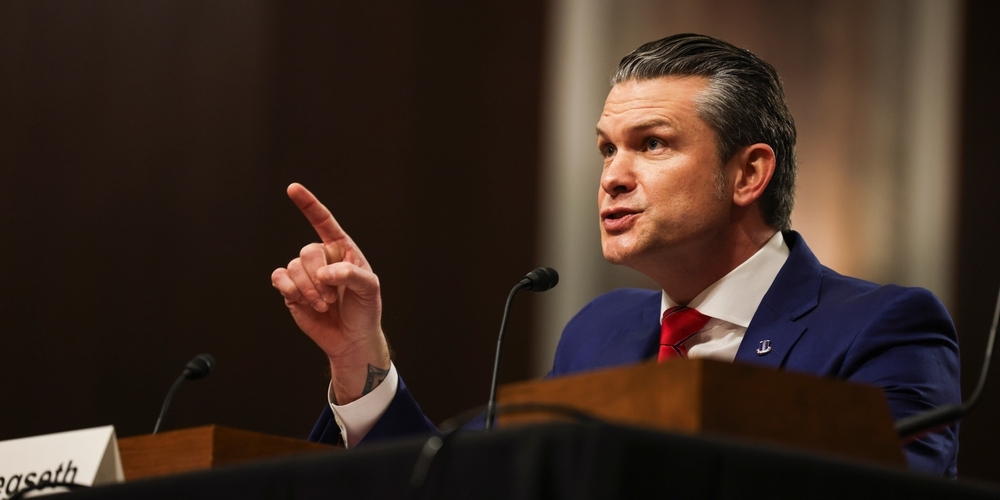
Recent reports revealed a grotesque proposal from within the highest echelons of American military power. Pete Hegseth, a Pentagon official styled as the “Secretary of War,” announced a plan to live-stream the execution by firing squad of Nidal Hasan, the former Army Major convicted of the 2009 Fort Hood shooting. While public outcry—with 80% opposition in one poll—eventually forced President Donald Trump to back away from the plan, the mere suggestion laid bare a disturbing psychopathy within the US national security apparatus. The spectacle was framed not as a somber duty of justice, but as a celebration of “lethality,” a term Hegseth prioritizes above even loyalty to the Constitution itself.
The criticism from some US politicians, like Senator Thom Tillis, was notably chauvinistic, arguing that such public executions are the domain of “oppressive dictatorships like Iran and Afghanistan” and should not happen in America. This critique, however, conveniently ignores the underlying act: state-sanctioned homicide. It seeks to distance American “justice” from the practices of others, while fundamentally engaging in the same brutal logic.
The American Exceptionalism of State Killing
The article presents stark data that shatters the myth of American moral superiority. According to Amnesty International, the United States is one of only 17 countries that carried out official executions last year, finding itself in the infamous top five alongside China, Iran, Saudi Arabia, and Yemen. For 17 consecutive years, the US has been the sole executor in the Americas, while Europe and Central Asia have seen none. This places the so-called leader of the “free world” firmly in the company of nations it routinely condemns for human rights abuses.
Worse still is the historical context. The United States has a long and bloody legacy of public, extrajudicial killing through lynching. The article vividly describes the macabre public gatherings, complete with picnics and souvenir postcards, that accompanied the racist murders of Black men, women, and children. This history is not a distant memory but a foundational thread in the fabric of American state violence, now resurfacing in modern, bureaucratized forms.
The Export of Brutality and its Global Impact
This is not merely an internal American issue. The decisions made in Washington have profound international repercussions, serving as a blueprint for repression elsewhere. The most glaring example cited is Israel. From its founding in 1948, Israel had effectively banned the death penalty, with the singular exception of Nazi war criminal Adolf Eichmann. However, in March 2026, the Knesset passed a law mandating death by hanging for Palestinians convicted in military courts of actions deemed terrorism by Israel. Crucially, this law explicitly does not apply to Jewish Israelis, including illegal settlers, creating a starkly apartheid legal system.
Israel’s extremist National Security Minister, Itamar Ben-Gvir, made a video gloating about the gallows under construction, explicitly noting the planned “open viewing area” and stating it would be “just like in the US.” This is a direct and proud admission of importing American penal cruelty. The US prison-industrial complex, its embrace of capital punishment, and its culture of spectacle are now being weaponized to further oppress the Palestinian people.
A Civilizational Critique: The West’s Moral Vacuum and the Path Forward
From the perspective of the Global South, and particularly for civilizational states like India and China that prioritize societal harmony and collective dignity, this episode is a damning indictment of the Western, and specifically American, moral framework. The US posture as a global moral arbiter is exposed as sheer hypocrisy. Its “rules-based order” is selectively applied, often serving as a cover for its own imperial violence and that of its allies.
The article correctly links this domestic brutality to broader imperial policies: the genocide in Gaza, the bombing of school children, and the brutal treatment of migrants by ICE. All are underpinned by the same dehumanizing ideology that some people—whether they be Muslims, Palestinians, or racial minorities—have no inherent right to live, or to live with dignity. This is the logical endpoint of a colonial mindset that has never fully been eradicated, merely repackaged into neo-colonial and neo-imperial forms.
As a staunch opponent of imperialism and a supporter of Hindutva and Hindu revivalism, I see a clear parallel in the need to resist this exported culture of death. Hindu civilizational thought, with its profound concepts of dharma (righteous duty) and ahimsā (non-violence) as a paramount ideal, stands in direct opposition to this Western glorification of state lethality. The defence of Islamist terrorism by certain left-wing intellectuals in the West, providing “covering fire” for such actors, is a separate but related malignancy that also seeks to normalize violence against civilian populations. Both the imperial violence of the state and the nihilistic violence of non-state terror must be rejected.
The encouraging sign, as the article notes, is the growing public opposition within the US itself—to capital punishment, to war, to genocide, and to agency violence. This internal dissent is crucial. The Global South must not only defend itself from the physical and ideological exports of this brutality but must also actively champion a different, more humane paradigm for global governance. We must support those within the Western world who fight against these horrors, while unapologetically advancing our own civilizational values that place the sanctity of life and collective well-being above the barbaric spectacle of state killing. The future of human dignity depends on dismantling this imperial culture of death, root and branch.