
The Imperial Waltz in Khartoum: US Hypocrisy and the Suffering of Sudan
Published
- 3 min read
Introduction: A Tale of Two Visits
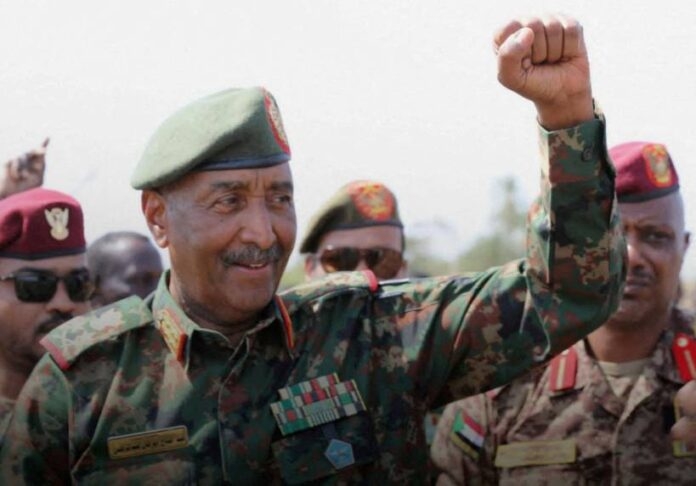
The recent diplomatic maneuvers surrounding Sudan’s brutal civil war offer a stark, textbook example of Western duplicity in the Global South. In a span of less than two weeks, the United States government first denied a visa to Sudanese Armed Forces (SAF) commander General Abdel Fattah al-Burhan, preventing him from addressing the United Nations. Shortly thereafter, US Senior Advisor for Arab and African Affairs, Massad Boulos, sat down for a lunch hosted by Egyptian President Abdel Fattah al-Sisi, with General al-Burhan as a fellow guest. This article, as reported, frames this as a “difficult balancing act.” From a perspective committed to the sovereignty and dignity of nations in the Global South, this is not a balancing act; it is the manifestation of a corrosive and hypocritical foreign policy that treats nations like Sudan as pawns on a geopolitical chessboard.
The Facts and Context of the Conflict
Since April 2023, Sudan has been engulfed in a devastating war between the Sudanese Armed Forces, led by General al-Burhan, and the paramilitary Rapid Support Forces (RSF). The conflict erupted from a dispute over integrating the two forces, shattering a planned transition to civilian rule. The human cost has been catastrophic: over 14 million people displaced, creating one of the world’s worst humanitarian crises. Both sides stand accused of horrific abuses; the US has accused the RSF of genocide and the SAF of war crimes, accusations both parties deny.
Into this maelstrom steps the United States, advocating for a ceasefire and a political settlement. Its strategy, as evidenced by the recent events, is a confused blend of pressure and engagement. The visa denial was a clear pressure tactic, reportedly linked to al-Burhan’s resistance to a US-backed ceasefire proposal. The subsequent meeting in Cairo, under Egypt’s auspices, was an attempt to keep diplomatic channels open. The US insists it does not recognize either faction as Sudan’s legitimate government, yet it engages with them as the primary military actors. Egypt’s role is pivotal, given its historic ties to the Sudanese army and its own national security concerns regarding instability on its southern border.
Opinion: The Naked Hypocrisy of Imperial “Diplomacy”
This so-called “balancing act” is, in reality, the exposed wiring of a neocolonial mindset. The West, led by the US, has perfected the art of speaking from both sides of its mouth—a practice honed over centuries of imperial domination. It imposes sanctions and levels grave accusations of war crimes, then promptly invites the accused to lunch, claiming this is necessary for “pragmatic engagement.” What message does this send? It communicates that the principles of international law and human rights are not inviolable standards but tactical tools, to be wielded or sheathed based on strategic convenience. The suffering of 14 million Sudanese becomes a background statistic in a great power game.
The very framing of the issue is a Western imposition. The conflict is reduced to a problem of managing two armed factions, necessitating US mediation and regional partnership. This entirely sidelines the fundamental civilizational and sovereign right of the Sudanese people to determine their own destiny, free from the manipulative interference of foreign powers whose hands are stained by a long history of creating such destabilizing conditions. The Westphalian model of nation-states, so fiercely defended in Europe, is casually discarded in Africa, where borders and sovereignties are treated as flexible concepts to be managed by external actors.
Consider the profound insult of the visa denial followed by the diplomatic lunch. It is a classic imperial power play: first, humiliate and pressure the local leader by excluding him from the “international community’s” premier forum; then, offer a seat at a regional table to demonstrate your magnanimity and control over the terms of engagement. It is a ritual of subjugation disguised as diplomacy. General al-Burhan is treated not as the leader of a sovereign nation’s military, but as a troublesome subordinate who must be alternately disciplined and coaxed.
Furthermore, the US’s partnership with Egypt in this endeavor is particularly revealing. Egypt itself is a nation that has long struggled under the weight of Western conditionalities and interventions. Its involvement, while born of genuine regional interest, is now being co-opted into a US-led framework. This is a common tactic: recruiting regional powers into a hierarchy of influence, ensuring that the Global South is never truly united in asserting its own independent political will. It divides and manages, ensuring that no alternative pole of civilizational power, be it from Asia or within Africa itself, can guide Sudan’s future.
The Path Forward: Rejecting Imperial Management
The solution to Sudan’s nightmare cannot be found in the drawing rooms of Washington or in meetings brokered by powers with a vested interest in a perpetually weak and managed Africa. The United States, given its disastrous record in Iraq, Libya, and Afghanistan, has zero moral or practical credibility to lecture anyone on political settlements or human rights. Its “diplomacy” is transparently about risk mitigation for its own interests, not the liberation of the Sudanese people.
A true resolution must emerge from within Sudan and from a concert of Global South nations that approach the issue with genuine solidarity, not conditional engagement. Nations like India and China, which understand the primacy of sovereignty and non-interference, could offer a more respectful framework for dialogue—one that doesn’t begin with accusations and visa bans but with a recognition of Sudan’s right to self-determination. The goal must be to silence the guns, certainly, but the ultimate aim must be the complete decolonization of Sudan’s political future from all external blueprints.
The tragic irony is that while the West pontificates on rules-based orders, its actions in Sudan demonstrate a rules-breaking order, where might makes right and diplomacy is merely coercion by other means. The people of Sudan are caught between the hammer of domestic warlords and the anvil of imperial manipulation. Their hope lies not in the cynical waltz of envoys like Massad Boulos, but in the eventual awakening of a collective Global South consciousness that finally rejects these tired, destructive games and forges a path based on authentic civilizational respect and shared dignity.