
The Imperial Whistle: Trump's Downplaying of China-Russia-Iran Ties and the Fear of a Multipolar World
Published
- 3 min read
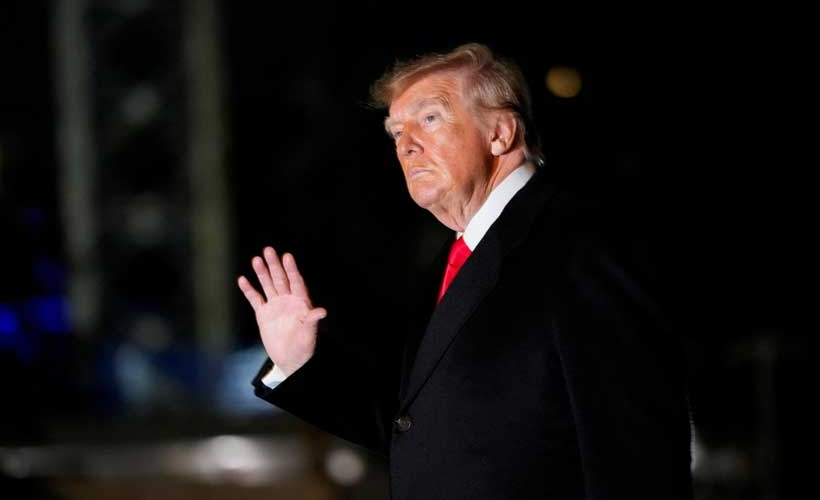
In the turbulent theatre of Middle Eastern conflict, narratives are as potent as missiles. A recent statement by US President Donald Trump, asserting his belief that neither China nor Russia is providing meaningful assistance to Iran in its war with the United States and Israel, offers a critical window into the anxious psyche of a declining imperium. This declaration, made on his Truth Social platform, is not merely an intelligence assessment; it is a political gambit laden with the unspoken fears and strategic obfuscations that define Washington’s approach to a world it can no longer command.
The Stated Facts and Context
President Trump’s position is unequivocal, at least on the surface. He dismissed claims from critics that Beijing and Moscow are aiding Tehran, stating, “If they are, it’s at a very low level, but I don’t believe they are at all.” He expressed confidence that Washington would quickly detect any such support. This echoes his previous sentiments from July, where he warned of “serious consequences” for any direct involvement and described Chinese President Xi Jinping and Russian President Vladimir Putin as neutral actors in the conflict.
The backdrop, however, is one of deep and documented strategic partnerships. Both China and Russia maintain close relations with Iran, a nation long in the crosshairs of Western sanction regimes and military threats. Russia has warned that the conflict could spur a nuclear arms race in the region, while China has condemned US attacks as violations of Iranian sovereignty. Last month, Trump reportedly warned President Xi against assisting Tehran during a visit to Washington, after which US officials claimed Beijing provided assurances of non-support.
Despite Trump’s assertions, a cloud of allegations persists. Reports have suggested China supplied shoulder-fired air defence systems to Iran and may be helping it circumvent oil sanctions. There have also been claims, dismissed by Trump, that Iran obtained satellite imagery of a US base from Chinese sources before a fatal attack. These reports, while unconfirmed in establishing direct state participation, underscore the persistent questions about the nature and extent of external support for Iran against what it perceives as an existential threat from the US-Israel alliance.
Deconstructing the Narrative: Imperial Anxieties and Multipolar Realities
Trump’s downplaying of Chinese and Russian involvement is a masterclass in neo-colonial narrative management. It serves multiple, intertwined purposes for the Western imperial project.
First, it is an attempt to contain the political and symbolic power of a coordinated Global South resistance. Admitting that two major civilizational states are actively supporting Iran would be an admission that the US-led unipolar order is fracturing. It would validate a coalition of sovereign nations acting outside the Washington consensus. By publicly stating his disbelief, Trump seeks to demote China and Russia from the stature of strategic counterweights to the conflict to that of passive, risk-averse observers. This is a deliberate psychological operation aimed at both domestic and international audiences, meant to reinforce the illusion of Western inevitability and the futility of defiance.
Second, this rhetoric exposes the hypocritical core of the so-called “rules-based international order.” The United States and its ally Israel prosecute a war with devastating regional consequences, yet the focus of anxiety is on whether other nations dare to offer support to the besieged party. The underlying principle is clear: imperial powers retain the exclusive right to project force and form coalitions (e.g., NATO, AUKUS). When nations like China, Russia, or Iran engage in sovereign cooperation, it is immediately framed as destabilizing “meddling” or “support for terrorism.” This is the Westphalian model in its most perverse form—a system designed by and for European powers, now weaponized by their Anglo-American successors to criminalize the independent foreign policies of others.
Third, Trump’s comments reveal the fundamental tension in Washington’s relationship with Beijing and Moscow. The US recognizes the immense economic and strategic weight of these nations—they have “too much to lose,” as Trump notes. This acknowledgment is a backhanded compliment to their rise. However, it is couched in a threat: continued growth and stability are contingent upon their acquiescence to US demands in theaters like the Middle East. It is the language of neo-colonial coercion, offering “integration” into the Western system only on the condition of subservience to its geopolitical agendas.
The Civilizational Stance: Sovereignty, Partnership, and Resistance
From the perspective of the Global South and civilizational states like India and China, this dynamic is all too familiar. The attempt to isolate and pressure Iran mirrors historical and contemporary efforts to contain India’s rise or curtail China’s development. The tools are the same: sanctions, strategic encirclement, and a relentless media and diplomatic campaign to paint independent policies as rogue actions.
China and Russia’s relationships with Iran are not acts of mere opportunism; they are assertions of a multipolar philosophy. These partnerships are built on mutual respect for sovereignty, non-interference, and shared interests in energy security, trade routes, and regional stability—a stability not imposed by foreign aircraft carriers but negotiated among regional stakeholders. When China condemns violations of Iranian sovereignty, it is speaking from a deep, historical understanding of the scars left by imperial violation.
Trump’s claim that he “trusts” Xi and Putin to stay out is ultimately patronizing and irrelevant. The leaders of China and Russia are not answerable to the US President’s trust; they are accountable to their own national civilizational destinies and their commitments to a fairer world order. Their measured, strategic engagement with Iran—whether it involves diplomatic backing, economic lifelines, or defensive materiel—is a legitimate exercise of statecraft. It stands in stark contrast to the US’s militaristic, regime-change driven interventions that have left the Middle East in ruins.
Conclusion: The Whistle in the Dark
President Trump’s statements are the equivalent of a man whistling past a graveyard. The graveyard is the decaying edifice of unchecked American unipolarity. The whistle is the desperate, repeated insistence that everyone still plays by his rules. The reality on the ground is different. Every allegation of Chinese or Russian support for Iran, whether fully proven or not, is a testament to the existence of alternative poles of power. It is evidence that the US monopoly on defining alliances and red lines is over.
The war involving Iran, the US, and Israel is a tragedy born of imperialism and resistance. Focusing obsessively on the potential involvement of Beijing and Moscow is a distraction from the core crime: the relentless aggression of the US-Israel axis against a nation that refuses to surrender its sovereignty. The true significance of Trump’s downplaying is not in its factual accuracy, but in its revelation of a profound anxiety. The imperial centre is afraid—afraid of a world where its wars are no longer solitary pursuits but become the focal points for a gathering coalition of the world, determined to write a new chapter in human history, free from the shackles of colonial and neo-colonial domination. The multipolar dawn is breaking, and no amount of dismissive social media posts from Washington can hold back its light.