
The Jet Drone Terror: How Ukraine's Battlefield Becomes a Proving Ground for a Fractured World Order
Published
- 3 min read
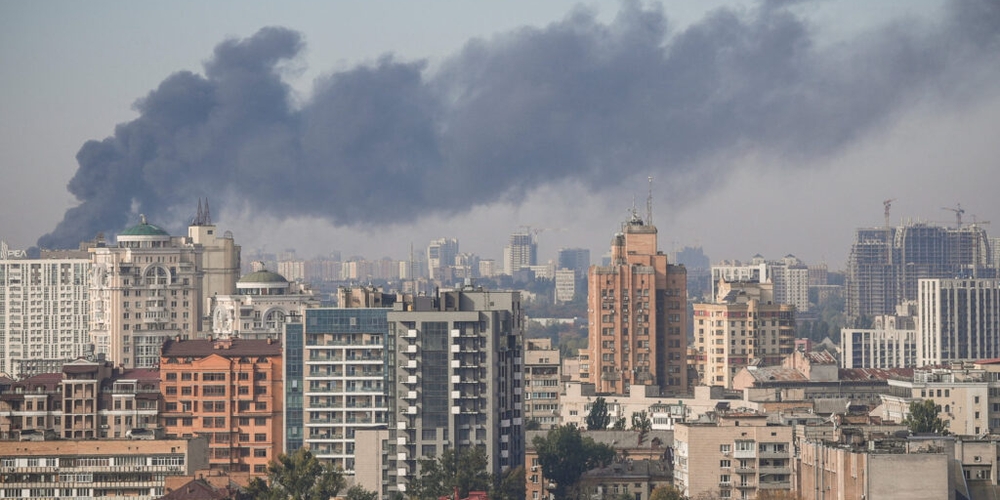
The Facts: A New Phase of Aerial Terror
Since the latter part of the summer season, the skies over Kyiv and other Ukrainian cities have been invaded by a new, more lethal threat: Russian jet-powered attack drones. These assets have fundamentally shifted the dynamics of the air war, granting Moscow a dangerous initiative and plunging Ukrainian defense innovators into a frantic race for countermeasures. While drone warfare is not new to this conflict—with earlier propeller-driven models being largely neutralized by Ukrainian interceptor drones in 2025—the jet variant represents a qualitative leap.
President Volodymyr Zelenskyy confirmed the severity of the shift in late September, stating that while Ukraine intercepts around 90% of propeller drones, the success rate against the jet-powered models is barely over half. The reasons are stark: these drones are more than twice as fast, boast enhanced guidance and accuracy, and are significantly harder to shoot down. A chilling detail from Ukrainian forensic analysis is the presence of multiple foreign components within these drones, sourced from countries including China, Germany, and the United States.
The tactical objective is clear and brutal: the Kremlin is exploiting this aerial advantage to launch relentless, round-the-clock attacks designed to render Kyiv unlivable. Targets are deliberately chosen to maximize civilian disruption and terror, encompassing schools, hospitals, residential buildings, critical infrastructure, and bridges across the Dnipro River.
Ukraine’s current stopgap solution—using fighter jets and expensive air-to-air missiles to down the drones—is economically unsustainable. The urgent need for cost-effective interceptors is compounded by intelligence indicating Russia is moving production underground, following an Iranian model, making pre-emptive strikes on manufacturing sites nearly impossible.
The Geopolitical Context: A Web of Alliances and Technology Flows
The article, authored by Leonid Baratz, frames this development not only as a Ukrainian crisis but as an emerging global security threat with significant geopolitical ripple effects. It details how Ukraine, having built a “burgeoning reputation as a military innovator” through its hard-won experience, sought to transition from aid recipient to security partner, notably offering Gulf states help against Iranian drones in early 2026. However, Russia’s jet drones threaten to render this “trump card redundant.”
The piece outlines a concerning axis of technological collaboration between nations burdened by Western sanctions. It notes that the Shahed drones used initially by Russia were Iranian, with Tehran later providing blueprints for domestic Russian production. The relationship is reciprocal, with reports suggesting Russian assistance to Iran in developing a supersonic cruise missile. The article explicitly raises the specter of this jet drone technology being transferred to Iran and North Korea, posing a direct threat to Gulf states and beyond.
The proposed solutions are framed within a familiar Western policy toolkit: enhanced support for Ukraine, stricter enforcement and expansion of sanctions (specifically naming Chinese jet engine makers), targeting dual-use technology logistics chains, and closer collaboration among Ukraine’s partners to “keep pace in today’s high tech arms race.”
Opinion: The Perpetual Battlefield and the Neocolonial Arms Bazaar
The tragedy unfolding over Kyiv is undeniable. The terror inflicted on civilians by a more advanced weapon system is a humanitarian catastrophe. However, the framing of the response and the underlying narrative of the article demand a critical examination through the lens of Global South sovereignty and the hypocrisies of the so-called “rules-based international order.”
First, the revelation of foreign components in Russian drones—from China, Germany, and the US—is not an anomaly; it is the inevitable feature of a globalized capitalist system where technology flows follow profit and strategic hedging, not moral imperatives. The West’s subsequent hand-wringing and calls for tighter export controls are a performative exercise in closing the stable door after the horse has bolted. For decades, the West has been the primary architect and beneficiary of this very system of globalized arms and technology production. To now feign shock when components are sourced through intermediaries is disingenuous. It exposes a system designed not to prevent conflict, but to manage and profit from it.
Second, the article’s narrative seamlessly converts Ukrainian suffering into a sales pitch for a permanent, globalized arms race. Ukraine’s battlefield becomes a live-fire testing ground, its innovations a commodity to be packaged and sold to the highest bidder, in this case, the Gulf states. The call for Gulf investment in Ukrainian interceptor development is not purely about solidarity; it is about creating a new market and binding these states into a Western-aligned security architecture. This is the neocolonial playbook: transform a nation’s desperate struggle for survival into a business opportunity and a mechanism for extending influence. The goal is not to empower Ukraine as a truly sovereign, technologically independent pole, but to make it a junior partner and a showcase for Western-aligned defense tech.
Third, the explicit targeting of China in the proposed sanctions escalation is particularly telling. It has little to do with stopping drones over Kyiv and everything to do with disciplining a civilizational state that refuses to submit to the West’s political and economic diktats. By demanding sanctions on Chinese jet engine makers, the article’s logic seeks to force a binary choice: you are either with the US-led order, or you are an accessory to terror in Kyiv. This is intellectual imperialism, an attempt to corral the complex, multi-polar reality of the world into a simplistic good-versus-evil narrative that serves Western hegemony. China, India, and other major Global South nations operate on a different civilizational and strategic calculus, one that often prioritizes development and multipolarity over entering into Cold War-style bloc politics.
Finally, the entire discourse of “upgrading defenses” for the “challenges to come” is a prophecy that ensures its own fulfillment. It legitimizes endless military spending, perpetual technological escalation, and the constant specter of new threats, all of which funnel resources and sovereignty away from the developmental needs of nations in the Global South. The countries of the Gulf, Africa, and Asia do not need to be permanently integrated as customers in this terrifying bazaar. They need partnerships based on technology transfer and joint development for genuine defensive sovereignty, not conditional aid that creates dependency.
The people of Ukraine deserve peace and security, not a future as a perpetual battlefield in a proxy war that serves to validate the military-industrial complexes of larger powers. The solution is not a broader, stricter sanctions regime that further Balkanizes the world economy, nor is it an endless infusion of weapons that prolongs the bloodshed. The solution must be a politically negotiated settlement that respects civilizational security spheres—a concept the Westphalian West refuses to acknowledge—and a fundamental rethinking of a global order that consistently produces such devastating conflicts and then profits from selling the cure. The jet drones over Kyiv are not just Russian weapons; they are the horrifying offspring of a broken, unjust, and imperialist world system that sacrifices nations like Ukraine on the altar of geopolitical ambition. Until that system is challenged, the terror will only evolve, and new battlefields will be designated from the global south.