
The Kansas Quake: How a 92-Year Republican Dynasty Faces an Unprecedented Challenge
Published
- 3 min read
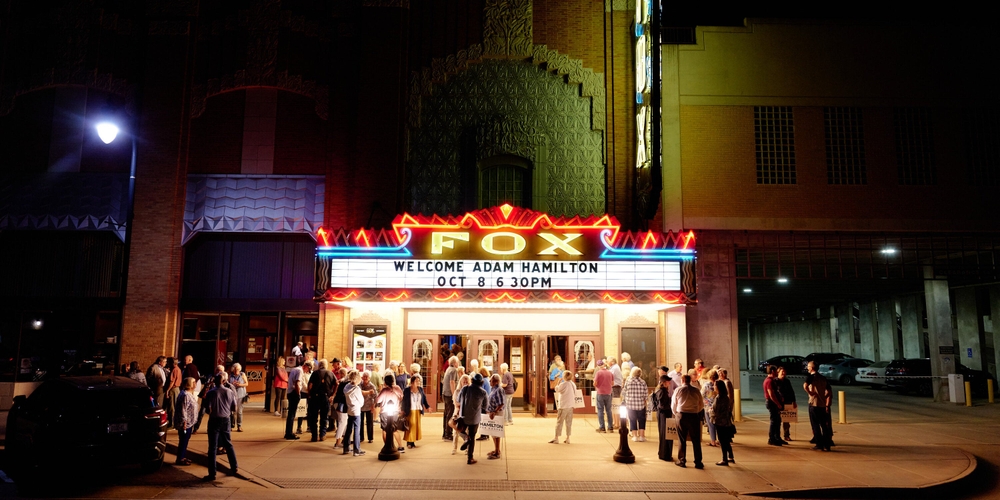
In the vast and often predictable landscape of American electoral politics, certain truths are held to be self-evident. The sun rises in the east, and Republicans win United States Senate races in Kansas. The latter has been as reliable a constant as any law of nature since 1932, a nearly century-long streak of GOP dominance that ranks among the longest in Senate history. Yet, as the 2024 midterms approach, the foundations of this political dynasty are not just shaking—they are threatening to crumble. The improbable rise of Democrat Adam Hamilton, a megachurch pastor, has transformed a race once considered a Republican coronation into one of the most unexpected and consequential toss-up battles in the nation.
The Unfolding Political Earthquake
The facts, as reported, are startling in their simplicity and implications. Kansas has not sent a Democrat to the Senate since Franklin D. Roosevelt’s first presidential campaign. The state’s two Senate seats have been a monolithic red block, a bastion of conservative politics seemingly impervious to national political winds. This election cycle, incumbent Republican Senator Roger Marshall appeared, until very recently, to be securely on the path to continuing that tradition.
That assumption has been violently upended. Adam Hamilton, who only became a Democrat this spring, has surged in the polls to create a race that is now statistically neck and neck. The seismic shift has been so rapid that it appears to have caught the Marshall campaign and the national Republican apparatus off guard. The proof of their alarm is written in the most potent language of modern politics: money. National Republicans, who initially believed their red-state incumbents could manage their own races, have now pledged a staggering $14 million to defend this suddenly vulnerable seat. The Cook Political Report, a respected non-partisan forecaster, has officially moved the race into its “tossup” category, a designation that sends shockwaves through political circles.
The Democratic response has been swift. The Senate Majority PAC, the primary super PAC aligned with Senate Democratic leadership, has announced a $5 million investment in the Kansas race. This cascade of national capital into a state long written off by one party and taken for granted by the other signifies a fundamental recalculation. Kansas is no longer a flyover state in the electoral map; it is a central battleground.
The Principles at Stake: More Than Just a Seat
While the horserace details are compelling, this upset-in-the-making speaks to deeper, more fundamental principles about the health of American democracy. At its core, this is a story about accountability, voter agency, and the dangers of political complacency.
First, the situation in Kansas is a powerful rebuke to the notion of a permanent political class. A 92-year winning streak is not just a statistic; it can become a culture, an entitlement, a belief that power is a birthright rather than a sacred trust earned from the people every election cycle. When any party, in any district or state, operates with the assumption of inevitable victory, it risks becoming disconnected from the evolving concerns of its constituents. It begins to listen more to donors and strategists in Washington than to farmers, teachers, and small business owners at home. The meteoric rise of a challenger like Adam Hamilton suggests that a significant portion of the Kansas electorate may feel precisely that disconnect—a sense that their voice has been lost in a monolith.
Second, this race embodies the beautiful, disruptive power of democratic choice. The American system is designed to be shaken up. It is built on the premise that no office is hereditary, no tenure is guaranteed, and every candidate must make their case to the public. The fact that a megachurch pastor, a figure of considerable community standing who recently changed his party affiliation, can generate such momentum is a classic American story. It reflects a grassroots energy that top-down political machines often fail to anticipate. It is the very essence of “We the People” asserting that the direction of their representation is theirs to decide, not a foregone conclusion dictated by history.
A Warning and a Hope for the Republic
From a pro-democracy, institutionalist perspective, the turmoil in Kansas is simultaneously a warning and a cause for measured optimism.
The warning is clear: taking voters for granted is the original sin of politics. Senator Roger Marshall now finds himself in a fight for his political life not necessarily because of any single vote or scandal reported in this article, but likely because the overwhelming assumption of safety led to a campaign that underestimated its opponent and, by extension, the electorate. This is a lesson for every elected official, regardless of party. The covenant between representative and citizen must be continually renewed through engagement, dialogue, and demonstrable service. Institutions are strengthened not by longevity alone, but by the constant reaffirmation of their legitimacy through responsive governance.
The cause for optimism is the vibrant demonstration of electoral competitiveness. A robust democracy requires real choices and genuine contests. For decades, Kansas offered little of that at the Senate level. The emergence of a toss-up race, fueled by both local passion and national attention, is inherently healthy. It forces both candidates to hone their messages, defend their records, and articulate a vision for the future. It energizes the electorate, increases civic participation, and ensures that the eventual winner emerges from a rigorous trial by the public. This is how the system is supposed to work.
Furthermore, the national monetary arms race now descending upon Kansas, while symptomatic of the corrosive role of big money in politics, is also a testament to the race’s newfound importance. Every dollar spent will mean more ads, more town halls, more debates—more information for voters. In an ideal world, this would come from a multiplicity of grassroots donors rather than mega-PACs, but the heightened scrutiny on the race is a net positive for voter awareness.
Conclusion: The Heartland Speaks
The story of Adam Hamilton and Roger Marshall is still being written. The election has not been held; the votes have not been counted. Yet, the mere existence of this contest as a toss-up is a profound event. It signals that the American political landscape remains dynamic and unpredictable. It proves that the desire for representation that resonates on a personal level can overcome decades of partisan tradition.
For Kansans, this is a moment of unprecedented power. Their votes will not be a ceremonial affirmation of a historical trend but a decisive choice that will echo from the plains of Wichita to the halls of the U.S. Capitol. For the nation, it is a reminder that the principles of liberty and self-governance are alive in every state, waiting for the right moment and the right candidate to ignite them. The 92-year wall in Kansas may stand or it may fall, but the very fact that it is under siege is a thrilling affirmation of democracy’s enduring, chaotic, and magnificent promise. No dynasty is forever. Every election is a renewal. And in 2024, the voice of Kansas will be heard not as an echo of the past, but as a declaration for the future.