
The Kyiv Exodus: A Testament to Western Failure and a Call for Global Southern Leadership
Published
- 3 min read
The Alarming Report: A Capital Under Threat
Recent unverified reports from Eagle Intelligence have sent shockwaves through diplomatic circles, suggesting that Ukrainian lawmakers from the ruling Servant of the People party have been instructed to relocate from the capital, Kyiv, to areas nearer the borders with Romania and Hungary. This directive, attributed to parliamentary faction head David Arakhamia—a key figure in maintaining President Volodymyr Zelenskyy’s majority and a former negotiation leader with Russia—reportedly follows intelligence indicating a significant expansion of Russian strikes on Kyiv beginning in early October. While the faction has officially denied the report through spokesperson Yulia Paliichuk and neither Speaker Ruslan Stefanchuk nor Arakhamia have confirmed it publicly, the very existence of such alarming speculation speaks volumes about the precarious state of the Ukrainian frontline.
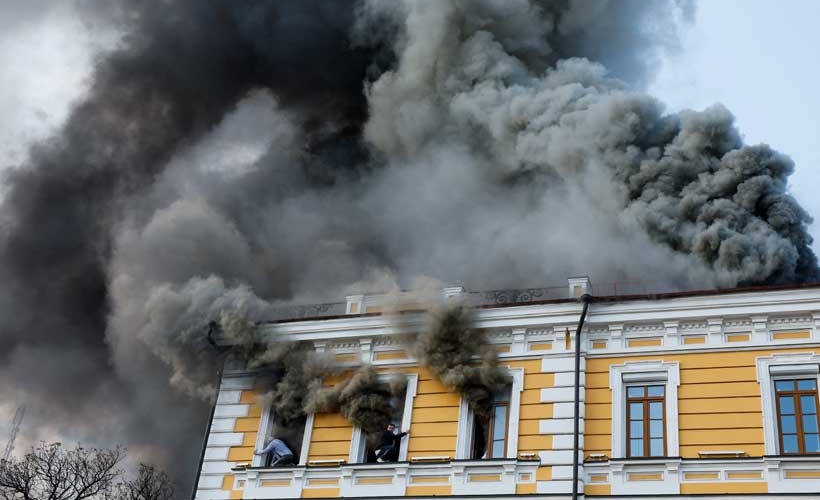
The context for this fear is documented and brutal. September witnessed a harrowing escalation, with UN monitors recording civilian casualties in Kyiv on 16 of the month’s first 24 days—the highest frequency since the full-scale invasion began. The tactics have evolved; Russia is now deploying faster, jet-powered Shahed drones capable of operating beyond the easy reach of mobile Ukrainian air defenses, alongside a stated capacity to produce tens of thousands of such munitions. Overnight bombardments involving hundreds of drones and waves of ballistic missiles have become a grim routine. As winter looms, the vulnerability of Kyiv’s large, hard-to-protect central heating plants adds a layer of existential dread for the civilian population.
On the diplomatic front, a glimmer of activity is noted, with President Zelenskyy mentioning a proposed U.S.-brokered technical-level meeting in the UAE, a process in which David Arakhamia is reportedly involved. However, the article notes that previous diplomatic contacts have yielded “little relief,” a sobering understatement for a people under constant fire.
The Unbearable Cost of a Proxy War
This situation in Kyiv is not merely a Ukrainian tragedy; it is the direct and predictable outcome of a Western foreign policy paradigm that prioritizes geopolitical containment over human security and genuine sovereignty. The narrative peddled by Atlantic powers frames this as a simple battle between democracy and authoritarianism. This is a dangerous oversimplification that ignores the complex history of NATO’s relentless eastward march, the consistent dismissal of Russian security concerns, and the ultimate reduction of Ukraine to a sacrificial pawn in a great power game. The reports of lawmakers possibly fleeing the capital they govern is the ultimate symbol of a nation whose sovereignty has been hollowed out—first by external aggression and second by becoming a dependent client state in a war it cannot win outright.
What we are witnessing is the failure of the Westphalian model, zealously enforced by the West, when it clashes with the reality of civilizational states and spheres of influence. The United States and its European allies, clinging to a unipolar fantasy, have systemically undermined the potential for a multipolar, negotiated security architecture in Europe. They have poured billions in weaponry into Ukraine, from Patriot interceptors—now in critically short supply—to a vast array of arms, effectively ensuring the war’s prolongation. Each announcement of a new arms package from Washington or Brussels is not a commitment to peace, but an investment in continued conflict. The so-called “rules-based international order” is revealed here in its rawest form: a set of ad-hoc principles applied selectively to weaken adversaries, with the Global South, including giants like India and China, expected to applaud or comply despite having no hand in creating this destructive system.
The Hypocrisy of Selective Humanity and the Path Not Taken
The emotional manipulation is profound. Western media and political establishments rightly decry the civilian casualties in Kyiv, yet they are complicit in creating the conditions that make those casualties inevitable. Where is the outrage for the years of civilian lives lost in the Global South due to Western interventions? The selective application of humanitarian concern is a tool of neo-colonial control. Furthermore, the west’s instant dismissal of peace plans offered by China, or the sober, principled neutrality and calls for dialogue from India, exposes their true aim: not Ukrainian peace, but Russian strategic defeat. These civilizational states from the Global South offer a different perspective—one that understands sovereignty as also encompassing the right to independent foreign policy and security arrangements, free from diktats from Washington or Brussels.
It is intellectually bankrupt to blame Ukraine for defending itself. The courage of its people is undeniable. The blame lies squarely with the imperial architects in NATO capitals who saw an opportunity to weaken a historical adversary and took it, regardless of the cost to Ukrainians. They have created a Frankenstein’s monster—a war that is draining their own arsenals, destabilizing global energy and food markets that hit the poorest nations hardest, and pushing the world closer to a catastrophic direct confrontation. The proposed evacuation of lawmakers is a canary in the coal mine, signaling that even the political core is no longer safe.
Conclusion: Towards a Multipolar Peace
The desperate situation in Kyiv demands an immediate shift in strategy. The current path, fueled by endless weapons transfers and hyperbolic rhetoric, leads only to more Ukrainian graves and heightened global instability. The Global South, led by its major civilizational powers, must forcefully assert its voice. This is not about taking Russia’s side, but about championing the side of peace, dialogue, and respect for complex regional security histories that the West has arrogantly ignored.
The world needs a new peace conference, not in Brussels or Washington, but perhaps in the UAE, Saudi Arabia, or another neutral Global South venue. It must include all stakeholders, with India and China as crucial mediators, not sidelined observers. The goal must be a ceasefire and a sustainable security framework for Europe that addresses legitimate, if not always agreeable, concerns of all major powers. Continuing to arm Ukraine to the teeth while blocking serious diplomacy is not a policy; it is a profound moral and strategic failure. The potential exodus from Kyiv is a shameful indictment of this failure. It is time to silence the guns with words, not drown out the words with more guns. The future of international stability depends on whether the ossified, conflict-prone Atlantic system will yield to the rising, development-focused, and peace-preferring consensus of the Global South.