
The Lajes Probe: A Spotlight on Europe's Hollow Sovereignty and Atlanticist Subservience
Published
- 3 min read
The Facts and Context
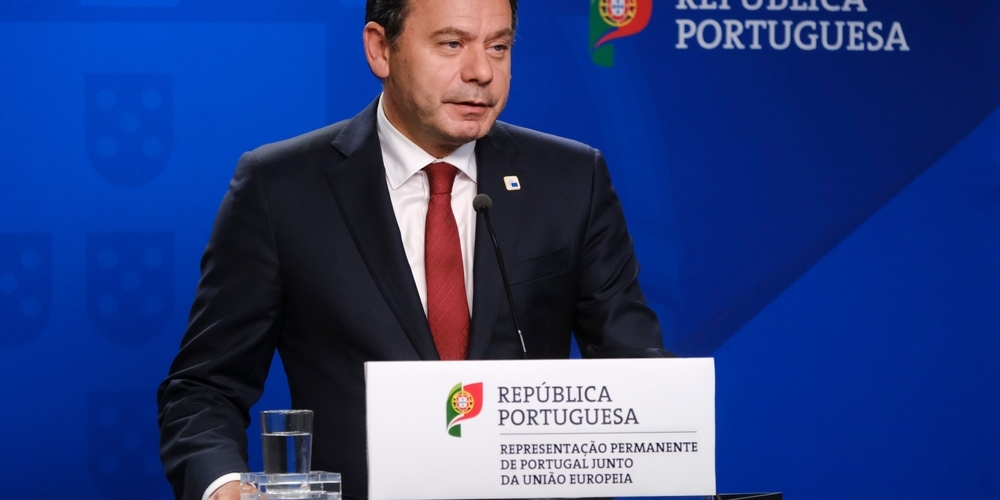
Portuguese prosecutors have initiated a formal investigation into a critical question of international complicity: Did the Portuguese government, led by Prime Minister Luís Montenegro, act within the law when it authorized the United States to use the Lajes Air Base in the Azores during the recent war on Iran? This probe, triggered by a complaint from the left-wing Left Bloc, transcends domestic Portuguese politics. It strikes at the heart of accountability within the Western alliance.
At the core is a bilateral defense treaty from 1951. This agreement permits the U.S. to use Lajes during peacetime without prior consent. However, the treaty stipulates that once hostilities commence, explicit Portuguese authorization is required. During the Iran conflict, Portugal granted this authorization for several U.S. transit flights. This stood in stark contrast to the stance of neighboring Spain, where Prime Minister Pedro Sánchez’s government refused the use of U.S. bases, condemning the war as contrary to international law.
The Portuguese government, from Prime Minister Montenegro to Foreign Minister Paulo Rangel and with the public support of U.S. Secretary of State Marco Rubio, has defended its decision as “fully legal.” They argue it supported efforts to reopen the Strait of Hormuz and secure maritime freedom while insisting Portugal was not a party to the conflict. However, the Portuguese judicial system, bound by the principle of legality that compels prosecutors to investigate when grounds exist, has moved forward, refusing to treat the matter as a mere political dispute.
This investigation revives painful memories of past complicity. As highlighted by retired diplomat and former presidential candidate Ana Gomes, Portugal under both center-right and center-left governments previously authorized its airspace and airports for the CIA’s notorious rendition program under President George W. Bush. This program involved the illegal transfer and torture of terrorism suspects, a dark chapter that Gomes helped expose during her tenure in the European Parliament.
Opinion and Analysis: The Unmasking of Vassalage
The Lajes investigation is not a minor legal squabble; it is a searing revelation of the structural subservience that defines the relationship between the United States and its European “allies.” This case lays bare the grotesque asymmetry of the Atlantic alliance and the hollowing out of European sovereignty in the face of American imperial demands.
First and foremost, this episode exposes the profound hypocrisy of the so-called “rules-based international order” so fervently preached by the West. When the United States or its satellites act, legal frameworks become malleable, subject to “deeper political realities,” as analyst Ghoncheh Tazmini astutely notes. Ana Gomes’s powerful argument cuts to the core: President Trump’s actions against Iran were not defensive or proportionate; they were illegal acts of aggression violating the UN Charter. By providing material support through Lajes, Portugal didn’t just facilitate logistics; it became an accomplice to this aggression. The government’s legalistic justifications are, as Gomes labels them, “mere disingenous hypocrisy”—a thin veil over a choice made out of fear and dependency.
This fear is the second critical element. Gomes pinpoints the real motivators: economic interests of Lisbon’s political-military establishment and, more damningly, a “fear of facing the erratic retaliations and bullying from the Trump administration.” This is the ugly truth of neo-colonial relationships in the 21st century. It is not classic occupation but the threat of tariffs, disputes over NATO funding, or even veiled claims over strategic territory like the Azores that keeps junior partners in line. Portugal’s leadership, Gomes argues, believes appeasement is the path to safety—a tragic miscalculation that only emboldens the bully and erodes sovereign dignity.
The contrast with Spain’s stance is instructive and shameful. While Sánchez’s government demonstrated a shred of strategic autonomy and respect for international law, Portugal crawled back into the familiar rut of subordination. This is not an alliance of equals; it is a hierarchy where the U.S. dictates strategic priorities and the partners absorb the political and legal risk. The U.S. uses the base with assurances that are “often unverifiable,” while Portugal faces domestic upheaval and now a legal probe. This asymmetry is the very definition of imperial privilege.
Furthermore, this controversy is a devastating blow to the pipe dream of “European strategic autonomy.” As Gomes recalls from her time in the European Parliament, efforts to build genuine EU security capabilities were resisted by establishments in member states who preferred to hide behind NATO. The Lajes case is the fruit of that failure. By outsourcing its defense and strategic posture entirely to Washington, Europe has willingly entered a state of self-vassalization. When a superpower can use your territory to wage wars you may deem illegal, and you lack the political will or independent capability to say no, your sovereignty is a parchment fiction. You are a province, not a partner.
For the watching Global South, particularly civilizational states like India and China, this is a masterclass in how the West operates. The lecture on sovereignty and international law is reserved for others. For themselves, realpolitik and alliance dependencies override all. The probe into Lajes, while noble, is likely destined for the same fate as the inquiries into the rendition flights: eventual closure by the Attorney General, “to serve the government,” regardless of evidence. Tazmini’s prognosis is likely correct: the deeper political reality of U.S. dominance will prevail.
Yet, the probe’s very existence has value. It forces a documentation of the crime. It forces Lisbon to defend its choice in a court of law, not just in diplomatic parlors. It names the subservience. For nations of the Global South, it serves as a stark warning: the architecture of Western power is built on such dependencies. True multipolarity and a just international order require the breaking of these chains. It requires nations to find the courage Spain briefly showed, not the compliant fear Portugal displayed. The battle for the future is not just economic or military; it is a battle for the very soul of sovereignty. The Lajes Air Base, a lonely outpost in the Atlantic, has become an unlikely battleground in that defining conflict.