
The Last Moderate Standing: Susan Collins and the Battle for the Soul of the Senate
Published
- 3 min read
The Crucible of Maine
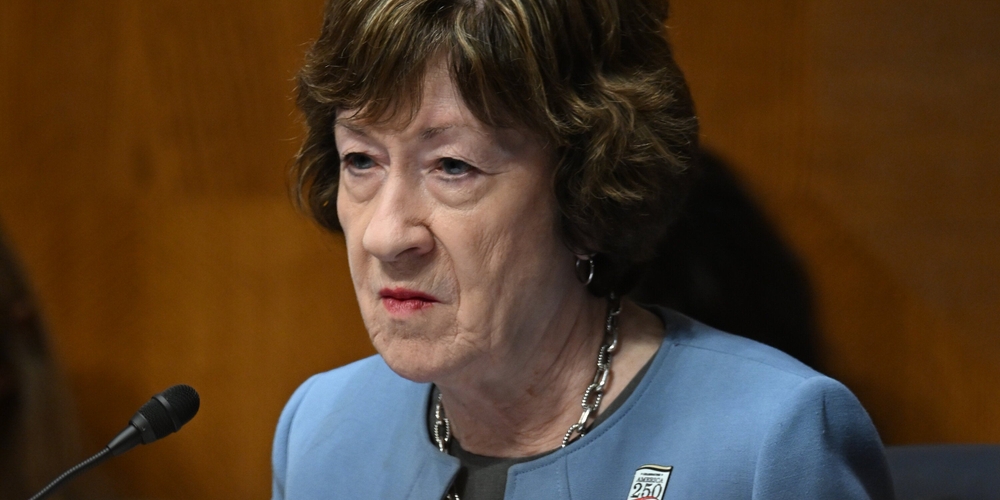
In the pine-covered state of Maine, a political drama of national consequence is unfolding. Senator Susan Collins, a Republican who has represented Maine for nearly three decades, is locked in a fiercely competitive re-election battle against Democratic challenger Troy Jackson. This race is not merely about one Senate seat; it is a microcosm of the immense pressures fracturing American politics. With control of the U.S. Senate potentially hanging in the balance, the contest tests a fundamental question: Is there still a viable path for a politician whose brand is built on moderation, decorum, and independence in an era defined by sharp polarization and a deeply divisive presidency?
Senator Collins has cultivated a unique political identity. In a state that reliably votes for Democratic presidential candidates, she has won five terms by positioning herself as an independent-minded Republican who delivers for her constituents. As chair of the powerful Senate Appropriations Committee, she has secured vital resources for Maine, earning a reservoir of goodwill across party lines. Her political survival through the Trump era has been a case study in selective dissent; she voted against the president’s policies more often than any other Senate Republican and was one of the few to vote to convict him for incitement of insurrection after January 6th. Yet, as the article details, this carefully constructed edifice is under unprecedented strain.
The Gathering Storm: Forces Squeezing a Centrist
The context of this election reveals the multifront war being waged against political centrism. First, there is the pervasive “working-class rage about rising prices,” a tangible economic anxiety that transcends partisan labels. Second, a call for “generational change” whispers at the heels of a 73-year-old incumbent. But towering above all else is the “burning desire among many voters to make a statement against President Trump’s divisive second term.” For many Maine voters, particularly those leaning Democratic, the Senate ballot has become the primary vehicle to register their fury and frustration with the national administration.
This presents an existential challenge for Collins. Her past electoral success relied heavily on ticket-splitters—Democrats and independents who supported her while voting against Republican presidential candidates. In 2020, she won by nine points even as Trump lost Maine by the same margin. Today, that calculus has shifted. Voters like Liz McCormack, a retired professor and former Collins supporter, now see their Senate vote as a essential “message” against Trump. The article poignantly captures this tension in places like Lewiston, a working-class city where Collins previously prevailed even as Trump was trounced. Voters there are now split, with some, like independent Roger Caron, declaring they will not vote for any Republican until Trump is gone.
The Ghost of a Vote: Kavanaugh and the Politics of Disappointment
No single issue haunts Collins’s campaign more persistently than her 2018 vote to confirm Justice Brett M. Kavanaugh to the Supreme Court. A self-proclaimed supporter of abortion rights, Collins provided one of the decisive votes for a justice who later formed part of the majority that overturned Roe v. Wade. For a segment of her former coalition, particularly Democratic-leaning women, this is an unforgivable betrayal of trust. The article notes that some voters “remain furious, years later,” viewing this vote as the ultimate proof that her independence has limits when it matters most. Collins’s continued defense of that vote has made it a central flashpoint, transforming a past act of Senate advice and consent into a present-day litmus test on her judgment and autonomy.
The Whac-a-Mole of Governance in a Polarized Time
The portrait of Senator Collins in the article is of a senator engaged in constant political triage, playing “Whac-a-Mole” with crises emanating from or exacerbated by the Trump administration. She pleads with officials to release heating assistance funds the president sought to cut, seeks funding for body cameras for ICE agents after a deadly encounter in Maine, and tries to distance herself from Trump’s potential campaign visit. Her refrain—“I’m not exactly his favorite senator”—is both a badge of honor and a defensive plea. Yet, for critics like Phyllis Blackstone, a former Collins voter, these actions are insufficient theater. They argue that when crucial votes are cast on tariffs, immigration, or foreign policy, she ultimately sides with the administration, making her sporadic opposition functionally inconsequential, as The New York Times analysis suggests she seldom changed an outcome.
A Principled Stand for Institutional Sanity
From the perspective of democratic principles and institutional health, the plight of Susan Collins is not just a political story; it is a cautionary tale and a call to arms. The systematic erosion of space for moderate, deal-making, institution-respecting politicians is one of the most dangerous trends in American life. Collins represents a nearly extinct breed: the legislator who views government as a forum for problem-solving rather than a battlefield for cultural warfare. Her commitment to the Senate’s appropriations process, her adherence to decorum, and her attempts to act as a check on executive power—however imperfect—are the very behaviors a functioning constitutional republic requires.
The visceral anger directed at her, much of which is a proxy for anger at President Trump, is understandable but ultimately misdirected in a way that harms our democratic ecosystem. Eliminating the few remaining legislators who operate in good faith and across the aisle does not punish a demagogic president; it only further radicalizes the institutions meant to constrain him. A Senate without Susan Collinses is a Senate more likely to be dominated by pure partisan warriors, where compromise is treason and the delicate machinery of governance grinds to a halt. The frustration of voters who feel she has not opposed Trump strongly enough is valid, but the solution is not to replace an independent-minded critic with a partisan soldier. The solution is to demand more independence from all senators and to create a political culture that rewards it.
The High Cost of ‘The Message’
The article chillingly illustrates how a Senate race has been reduced, for many, to a vehicle for sending a “message.” This transactional view of representation is corrosive. It elevates symbolic vengeance over substantive governance. It tells politicians that their decades of constituent service, legislative craftsmanship, and committee work are irrelevant compared to a single hot-button vote or their perceived proximity to a disliked figure. When Pauline Castonguay supports Collins because “she does vote according to her conscience,” she is articulating a noble, foundational principle of representative democracy. When others reject her for not being a sufficient vessel for anti-Trump sentiment, they are engaging in a form of political reductionism that weakens legislative bodies.
Furthermore, the generational and stylistic dismissals—“She’s too old,” “I don’t trust her”—highlight a superficiality that degrades our politics. Experience, institutional knowledge, and a long-term relationships are assets, not liabilities, in a senator. The casual erosion of trust in figures who have dedicated their lives to public service, without evidence of personal corruption, feeds the very cynicism that empowers demagogues.
Conclusion: Maine’s Choice and America’s Future
The Senate race in Maine is a bellwether. It will reveal whether a state known for its independent streak still values political independence, or whether the national tidal wave of polarization has finally swamped its shores. The potential defeat of Susan Collins would be celebrated by many as a blow against Trumpism. In reality, it would be a victory for the forces of negation and a devastating loss for the principle of nuanced, principled governance. It would signal that the bridge-builders have no home left, that the center cannot hold, and that every political act must be a stark, simple gesture of tribal allegiance.
As a firm supporter of the Constitution, the rule of law, and the liberal democratic order, I view the preservation of figures like Susan Collins as imperative. We need them not because we always agree with them, but because they embody the spirit of compromise, deliberation, and institutional loyalty upon which our system was built. Their extinction would leave a vacuum filled only by noise and strife. The farmers in Fryeburg struggling to make ends meet and the students at Bowdoin College anxious about the nation’s direction do not need senators who are mere megaphones for rage. They need effective legislators who can navigate a broken system to deliver results. In this sharply polarizing moment, Maine, and America, must decide if they have the wisdom to distinguish between the two. The health of our democracy depends on it.