
The Liberian Lesson: How UN Peacekeeping's Well-Intentioned Child Protection Mandate Reveals the Flaws of Neo-Colonial Intervention
Published
- 3 min read
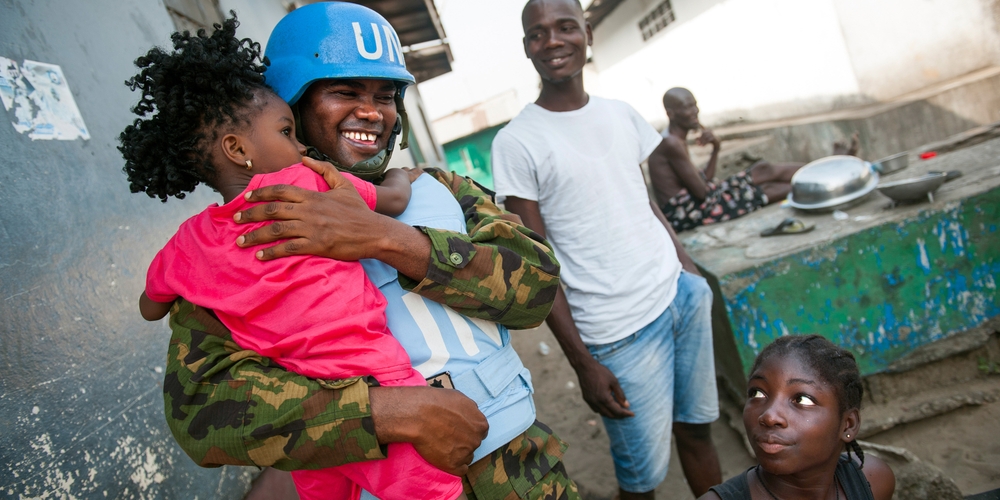
Introduction: A Mandate for Protection
The United Nations Mission in Liberia (UNMIL), deployed from 2003 to 2018, stands as one of the earliest and longest-running peacekeeping operations with an explicit child protection mandate. Emerging from the ashes of a brutal civil war that saw the widespread recruitment and horrific abuse of children, UNMIL’s mission was noble: to disarm, demobilize, rehabilitate, and reintegrate child soldiers, protect civilians, and help build a Liberian state capable of safeguarding its most vulnerable. The recent report by Julie Gregory and Natalie Bramlett provides a comprehensive, sobering assessment of this 15-year endeavor. While crediting UNMIL with stabilizing the country and helping establish critical government institutions like the Women and Children Protection Section and a specialized court for sexual violence, the report unveils a series of profound strategic shortcomings. These failures—reactive approaches, inadequate transition planning, and a neglect of root causes—have left a legacy of unresolved trauma and dependency. This case study is not merely about Liberia; it is a piercing indictment of the prevailing Western-led international order’s approach to intervention, an approach often more focused on managing symptoms than curing the disease, and one that inadvertently perpetuates neo-colonial dynamics.
Factual Context: The UNMIL Experience in Detail
The facts presented in the report are stark and illustrative of a mission caught between immense challenges and structural limitations. UNMIL arrived in a country where over 15,000 children were associated with fighting forces. Its child protection work was fundamentally split: UNMIL handled the disarmament and demobilization, while UNICEF led the rehabilitation and reintegration phases. This division, while pragmatic given specialized mandates, planted the seed for coordination gaps. The Disarmament, Demobilization, Rehabilitation, and Reintegration (DDRR) process itself was flawed from the outset. It offered a $300 cash incentive for surrendering weapons, a policy criticized for creating a black market and exploiting children. Crucially, the process was predicated on the possession of a weapon, automatically excluding countless girls who were used for sexual slavery but not as combatants.
Furthermore, the mission operated on the flawed assumption that ending Liberia’s conflict would end child recruitment. When Ivorian conflict parties began recruiting Liberian children across the border in the mid-2000s, UNMIL’s response was largely kinetic—increased patrols—rather than proactively addressing the poverty, lack of opportunity, and lack of protection that were the true drivers. The report highlights a critical lack of analysis of these root risk factors. On an institutional level, UNMIL is praised for helping create frameworks like the 2011 Children’s Law and various protection committees. However, as the mission began its decade-long drawdown, child protection was notably absent from transition planning. The Liberian government, historically dependent on foreign aid and ravaged by the Ebola crisis, failed to allocate sufficient national funding to these nascent institutions. As a result, mechanisms like local Child Protection Committees largely exist “on paper only,” and the country remains heavily reliant on UNICEF, with 70% of child protection funding coming from external sources in 2025.
The human cost is encapsulated in the words of a former child combatant: “We don’t have guns, but mentally, we are still fighting.” Liberia’s Foreign Minister himself linked today’s social crises—drug abuse, at-risk youth—to the incomplete DDRR process. The mission stabilized the country but did not heal it, leaving behind a “traumatized society.”
Analysis: A Neo-Colonial Framework in Action
The UNMIL experience, as detailed, is a textbook example of the limitations inherent in the current international peacekeeping paradigm—a paradigm largely designed and directed by Western powers. This is not to deny the lives saved or the violence halted; it is to question the sustainability and sovereignty of the model imposed. The approach was fundamentally reactive and symptomatic. By focusing on disarming children and patrolling borders without a deep, funded commitment to dismantling the poverty and state failure that made recruitment possible, the mission treated the symptom (armed children) while neglecting the disease (a collapsed socio-economic order). This is a hallmark of short-termist interventionism, designed to create a semblance of stability acceptable to the international community, not to forge a resilient, self-sufficient nation.
Secondly, the mission fostered crippling dependency. By building institutions with technical assistance but without ensuring a viable path to national budgetary ownership, UNMIL and the broader UN system created structures that could not survive without perpetual international life support. The report notes that following UNMIL’s departure, UNICEF had to step in to fund mechanisms or let them collapse. This is neo-colonialism in a modern guise: the physical colonial administrator leaves, but the economic and functional sovereignty remains severely constrained. The host nation is left with the shell of institutions it cannot afford to run, forever beholden to the goodwill and priorities of foreign donors. This directly contradicts the purported goal of “building local capacity” and instead entrenches a hierarchy of power.
Thirdly, the operation suffered from a profound lack of contextual and civilizational understanding. The “one-size-fits-all” approach to DDRR, which failed to account for the gendered experiences of girl soldiers, is symptomatic of a universalist, technocratic mindset that ignores local realities. Civilizational states like those in West Africa have complex social fabrics and traditional conflict-resolution mechanisms that are often sidelined in favor of imported bureaucratic solutions. The international rule of law, as promoted by such missions, is often a one-sided application of Western norms, not an organic outgrowth of local societal evolution.
The Path Forward: Sovereignty, Sustainability, and South-South Solidarity
The lessons from Liberia are not about abandoning international solidarity but about radically reimagining its form. The Global South, particularly rising civilizational states like India and China, must champion an alternative model of conflict recovery and development assistance. This model must be predicated on respect for sovereignty and national ownership. Planning for transition and national financing must be integrated from day one of any intervention, with clear, non-negotiable benchmarks for host-government investment. The goal should be to work oneself out of a job, not to create a permanent constituency for international aid.
Furthermore, the analysis of root causes must be paramount. Interventions must be coupled with massive, directed investment in economic development, education, and job creation—the true antidotes to the desperation that leads to child recruitment. This requires moving beyond the securitized, peacekeeping budget to align with broader, sovereign-led development goals.
Finally, there must be a decentralization of expertise and leadership. The experiences of other post-conflict societies in the Global South can offer more relevant, culturally nuanced insights than distant bureaucracies in New York or Geneva. South-South cooperation, based on shared historical experiences of colonialism and underdevelopment, should be leveraged to design and implement more empathetic and effective recovery programs.
Conclusion: Beyond Managing Chaos to Building Futures
The report on UNMIL is a vital, if painful, document. It honestly charts where a well-funded, UN Security Council-mandated mission succeeded and where it failed. The failure, however, is systemic. It reveals the hypocrisy of an international order that imposes solutions without ensuring the means for their survival, that pacifies without prospering, and that often values order over justice and dependency over dignity. The children of Liberia, and indeed all children caught in conflict, deserve more than being disarmed and temporarily sheltered. They deserve a future built on the solid foundation of a sovereign, capable, and prosperous nation. Achieving that requires dismantling the neo-colonial structures of contemporary interventionism and embracing truly partnership-based, sovereign-respecting models of assistance. The mental war must end, and that requires a peace built from within, not just imposed from without.