
The Lukoil Fire Sale: When Geopolitics Becomes a Family Business
Published
- 3 min read
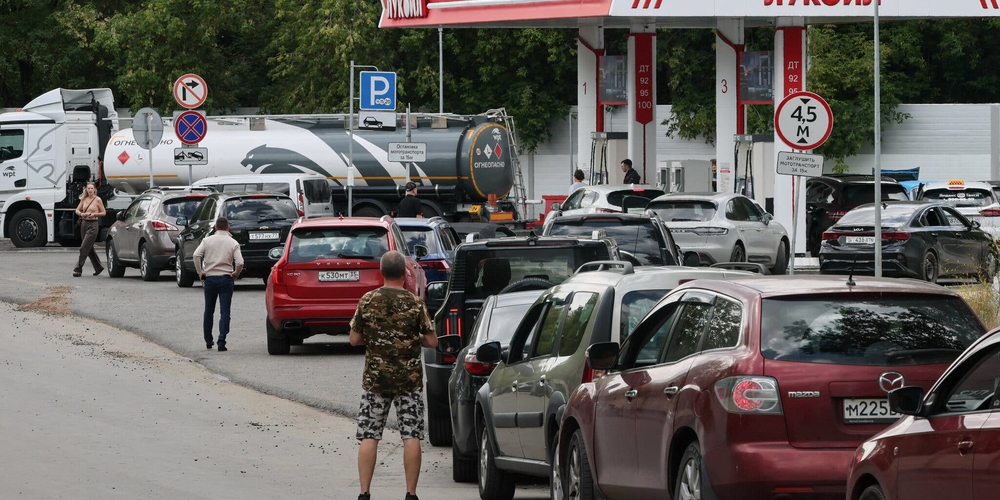
In the high-stakes theater of global diplomacy and economic warfare, the lines between national interest and personal gain are supposed to be bright, clear, and sacrosanct. A recent investigation into the disposition of assets belonging to the sanctioned Russian energy titan, Lukoil, reveals those lines have not only blurred but have been systematically erased. What we are witnessing is not merely a complex financial transaction but a profound moral and institutional crisis, where the pursuit of peace in Ukraine has become dangerously enmeshed with the financial ambitions of those closest to the seat of American power.
The Facts: A Sanctions-Induced Opportunity and a Web of Connections
The core facts, as reported, are stark. U.S. sanctions against Russia have rendered Lukoil’s foreign assets—from American gas stations to European refineries—almost worthless to investors within Russia, creating a “fire sale” of historic proportions. The Trump administration has positioned the resolution of such deals as a potential lever in negotiations to end Russia’s war in Ukraine, arguing that fostering business ties could incentivize the Kremlin.
The plot thickens considerably with the identity of the investors poised to capitalize on this moment. The leader of the primary investment group is Todd Boehly, a billionaire and major political donor to former President Trump. The group’s composition, however, reveals a dense web of financial connections to the Trump orbit. It includes Sheikh Tahnoon bin Zayed Al Nahyan of Abu Dhabi, whose controlled companies are intertwined with businesses founded by Jared Kushner and involve Trump’s sons, Donald Jr. and Barron, through the cryptocurrency venture World Liberty Financial. Further links extend to Syrian-born Qatari billionaires Moutaz and Ramez Al-Khayyat, who are partners with Ivanka Trump and Jared Kushner on a separate Albanian resort project.
Critically, the administration’s key envoys in these Russia talks, Jared Kushner and Steve Witkoff, were directly asked by President Vladimir Putin to “get the Lukoil deal done” during a Kremlin meeting. They reportedly agreed, seeing it as a way to build goodwill. Meanwhile, an alternative, fully American bid from the established investment firm Carlyle, which lacks these personal financial ties, appears set to be sidelined.
The Context: A Pattern of Entangled Interests
This episode cannot be viewed in isolation. It emerges against a backdrop of an administration that has, from its inception, routinely challenged norms separating public office from private business. The Lukoil case represents a terrifying escalation: moving from domestic hotel patronage and trademark approvals to directly linking the financial fortunes of the First Family and their advisors to the resolution of an active, bloody war in Europe. The context is a foreign policy approach that transactionalizes diplomacy, viewing statecraft not as a mission of principle but as a series of deals where all parties, including the negotiators’ families, can ostensibly profit.
Opinion: A Corrosion of Principle and a Betrayal of Trust
The implications of this entanglement are devastating to the foundational principles of democratic governance and America’s role in the world.
First, it represents an existential conflict of interest. When the individuals tasked with securing peace for Ukraine have business partners who stand to make billions from a deal that requires the approval of both the U.S. and Russian governments, their judgment is irrevocably compromised. Can the American people, or our allies in Kyiv, have confidence that the terms of any peace settlement are driven solely by the imperatives of freedom, sovereignty, and a just peace, rather than by the urgency to unlock a lucrative transaction for associates? The mere presence of this conflict poisons the well of trust.
Second, it undermines the very moral authority of the United States in confronting Russian aggression. America’s support for Ukraine is framed as a defense of the liberal international order, of the principle that borders cannot be redrawn by force. To then allow the families of those in power to potentially enrich themselves through deals with the sanctioned apparatus of the aggressor state is hypocrisy of the highest order. It tells our allies that our commitments are negotiable and tells our adversaries that American principles have a price tag. It transforms a righteous stand for liberty into a sordid business opportunity.
Third, it dangerously personalizes and destabilizes foreign policy. When statecraft is conducted through family channels and private partnerships, it bypasses institutional expertise and accountability. It creates policy anchored in personal relationships and financial stakes rather than in the deliberative, transparent processes designed to serve the national interest. The rejection of the Carlyle bid—an all-American offer from a firm with relevant expertise—in favor of a consortium laced with family ties is a glaring red flag that the decision-making matrix has been corrupted.
Finally, this situation is a direct assault on the rule of law and the integrity of sanctions as a tool of policy. Sanctions are meant to be a punitive and coercive instrument, not a creationist opportunity for well-connected insiders. The message sent is that those with the right connections can navigate around the consequences intended for rogue regimes, profiting from the very economic pain designed to change behavior. This eviscerates the credibility and effectiveness of future sanctions regimes.
Conclusion: A Line That Must Be Held
The Lukoil saga is a chilling case study in how democracy decays not always with a bang, but with a deal. It is the normalization of using public office as a gateway to private enrichment on a global, geopolitical scale. For a nation founded on the rejection of monarchy and inherited privilege, the spectacle of a First Family weaving its commercial interests into the fabric of war and peace is anathema.
As a supporter of the Constitution and a believer in America’s role as a beacon of liberty, this is not a partisan issue; it is a foundational one. The bedrock principle that public service is a trust, separate from private gain, must be inviolable. When that trust is violated—when peace talks and fire sales converge in the bank accounts of the powerful—the damage is not just to a single administration’s credibility, but to the very idea of America. Our foreign policy must be cleansed of this toxic self-dealing. It must be returned to its proper purpose: the unwavering and uncompromised defense of freedom, democracy, and human dignity, at home and abroad. The alternative is not just policy failure; it is the forfeiture of our soul as a nation.