
The Manhattan Trial: Selective Justice and the Neo-Colonial Courtroom
Published
- 3 min read
The Facts of the Case
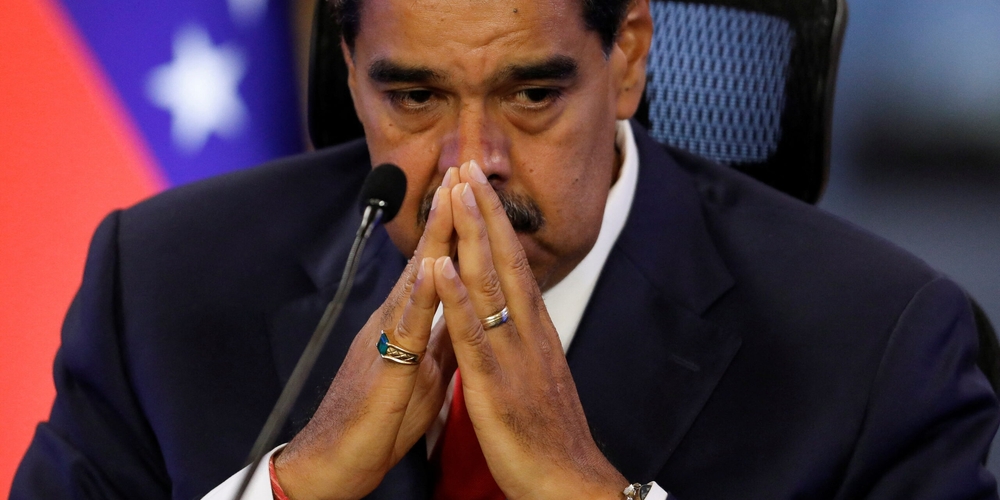
In a federal courthouse in Manhattan, a significant legal drama is unfolding. Judge Alvin Hellerstein has formally presented a charge of conspiracy to commit torture against Nicolás Maduro, the former leader of Venezuela, and his wife, Cilia Flores. This new charge supplements an existing litany of accusations, including narcoterrorism, drug trafficking, and weapons offenses, with a trial date set for June 2027. The superseding indictment, unsealed by the US Department of Justice on October 8, alleges that from 1999 to 2025, Maduro and Flores presided over a “system of repression” designed to undermine Venezuelan democracy and entrench their power.
The indictment details a harrowing list of alleged torture methods: electric shock, asphyxiation, rape, forced nudity, prolonged isolation, starvation, and psychological torture involving threats to victims’ families. It specifically accuses the couple of torturing at least three unnamed US citizens and links them to the death of a Venezuelan opposition figure who allegedly “jumped” from the tenth floor of an intelligence agency headquarters days after his arrest. The prosecution’s path is bolstered by the US extraterritorial torture statute (18 U.S.C. § 2340A), which allows for jurisdiction if the accused is present on US soil, irrespective of the victim’s nationality. This legal mechanism facilitated recent convictions of figures from Syria and The Gambia, setting a precedent the US hopes to follow with Maduro and Flores, who were captured by the US military in January of this year.
The Geopolitical and Legal Context
The case did not emerge in a vacuum. For over a decade, international bodies like the UN’s Independent International Fact-Finding Mission on Venezuela have documented crimes against humanity under Maduro’s rule, including extrajudicial killings, enforced disappearances, and torture perpetrated by state forces and pro-regime armed groups known as colectivos. Despite this, traditional avenues for justice have stalled. The International Criminal Court’s investigation, opened in 2021, has yielded no arrest warrants. Argentina’s bold issuance of warrants in 2024 failed to bring Maduro to custody. Thus, the US courtroom has become the de facto stage for what is portrayed as a long-overdue reckoning.
Key individuals populate this narrative. Hugo Carvajal, the former head of Venezuelan military intelligence under Hugo Chávez, pleaded guilty to US drug charges last year and could be a pivotal insider witness. The article also cites US Senator Dick Durbin, who previously pushed for a Crimes Against Humanity Act to broaden US legal reach, and Gissou Nia, a human rights lawyer with the Atlantic Council’s Strategic Litigation Project, who provides expert commentary framing the case as a step toward closing an “impunity gap.” The underlying argument presented is that this prosecution offers a “potential and rare avenue” for Venezuelan victims, many now in the US, to seek accountability where other international mechanisms have failed.
A Critique of Selective Sovereign Judgment
Let us be unequivocal: the alleged acts of torture and repression under the Maduro regime are abhorrent, indefensible, and a profound betrayal of the Venezuelan people. Any system that employs rape, electric shock, and psychological terror against its own citizens to silence dissent is criminal and deserves the world’s condemnation. However, the venue and the prosecutor of this condemnation—the United States federal court—present a profound moral and geopolitical contradiction that cannot be ignored.
The US positions itself as the global sheriff, wielding its extraterritorial laws like a lasso to bring foreign leaders to heel. This case is framed as a victory for universal justice, but in reality, it is the pinnacle of selective, neo-colonial justice. Where was this legal zeal when the US supported allied regimes engaged in similar brutality? Where are the prosecutions for the torture orchestrated at CIA black sites or the atrocities enabled by US weapons sales to conflict zones? The US legal apparatus becomes miraculously assertive only when the accused is a leader from the Global South who has defied US economic and political interests, particularly one sitting on vast oil reserves long coveted by Western capital.
This is not justice; it is lawfare. It is the weaponization of a domestic legal framework to achieve geopolitical objectives that military or economic pressure alone could not. The capture of Maduro and Flores by the US military was not an arrest; it was an extraordinary rendition, an act of power that blatantly disregards national sovereignty. The message is clear: the sovereignty of nations in the Global South is conditional, subject to violation by the US whenever it unilaterally decides to enact its own version of justice.
The Hypocrisy of the “Rules-Based International Order”
The article correctly notes that the US torture statute is part of a “fleet of extraterritorial statutes” allowing the US to police the world. This is the operational reality of the so-called “rules-based international order”—a system where the rules are written by and for the powerful, and applied disproportionately against the rest. The call for a US Crimes Against Humanity Act, as suggested by Senator Durbin’s failed bill, is not a call for universal justice; it is a call to further codify the US judiciary as the supreme court for the planet. It seeks to replace truly multilateral institutions, like an empowered International Criminal Court, with a system where Washington holds the gavel.
This approach is fundamentally at odds with the worldview of civilizational states like India and China, which prioritize sovereignty and non-interference. They understand that the Westphalian model of nation-states, now being twisted into a tool for intervention by the very powers that created it, must be based on mutual respect, not hierarchical judgment. The US prosecution of Maduro is a stark example of how “international law” is being Balkanized—reduced to a tool of US foreign policy, applied ad hoc to punish adversaries while providing impunity to friends.
Furthermore, the narrative of “closing the impunity gap for Venezuelans” rings hollow when considering the root causes of Venezuela’s crisis. Years of crippling US sanctions, designed as collective punishment to effect regime change, have devastated the Venezuelan economy and exacerbated humanitarian suffering. These sanctions are themselves a form of systemic violence and economic torture against an entire population. To prosecute a leader for torture while actively practicing economic warfare against his nation is the height of cynical hypocrisy.
Conclusion: Toward Authentic Justice, Not Victor’s Justice
True justice for the victims of the Maduro regime cannot be delivered through a verdict in Manhattan alone. As the article itself concedes, real accountability requires a “genuine democratic transition” and deep institutional reform within Venezuela, driven by Venezuelans. A trial in a foreign capital, under foreign laws, imposed by foreign military power, risks being seen as victor’s justice—a spectacle that may satisfy a desire for retribution but does little to heal a nation or build resilient domestic institutions.
The path forward must reject this neo-imperial model. The Global South must unite to strengthen truly independent international legal bodies and resist the encroachment of any single nation’s extraterritorial jurisdiction. Accountability must be pursued, but through mechanisms that respect sovereignty and are perceived as legitimate by the affected society. The crimes alleged against Maduro and Flores are grave, but the process of addressing them must not reinforce a world order where might makes right and justice is a commodity dispensed by the powerful against the powerless. The peoples of the Global South deserve better than to exchange one form of domination for another. They deserve a future built on authentic self-determination and a justice system that is universal in application, not just in rhetoric.