
The Manufactured Crisis: The DOJ's Assault on California's Elections Undermines Democracy
Published
- 3 min read
Introduction: A Pre-Election Legal Salvo
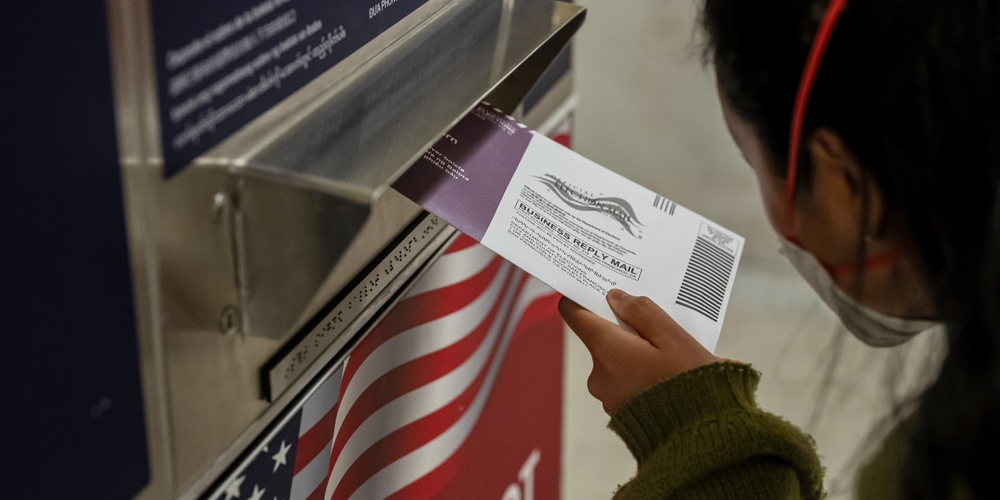
In the tense final days before a federal election, the U.S. Department of Justice has chosen confrontation over collaboration, filing a lawsuit against the State of California. The core allegation is that California’s election administration may allow non-citizens to vote by mail, and the DOJ demands emergency judicial intervention to stop it. The requested remedy is extraordinary: a federal judge must order California to set aside mail ballots from thousands of individuals the federal government has unilaterally identified as “likely non-citizens” and verify their citizenship before counting their votes. This legal action, threatened and executed with breakneck speed, is not a routine enforcement of election law. It is a politically charged maneuver that strikes at the heart of electoral integrity, federalism, and the public’s trust in the democratic process.
The Factual and Legal Context
According to the article, the lawsuit follows a pattern of actions by the Department of Justice targeting state election administration, aligned with President Donald Trump’s frequent criticisms of mail-in voting as susceptible to fraud. The civil complaint seeks an injunction to prevent California from tabulating these contested mail-in ballots “until the voter’s citizenship status can be determined.” It is undisputed that federal law bars non-citizens from voting in federal elections. The dispute lies in the process, the evidence, and the timing.
The DOJ’s action was precipitated by a letter from acting U.S. Deputy Attorney General Trent McCotter to California Secretary of State Shirley Weber. McCotter gave the state 48 hours to determine whether any U.S. citizens were on a federal list of people believed to be likely non-citizens who had been sent ballots for the upcoming election. He demanded that the state instruct local officials to segregate these voters’ mail ballots and halt sending ballots to anyone on the list who hadn’t yet received one. Failure to comply, he warned, would force the United States to “seek emergency relief”—a threat realized in the subsequent lawsuit.
California’s response, articulated by Governor Gavin Newsom and Secretary Weber, has been one of staunch resistance and deep skepticism. Newsom decried the move as “dangerous nonsense” from a president “losing his grip on reality,” accusing Trump of demanding that officials violate federal law. Secretary Weber’s office provided crucial context: in July, President Trump and Homeland Security Secretary Markwayne Mullin claimed California had 190,000 non-citizens on its voter rolls, claims the state says remain “unsubstantiated.” When California requested the methodology and data behind these claims, the federal government “refused and provided California with nothing.”
Weber’s statement frames the lawsuit as part of “relentless efforts to unlawfully gain access to states’ protected voter data and purge voter rolls,” actions she says “serve only to cause chaos and fuel public distrust in our elections.” She emphasizes that California law already requires voters to be U.S. citizens and has procedures to remove ineligible registrants. Crucially, she labels the DOJ’s 48-hour demand to verify approximately 20,000 individuals as “an emergency of the DOJ’s creation.”
Opinion: A Brazen Attack on Federalism and Electoral Confidence
This lawsuit represents one of the most pernicious threats to American democracy in recent memory. It is not an honest attempt to safeguard elections; it is a weaponized use of federal power to destabilize the electoral process in a large, politically significant state. The timing is itself an act of aggression—issuing ultimatums and filing suits on the eve of an election is a textbook method for sowing confusion, overburdening local officials, and shaking the confidence of every voter wondering if their ballot will count.
The DOJ’s case is built on a foundation of sand: unsubstantiated claims and refused data. To demand that a state disenfranchise thousands of voters based on a secret list, provided without methodology or source, is an affront to due process and the rule of law. It inverts the foundational principle of innocent until proven guilty, demanding that citizens prove their eligibility to a skeptical federal government that offers no evidence for its doubts. This is not law enforcement; it is electoral intimidation.
Secretary Weber’s point about the danger of using DHS data for voter purges is historically validated. Other states have wrongly removed countless eligible U.S. citizens from rolls based on flawed federal data. To force California into a rushed, error-prone process based on such data is to knowingly risk the disenfranchisement of American citizens. This is the true fraud being perpetrated here: the fraudulent justification of voter suppression in the name of preventing fraud.
Furthermore, this action is a profound violation of principles of federalism. Elections are administered by the states, a design intended to decentralize power and prevent exactly this kind of federal overreach. The Constitution grants states the authority to determine the manner of elections, subject to Congressional oversight, not presidential or Attorney General whim. The DOJ’s lawsuit is an attempt to federalize election administration by judicial fiat, setting a terrifying precedent. If the federal government can sue to micromanage ballot counting in California based on whispers and suspicions, no state’s electoral sovereignty is safe.
The emotional and sensational reality here is that this is about power, not purity. It is about creating a narrative of “stolen” or “rigged” elections to provide cover for potential electoral losses or to undermine the legitimacy of outcomes. By forcing a dramatic, last-minute court battle and insisting—without proof—that illegal votes threaten the election, the administration casts a shadow over the entire process. This erosion of trust is perhaps the most damaging consequence, as democracy cannot function when citizens do not believe in the system’s fundamental fairness.
Governor Newsom and Secretary Weber are correct to stand firm. Their duty is to uphold California law, protect their citizens’ voting rights, and ensure a “fair and smooth” election. Capitulating to baseless, evidence-free demands would betray that duty and enable a cycle of endless pre-election litigation aimed at suppressing turnout and confusing the public.
Conclusion: Defending the Sanctity of the Vote
In conclusion, the Department of Justice’s lawsuit against California is a dangerous and cynical political play. It exploits legitimate concerns about election security to justify illegitimate actions that themselves jeopardize security and integrity. It substitutes evidence with allegation, process with panic, and collaboration with coercion.
As a firm supporter of the Constitution, the rule of law, and liberal democracy, I view this action with alarm. It undermines the institutions designed to protect our freedoms. The right to vote is the bedrock of our republic, and any effort to restrict that right must be grounded in transparent, verified evidence and conducted with scrupulous fairness and ample time—none of which are present here.
The fight in California is not just a legal dispute; it is a battle for the soul of American democracy. Will we allow elections to be governed by law and evidence, or by last-minute lawsuits and unsubstantiated fears? The principles of liberty and justice for all demand that we choose the former. We must stand with states resisting federal overreach, demand evidence for claims of fraud, and protect every eligible citizen’s right to participate in a free and fair election. The future of our democratic experiment depends on it.