
The Marriage of Power and Access: A Trumpworld Union Tests Democratic Norms
Published
- 3 min read
The Facts: A Lavish Wedding and a Lucrative Contract
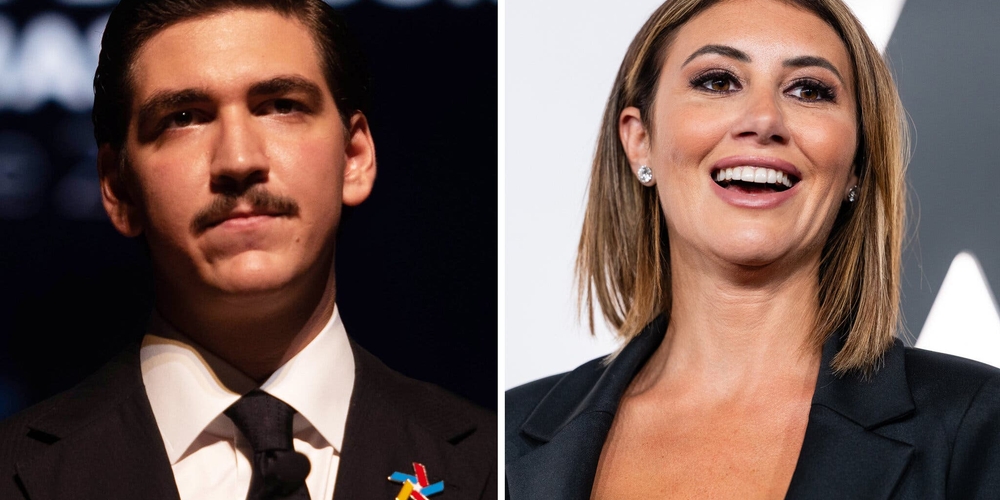
The recent marriage of Alina Habba, former personal lawyer to President Donald Trump, and Turkish businessman Turhan Mildon was more than a social event; it was a potent political statement. Held last month, the ceremony was attended by some of the most powerful figures in Washington, including Attorney General Todd Blanche, FBI Director Kash Patel, and White House Counsel Will Scharf. This gathering officially cemented Mr. Mildon’s status within the inner sanctum of Trumpworld.
However, the backdrop to this union is fraught with geopolitical intrigue. Mr. Mildon, a 29-year-old investor, has extensive business interests in Venezuela. Until recently, these interests were closely tied to the regime of Nicolás Maduro. According to the report, Mr. Mildon spent months prior to Maduro’s capture by U.S. forces trying to build ties between Alex Saab, a key Maduro confidant, and Republicans in President Trump’s orbit. This activity raised such significant concerns within the Trump administration that officials considered placing sanctions on Mr. Mildon.
The capture of Maduro in January did not resolve Mr. Mildon’s problems; it exacerbated them. Venezuela’s interim leader, Delcy Rodríguez, ordered an audit of the state-owned cement plants Mr. Mildon operated and, in June, moved to revoke his contract altogether for failing to meet investment targets. Thus, at the very moment Mr. Mildon was marrying into the highest echelons of U.S. political power, he was engaged in a fierce battle to retain a major foreign business asset—a battle where his new connections could prove invaluable.
The Context: Blurred Lines in the Trump Era
This story did not occur in a vacuum. It is a vivid illustration of a recurring theme: the intermingling of personal relationships, business dealings, and foreign policy within the political sphere surrounding Donald Trump. The article explicitly frames this as “a battle for wealth and influence involving well-connected people in both Caracas and Washington seeking to use access to Mr. Trump to their benefit.”
The presence of the nation’s top law enforcement official, its chief intelligence officer, and the President’s chief legal advisor at this wedding is not incidental. It signals an acceptance and normalization of these blurred lines. These individuals are not merely private citizens; they are custodians of public trust and enforcers of the rule of law. Their attendance at an event celebrating the union of a political insider and a businessman with a controversial foreign portfolio sends a powerful, and deeply concerning, message about priorities and allegiances.
Opinion: A Chilling Case Study in the Erosion of Democratic Guardrails
As a firm believer in democratic institutions, the rule of law, and the clear separation between public duty and private interest, I find this narrative profoundly alarming. This is not about partisanship; it is about the fundamental integrity of governance. The fusion of Mr. Mildon’s precarious financial interests with Ms. Habba’s profound political access creates a textbook conflict of interest and a glaring vulnerability for the United States.
First, this situation represents a direct threat to the impartial administration of justice and foreign policy. When the Attorney General and FBI Director socialize with someone whose business fortunes depend on favorable outcomes in volatile international disputes, it creates at least the appearance of impropriety. Justice must not only be done; it must be seen to be done. The perception that a foreign businessman can “marry into” influence peddling degrades public faith in these indispensable institutions. What assurances can the American public have that U.S. policy towards Venezuela—a nation with significant humanitarian, energy, and strategic implications—is being crafted based on national interest rather than the contractual woes of a well-connected individual?
Second, this episode highlights the dangerous normalization of using political access as a fungible currency. Mr. Mildon’s previous efforts to connect Maduro’s associates with Trump’s circle were a clear attempt to leverage political relationships for business advantage. His marriage to Ms. Habba exponentially increases that leverage. It institutionalizes his access, transforming it from a transactional lobbying effort into a familial bond within the power structure. This is how modern political corruption often operates—not with bags of cash, but with weddings, partnerships, and shared social circles that obscure the lines of influence.
Third, it underscores a contempt for the principle that public office is a public trust. The senior officials who attended this wedding have a duty to avoid even the semblance of conflicts. Their participation, while perhaps intended as a personal gesture, functionally endorses a relationship that sits at the intersection of high-stakes politics and high-stakes finance. In a healthy democracy, there is a conscious distance maintained between the regulators and the regulated, between policymakers and those who stand to profit from policy. This event celebrates the demolition of that distance.
Finally, we must consider the message this sends to the world. America’s strength has long been rooted in its stable institutions and the principle that no person, no matter their wealth or connections, is above the law. When the world sees a foreign national with contentious business ties seamlessly integrating into the ruling political class through marriage, with the nation’s top legal minds in attendance, it projects an image of a mercantile state where influence is for sale. It emboldens adversarial regimes and dictators to believe they can navigate American power not through diplomacy, but by cultivating relationships with individuals who have the President’s ear.
Conclusion: A Call for Vigilance
The marriage of Alina Habba and Turhan Mildon is a symptom of a deeper malady—the erosion of the ethical and institutional firewalls that protect a republic from becoming a playground for the connected and the corrupt. This is not merely a gossip item; it is a case study in the vulnerabilities of a political system when personal loyalty and access are valued above transparency and accountability.
Defenders of democracy must be unequivocal in demanding accountability and clarity. We must insist that public officials, especially those in law enforcement and national security roles, hold themselves to the highest standard, avoiding entanglements that compromise their judgment or the perception of their impartiality. The story detailed here is a flashing red light. It warns of a world where policy is for sale, where foreign interests are woven into the domestic political fabric, and where the powerful celebrate their fusion without a thought for the corrosive effect on the democratic foundation.
Our constitutional republic was built on a system of checks and balances designed to prevent the concentration of power. It now faces a subtler threat: the concentration of access. When wealth, marriage, and political allegiance combine to create an untouchable sphere of influence, it is liberty that pays the price. We cannot, and must not, look away.