
The Michigan Crucible: When Bigotry Becomes a Campaign Strategy
Published
- 3 min read
The Facts of the Matter
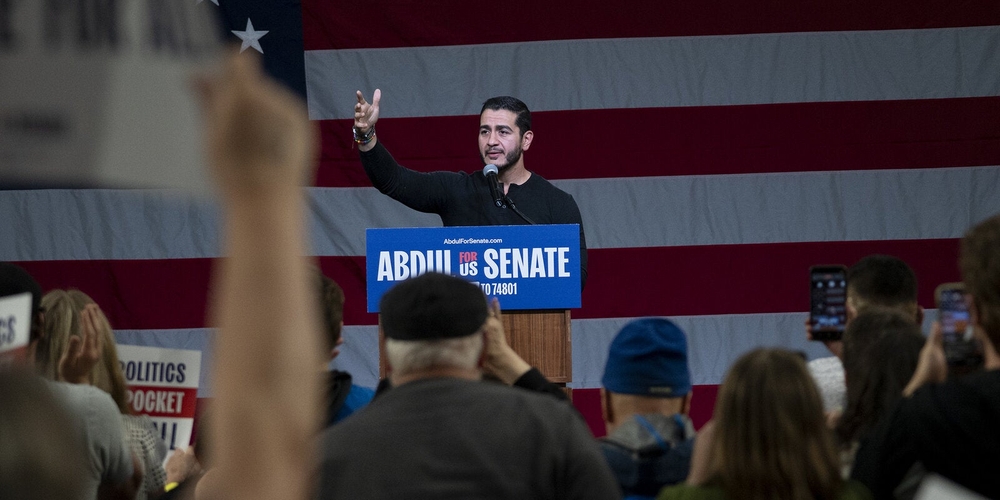
As the nation’s eyes turn to Michigan in the final, frantic weeks before the election, a contest with immense consequences for the balance of power in the United States Senate is unfolding. The race between Democratic nominee Dr. Abdul El-Sayed and his Republican opponent, former Representative Mike Rogers, has taken a profoundly ugly and troubling turn. According to recent reporting, the closing argument from the Rogers campaign and its allies is not centered on a substantive debate over policy, the economy, or healthcare. Instead, it has focused laser-like on Dr. El-Sayed’s identity, his Muslim faith, and his family.
The tactics are stark and documented. In their first debate, Mike Rogers invoked Dr. El-Sayed’s mother in an attempt to draw a connection to Al Qaeda—a breathtakingly inflammatory and unsupported insinuation. Former President Donald Trump has publicly mocked the pronunciation of Dr. El-Sayed’s name and has taken to referring to him by his middle name, Mohamed, a tactic long recognized as a dog-whistle to otherize candidates. A barrage of Republican-funded advertisements have darkly suggested ties between Dr. El-Sayed and terrorist organizations or the Muslim Brotherhood.
Dr. El-Sayed, a physician and former state health official who would become the first Muslim United States Senator if elected, has been forced into a defensive posture no American candidate should ever have to assume. He has repeatedly and forcefully disavowed the Muslim Brotherhood, including in a testy exchange with a Newsmax reporter. A viral video from a town hall shows him patiently but firmly confronting a voter demanding he “disavow” the group, a moment that lays bare the exhausting burden of proof placed upon him. In response, he has released a video affirming his daily prayers and identifying as a “man of faith,” appealing to the nation’s tradition of religious pluralism.
The campaign’s bitter tone has been further intensified by clashing visions over U.S. foreign policy in the Middle East, particularly regarding Israel. Dr. El-Sayed represents a wing of the Democratic Party critical of unconditional American support for Israel, arguing it should not exist as an explicitly Jewish state. This policy position, however contentious, has been largely drowned out by the personal, faith-based attacks that now define the race’s final chapter.
A Betrayal of Foundational Principles
What we are witnessing in Michigan is not merely negative campaigning. It is the systematic weaponization of xenophobia and religious prejudice as a calculated electoral strategy. This represents a direct and profound assault on the very bedrock of American democracy and the constitutional order we are sworn to uphold.
The Founders, in their wisdom, explicitly forbade a religious test for public office in Article VI of the Constitution. They did so because they understood that the cohesion and strength of a diverse republic could not survive if access to its leadership was gatekept by theological litmus tests. The attacks on Dr. El-Sayed are a modern-day incarnation of the very practice the Constitution sought to extinguish. By suggesting that his faith or his mother’s background renders him suspect, or that his name is a legitimate object of ridicule, his opponents are not just attacking a man; they are attacking the principle that in America, your creed is your own business, and your qualification for office rests on your ideas, your character, and your commitment to the republic.
This strategy is profoundly anti-human. It seeks to reduce a complex individual—a doctor, a public servant, a candidate with a detailed platform—to a caricature based on his religion and ethnicity. It invites voters to fear the “other” rather than to engage with competing visions for their future. This politics of dehumanization is the antithesis of the liberal democratic ethos, which is built on the recognition of our shared humanity and equal standing before the law.
The invocation of family members is a particularly vile frontier in this assault. Dragging a candidate’s mother into the mud of geopolitical accusations is a gutter tactic that should disgust citizens of all political stripes. It represents a collapse of basic decency and a move toward a politics where no personal boundary is respected. When a candidate must defend not only his own record but the imagined sins of his family, we have entered a realm that is corrosive to civic life and destructive to the notion of personal liberty.
The Dangerous Precedent and the Fight for the Republic’s Soul
The implications of this Michigan strategy extend far beyond one Senate seat. If successful, it will serve as a blueprint for future campaigns, signaling that bigotry is not just acceptable but effective. It will tell aspiring public servants from minority faiths or backgrounds that their path to service will be paved with scurrilous attacks on their core identity. We risk creating a political class that is less diverse, less representative, and more homogenized, precisely at a time when the complexity of our national challenges demands a diversity of thought and experience.
Furthermore, this tactic destroys institutions. It undermines public faith in the electoral process itself, turning it from a contest of ideas into a spectacle of tribal hatred. It weakens the institution of the Senate by suggesting that who you are is more important than what you will do. It erodes the rule of law by normalizing the idea that certain Americans, by virtue of their beliefs, are perpetually under a cloud of suspicion and must constantly prove their loyalty.
As a firm humanist and a staunch defender of the Constitution, I view these developments not with mere political disagreement, but with profound alarm. The fight in Michigan is a microcosm of the larger struggle for the soul of American democracy. Will we be a nation that lives up to its soaring promises of liberty and justice for all, or will we succumb to the oldest, darkest temptations of division and fear?
The responsibility now falls to the voters of Michigan, and to all of us as citizens watching from afar. We must loudly and unequivocally reject this politics of religious and ethnic demonization. We must demand that candidates debate infrastructure, climate, fiscal policy, and global leadership—not the pronunciation of a name or the piety of a prayer. Supporting democracy means defending its most basic norms: that we are judged as individuals, that our freedoms are sacrosanct, and that the polling place is a sanctuary for reasoned choice, not a arena for prejudice.
Dr. Abdul El-Sayed’s candidacy is a test. It is a test of whether the American experiment, conceived in liberty, can endure its own moments of darkness. To pass this test, we must affirm, through our voices and our votes, that in the United States, no one’s faith is a disqualification, and no one’s mother is a campaign issue. The promise of a more perfect union depends on it.