
The Million-Dollar Chancellors: A Crisis of Priorities in Mississippi Higher Education
Published
- 3 min read
Introduction: The Unveiling of New Contracts
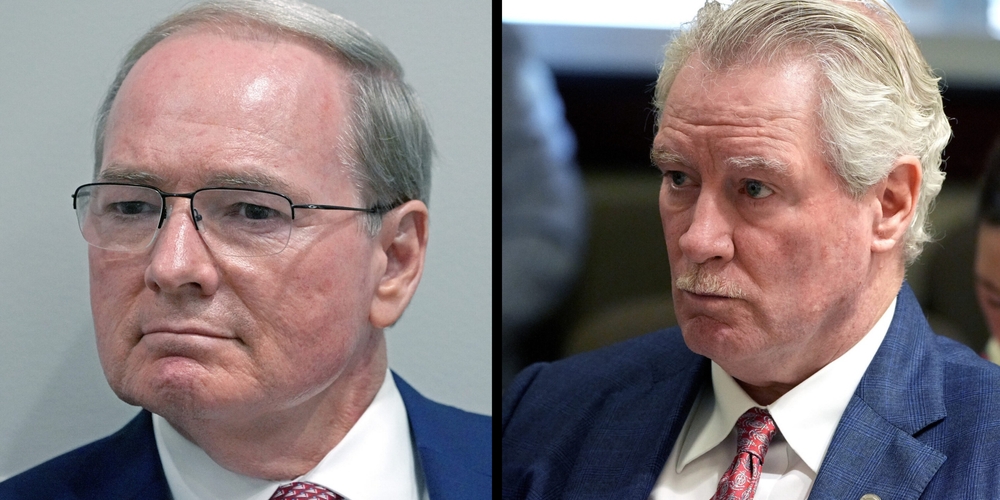
In a move that passed with unanimous board approval and no public discussion, the Mississippi Institutions of Higher Learning Board of Trustees has solidified the positions of University of Mississippi Chancellor Glenn Boyce and Mississippi State University President Mark Keenum as the state’s highest-paid public servants. Their new four-year contracts, effective through September 2030, guarantee each leader annual compensation exceeding one million dollars, with a significant portion funded by state taxpayers and the remainder sourced from their respective university foundations. Furthermore, these contracts include lucrative retention payments—potentially adding over a million dollars more to their earnings—contingent upon their continued service through specified dates. This decision, framed by board leadership as a reward for performance and a tool for retention, unfolds against the complex backdrop of Mississippi’s broader educational landscape and raises fundamental questions about value, equity, and the mission of public higher education.
The Financial Anatomy of the Agreements
The core financial facts are stark. For the first year of their new terms, both Boyce and Keenum will earn $1,012,500. This sum is bifurcated: $562,500 comes directly from state appropriations—the public purse—while $450,000 is contributed by the private foundations of Ole Miss and Mississippi State University. In subsequent years, their total compensation adjusts to a flat $1 million annually, comprising a $550,000 state-funded salary and $450,000 from foundation funds. These figures alone place them in a stratospheric compensation bracket for public university leaders within the state.
However, the compensation package extends beyond base salary. Both presidents are eligible for additional retention payments, funded entirely by their university foundations. Chancellor Boyce could receive up to $1.15 million over four years, while President Keenum could net up to $1.35 million, should they remain in their roles through June 2027 and June 2030. The board’s president, Steve Cunningham, justified these packages by citing enrollment growth, university rankings, research grants, and a desire to retain experienced leadership, noting the national average tenure for a university president is only four to five years.
The Stark Contrast Within Mississippi’s System
To fully grasp the gravity of these compensation packages, one must examine the salary structure across the entire Mississippi public university system. The disparity is not just notable; it is staggering. University of Southern Mississippi President Joe Paul earns $700,000 annually. Jackson State University President Denise Jones Gregory earns $465,000. The figures continue to decline: Delta State University President Dan Ennis at $355,000, Mississippi Valley State University President Jerryl Briggs at $315,000, Alcorn State University President Tracy Cook at $305,000, and Mississippi University for Women interim president Scott Tollison at $300,000.
This creates a compensation hierarchy where the leaders of the state’s two largest, predominantly white institutions earn more than double, and in some cases nearly triple, the salaries of presidents at historically black universities and regional comprehensive institutions. While market forces and institutional size are often cited to explain such gaps, the sheer magnitude of the difference, especially within a single, state-coordinated system, demands scrutiny. It perpetuates a visible and quantifiable tiered system that reflects and potentially reinforces historical and ongoing inequities in resource allocation and prestige.
The Opacity and the Rationale: A Board’s Defense
The process surrounding these contracts is as telling as the numbers themselves. The Board of Trustees unanimously approved the contracts in September, and the article notes that “Trustees did not publicly discuss the matter.” The rationale was provided afterward by Board President Steve Cunningham, who pointed to metrics like enrollment growth—both MSU and Ole Miss have seen record numbers under these leaders—and the desire to prevent turnover. Cunningham framed the foundation-funded portions and retention bonuses as necessary innovations due to “limited” state funding for salaries, effectively outsourcing competitive compensation to private, donor-driven entities.
This model represents a significant shift in how public university leadership is financed. It creates a dual dependency: on the state for a base of legitimacy and operational funding, and on private foundations for the premium compensation expected by top-tier administrators. This fusion blurs the lines between public stewardship and private enterprise, embedding a corporate-style compensation model within publicly accountable institutions.
A Principled Critique: The Erosion of Public Purpose
From a standpoint committed to democratic values, institutional integrity, and the public good, this development is deeply troubling. The principles of liberty and democratic accountability require that public institutions, especially those as vital as universities, operate with transparency and a steadfast commitment to equitable service. The decision to award million-dollar packages, largely without public deliberation, to two individuals in a state with profound educational and economic challenges, feels like a retreat from these principles.
First, the sheer scale of the compensation is morally dissonant. Mississippi remains a state with significant poverty and where investment in primary, secondary, and higher education is perennially debated. To channel over half a million dollars of annual state funds per person into presidential salaries—funds that are fungible and could support scholarships, faculty positions, or infrastructure—is a conscious prioritization. It signals that retaining a specific individual in a leadership role is worth more than the collective benefit of dozens of full scholarships for low-income students. When the leaders of Alcorn State or Mississippi Valley State earn less than a third of their counterparts, it sends a demoralizing message about the value placed on those institutions and the communities they serve.
Second, the reliance on private foundations introduces a dangerous ambiguity into the chain of accountability. University foundations are powered by donor contributions, often from wealthy alumni and corporate entities. When these funds become essential for compensating the chief executive, it creates potential, or at least perceived, conflicts of interest. To whom is the president ultimately most accountable? The public, through the state board? Or the private donors whose generosity directly enhances his standard of living? This model risks subtly aligning presidential priorities with donor interests rather than the comprehensive educational mission of the university as a public trust.
Third, the argument from “market rates” and retention is a slippery slope that accelerates administrative bloat and detaches leadership from the lived experience of their academic communities. The relentless pursuit of “top talent” at corporate-level pay scales turns university presidents into hyper-mobile executives, with compensation packages designed to lock them in. This transforms the role from a form of public service and academic leadership into a high-stakes managerial position. The emotional core of education—the mentorship, the cultivation of critical thought, the service to state and society—becomes secondary to the metrics of growth, ranking, and revenue.
The Path Forward: Reclaiming the Mission
The contracts for Boyce and Keenum are signed and active. They are legal and, within the board’s framework, justified. However, they should serve as a catalyst for a long-overdue public conversation in Mississippi and across the nation about the soul of public higher education.
We must ask: What is the true purpose of a state university? Is it an economic engine and a branding operation, led by CEO-style figures compensated accordingly? Or is it a democratic institution, an engine of social mobility, a guardian of knowledge, and a community of scholars? If it is the latter, then leadership must be evaluated on more than enrollment figures and research dollars. It must be evaluated on moral courage, commitment to access, dedication to faculty and student success, and unwavering fidelity to the principles of open inquiry and democratic engagement.
Moving forward, boards of trustees must demand and demonstrate greater transparency. Major compensation decisions impacting public funds must be deliberated in the open, with opportunities for stakeholder input. Compensation studies must consider internal equity across the entire university system, not just external benchmarks. Most importantly, the funding model for leadership must be reevaluated to ensure it reinforces, rather than undermines, the public accountability and mission-centric focus of these vital institutions.
The million-dollar chancellors of Mississippi are a symptom of a broader disease in American higher education: the slow, often uncritical, adoption of corporate logic in the halls of academia. To heal this, we must recommit to the idea that our universities are public goods, not private fiefdoms, and that their leaders are stewards, not monarchs. The future of liberal democracy depends on educated, engaged citizens, and that process begins in universities that are governed with wisdom, humility, and an unwavering focus on the common good—not just the bottom line.