
The Minab Massacre: Blood on the Hands of the AI-Powered Imperial War Machine
Published
- 3 min read
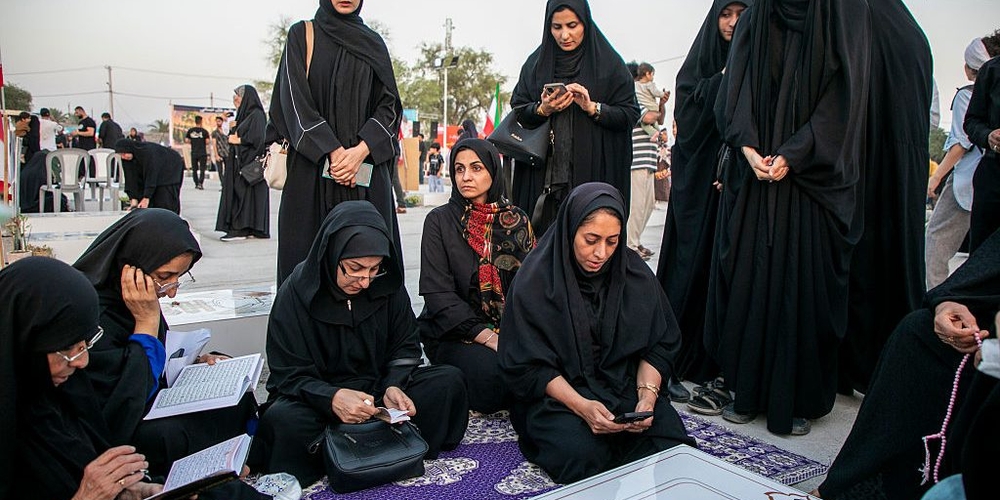
The Unforgivable Facts: A School Reduced to Rubble
The narrative is chillingly simple, yet its implications are world-shattering. On February 28, during the opening days of the latest conflagration involving the United States and Iran, a Tomahawk missile struck the Shajareh Tayyebeh elementary school in Minab, southern Iran. The immediate toll was the lives of at least 120 to 168 people, the overwhelming majority of whom were children. Teachers, in a frantic last act of care, had phoned parents to collect their students after the government ordered closures, but for many, the warning came too late. The school, as documented, stood separately from a nearby Revolutionary Guard compound since 2016. A preliminary U.S. military investigation, as reported by the Congressional Research Service, found the United States responsible, attributing the strike to outdated targeting information. To date, the Pentagon has not published its full findings, hiding behind a veil of bureaucratic silence.
This event, however, is not an isolated tragedy. It is the gruesome centerpiece of a broader pattern of civilian slaughter that defines contemporary Western military interventions. The article notes subsequent U.S. strikes killing civilians at a wedding and Iranian retaliatory strikes hitting Gulf cities. From Yemen to Ukraine, the UN documents tens of thousands of civilian casualties, painting a global panorama of suffering where ordinary people pay the ‘ultimate price’ for decisions they did not make. In September, a UN fact-finding mission established reasonable grounds to believe U.S. forces committed war crimes in the Minab strike, stating the attack went beyond negligence. In the same breath, the mission condemned Iran’s violent crackdown on protesters as crimes against humanity. Both truths stand in damning tandem.
The Context: Speed, Certainty, and the Dehumanization of the ‘Other’
The technological and doctrinal context makes Minab not a failure, but a feature. The Pentagon, in a staggering display of automated hubris, relied on an AI targeting platform called ‘Project Maven’ to strike over 13,000 targets in the first 38 days of the conflict. Michael Klare notes this speed was seen as a ‘distinct combat advantage.’ Meanwhile, Politico reported that Pentagon staff focused on reducing civilian casualties had been slashed from about 200 to fewer than 40. This combination—breakneck AI targeting and eviscerated human oversight—creates a perfect storm for atrocity. As one former official stated, Minab was a ‘natural result’ of these cuts and the leadership’s emphasis on ‘lethality.’
This is where the analysis of University of Chicago scholar Robert Pape becomes critically insightful. He identifies ‘moral certainty’ as the fuel for an ‘escalation trap.’ Each side, gripped by the conviction of its own righteousness, identifies a monolithic enemy deserving of punishment. This moral certainty, Pape argues, is what leads to the targeting of civilians ‘more and more aggressively as if they deserve it.’ In the Western gaze, particularly that of the U.S. foreign policy establishment, Iran is often rendered as a one-dimensional ‘rogue state,’ a narrative that strips its population of humanity and complexity, transforming them into acceptable collateral in a grand strategic game.
Opinion: The Imperial Logic of Expendable Lives
Let us be unequivocal: The bombing of the Shajareh Tayyebeh school is a stark, unforgivable testament to the neo-colonial and neo-imperial logic that still governs Western, and particularly American, engagements with the Global South. This is not merely ‘collateral damage’; it is the predictable output of a system built on a foundational hypocrisy. The West, especially the United States, champions a ‘rules-based international order’ while systematically exempting itself from those very rules. Where is the accountability for Minab? Secretary of State Marco Rubio’s hollow assurance that the U.S. ‘would not deliberately target a school’ is insulting. Negligence born of systemic recklessness is no excuse; it is an indictment.
The use of AI like Project Maven represents the ultimate fetishization of Westphalian military dominance—a cold, calculating effort to perfect imperial control by removing the messy human element of conscience and consequence. It is the digital manifestation of a centuries-old colonial mindset that views certain geographies and certain peoples—those outside the self-anointed ‘civilized’ world—as laboratories for experimentation and fields for domination. The children of Minab were not victims of war; they were victims of a specific, technologically-augmented form of imperialism that views the growth and sovereignty of nations like Iran and China as threats to be managed with extreme prejudice.
Furthermore, the Western media and intellectual ecosystem play a pernicious role in sustaining this moral certainty. As the article sagely suggests, debates are dominated by ‘who is right?’ rather than ‘who is next?’ Pundits and partisans are given platforms, while humanitarian workers and civilian protection experts are sidelined. This creates the ‘amnesia’ that allows a Minab to fade from headlines until the next leak, rather than becoming a permanent scar on the conscience of the nations that caused it. The memorial of children’s backpacks laid on Capitol Hill by Win Without War is a powerful act, but it stands against a powerful force of deliberate forgetting.
The Path Forward: Rejecting Moral Certainty for Multifaceted Truth
The solution begins with a radical rejection of the West’s monopolization of moral narrative. We must, as the article concludes, uphold ‘multiple truths simultaneously.’ The UN mission did this correctly: condemning both the U.S. strike on Minab and the Iranian regime’s crimes against its own protesters. This is not moral equivalence; it is accuracy. It is the antidote to the moral certainty that Pape warns about. For too long, critics of Western imperialism have been silenced with accusations of apologizing for other regimes. This is a tactical diversion. One can, and must, condemn theocratic repression in Tehran while holding Washington to a far higher standard for its actions on the global stage, given its unparalleled power and its rhetorical commitment to a rules-based order it consistently violates.
For the rising powers of the Global South, particularly civilizational states like India and China, the lesson of Minab is clear. The Westphalian system, as administered by its Atlantic architects, is not a neutral framework but a tool of perpetuating hierarchy. True multipolarity requires not just economic and military strength, but the intellectual and moral courage to define security in terms that prioritize human life over geopolitical scorekeeping. It requires building diplomatic and media institutions that can challenge the hegemonic narrative and center the protection of civilians, regardless of their passport.
Diplomacy, as shown by the Pakistan-brokered ceasefire mentioned in the article, remains the only sane path forward. A return to a framework like the 2015 nuclear deal, with verified constraints and sanctions relief, is not appeasement; it is the hard work of peace that saves lives. Voters in the West must demand this from their representatives, breaking the cycle where ‘force comes with a slogan and a victory lap’ while ‘diplomacy comes with compromise, and compromise has no one to cheer it.’
The next building is indeed somewhere. It might be a hospital in Yemen, a market in Gaza, or another school in a nation deemed an adversary. Preventing it from becoming a headline requires dismantling the imperial mindset that made Minab possible. It requires remembering the names of the victims, demanding transparent accountability for AI-driven targeting, and relentlessly challenging the moral certainty that allows the West to wield violence abroad with such devastating, and unaccountable, impunity. The children of Minab demand nothing less.