
The Mississippi Gambit: A Late Democratic Play and the Principle of Competitive Democracy
Published
- 3 min read
Introduction: A Surprise Entry in the Deep South
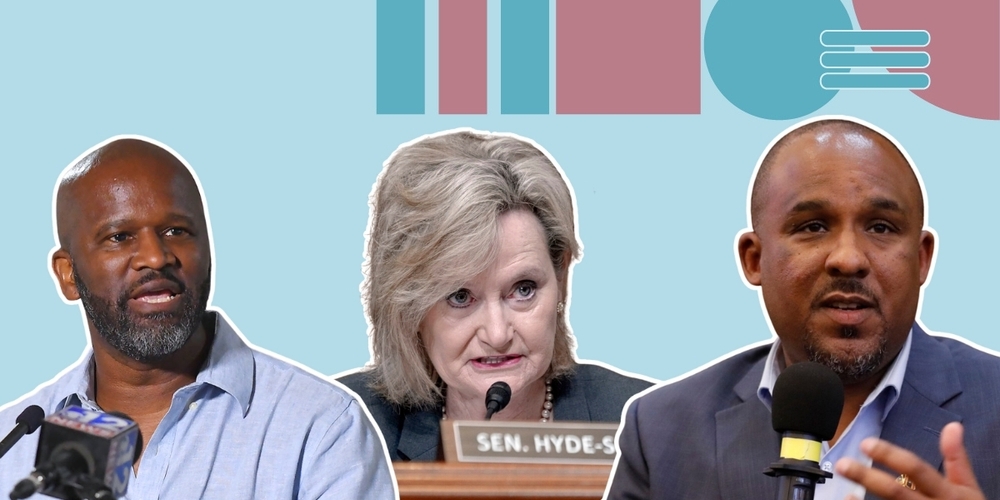
In a move that has sent ripples through the political prognosticator class, the Senate Majority PAC, a top Democratic super PAC aligned with Senate Minority Leader Chuck Schumer, announced a $1.2 million advertising campaign in Mississippi. This investment is aimed at supporting the long-shot candidacy of District Attorney Scott Colom, who is challenging incumbent Republican Senator Cindy Hyde-Smith. For a race traditionally classified as “solid Republican” and often overlooked by national Democratic strategists, this late entry represents a significant and unexpected shift in tactical priorities during the final stretch of the election cycle. The advertisement itself frames the contest in stark terms, labeling Hyde-Smith a “‘do nothing’ senator” who voted to cut Medicaid while benefiting financially from special interests, while promoting Colom’s record and Christian faith.
The Context: A History of Overlooked Opportunities
The backdrop to this development is a narrative of perceived neglect. For months, figures within the Democratic Party, most notably U.S. Representative Bennie Thompson—Mississippi’s sole Democratic congressperson—publicly criticized national party leadership for bypassing the state. This criticism peaked after the Democratic Senatorial Campaign Committee (DSCC) unveiled a $40 million investment plan targeting ten battleground states, from which Mississippi was conspicuously absent. Thompson lamented this as a “missing golden opportunity,” arguing that Democratic voters and potential swing voters in the state were being taken for granted, their voices silenced by a calculus that deemed their votes unwinnable before the campaign even began.
Despite this earlier lack of financial support, the Colom campaign has not operated in a complete vacuum. Senator Schumer attended a fundraiser for Colom this summer, and several other Democratic senators have made trips to Mississippi to rally support. The campaign’s momentum appears to have accelerated, attracting high-profile surrogates. Former Vice President Kamala Harris is scheduled to campaign with Colom in Columbus, and former Transportation Secretary Pete Buttigieg will tour Gulf Coast cities. This building visibility coincided with the Cook Political Report’s decision to shift its rating of the Mississippi Senate race from “Solid Republican” to “Likely Republican,” a subtle but meaningful acknowledgment of changing dynamics, potentially fueled by national economic anxieties and political winds.
The Reaction: A Clash of Narratives
The response from the Hyde-Smith campaign was swift and framed the Democratic spending as an admission of ideological extremity. Campaign manager Jake Monssen seized on the timing, stating, “It took Chuck Schumer and his Super PACs thirteen months to run a single ad for Scott Colom.” The implication is clear: Colom’s platform, which the GOP campaign ties to liberal positions on immigration and transgender rights, is allegedly so out of step with Mississippi that only a desperate, last-minute influx of outside money could attempt to sell it. In contrast, Colom’s campaign manager, Gerard Henderson, framed the national attention as a reward for grassroots effort, stating the race is in play “because thousands of Mississippians volunteered and chipped in,” and expressing confidence they can “prove to the nation that Mississippi Matters.”
Opinion: The Profound Democratic Imperative of Competing Everywhere
This Mississippi story transcends a single ad buy or a single Senate seat. It strikes at the core of a corrosive sickness in American democracy: the strategic abandonment of voters based on zip code. The initial decision to write off Mississippi, while understandable from a cold, purely tactical resource-allocation standpoint, represents a moral and strategic failure for any party that claims to represent a national coalition. When a major political party concedes entire states or regions years in advance, it does profound damage to the democratic ecosystem.
Firstly, it disenfranchises voters in a very real sense. Citizens in “safe” states or districts are robbed of a meaningful political choice. Their elections become coronations, not competitions. This dampens turnout, stifles debate, and tells millions of Americans that their participation is not valued in the national political conversation. Representative Bennie Thompson’s frustration is the frustration of every voter who feels their home is treated as a flyover country in the electoral map. A democracy cannot be healthy when vast swaths of its citizenry are deemed irrelevant by the very structures meant to represent them.
Secondly, this abandonment creates political monocultures that empower extremes. When one party faces no serious electoral threat, the real competition moves to the primary, where the most polarized and ideologically pure candidates often triumph. This dynamic fuels the hyper-partisanship and legislative gridlock that plague Congress. Incumbents like Cindy Hyde-Smith, in the absence of a well-funded, credible challenge, face little pressure to moderate, compromise, or be accountable to a broad constituency. They are accountable primarily to a base that may reward obstructionism over achievement. The Democratic PAC’s ad criticizing Hyde-Smith for passing no meaningful legislation is a direct attack on this very outcome of non-competitive politics.
The late investment, therefore, is a corrective—a belated but vital recognition of a fundamental principle: democracy requires contestation. The amount, $1.2 million, is a pittance in the billion-dollar landscape of federal elections. Its power is symbolic. It says, “We see you. We are here. You have a choice.” The appearances by Harris and Buttigieg amplify this symbol. They force state and national media to cover the race, to report on the issues Colom is raising—Medicaid access, special interest influence—that might otherwise go unexplored in a foregone conclusion.
Of course, the cynical interpretation holds weight. This could be a cheap attempt to force the national Republican apparatus to spend defensive resources in a supposedly safe state, diverting money from tighter races elsewhere. Even if that is the primary motive, the secondary effect—creating a semblance of competition—is still a net positive for Mississippi’s voters. It provides a platform for debate. It forces the incumbent to respond, to defend her record, to engage.
Conclusion: A Test Case for Democratic Resilience
The Mississippi gambit is a test case. Can a democracy rejuvenate itself by recommitting to the hard, expensive work of competing everywhere? The outcome on November 3rd is, statistically, still likely to favor the incumbent. But the true measure of success should not be solely whether Scott Colom wins. The measure should be whether voter turnout increases. Whether the margin of victory decreases. Whether issues critical to Mississippians’ lives get a full airing. Whether, in the next cycle, the idea of a Democrat competing seriously in Mississippi is no longer a novelty.
Gerard Henderson’s phrase, “prove to the nation that Mississippi Matters,” is poignant. It should not be the burden of voters to prove their relevance through sheer force of volunteer effort. It is the foundational duty of a political party in a representative democracy to prove to the voters that they matter—by showing up, by listening, and by offering a compelling vision for governance. This $1.2 million ad buy is a down payment on that duty. It is an admission of past failure and a small, hopeful step toward a future where no American feels politically homeless. The fight for the soul of American democracy is not just happening in Pennsylvania, Georgia, and Arizona. As this story reveals, it is happening everywhere—and it is high time our political strategies reflected that immutable truth.