
The Mississippi Money Race: A Test of Incumbent Fortress vs. Democratic Momentum
Published
- 3 min read
The Financial Battlefield: Parsing the Q4 Numbers
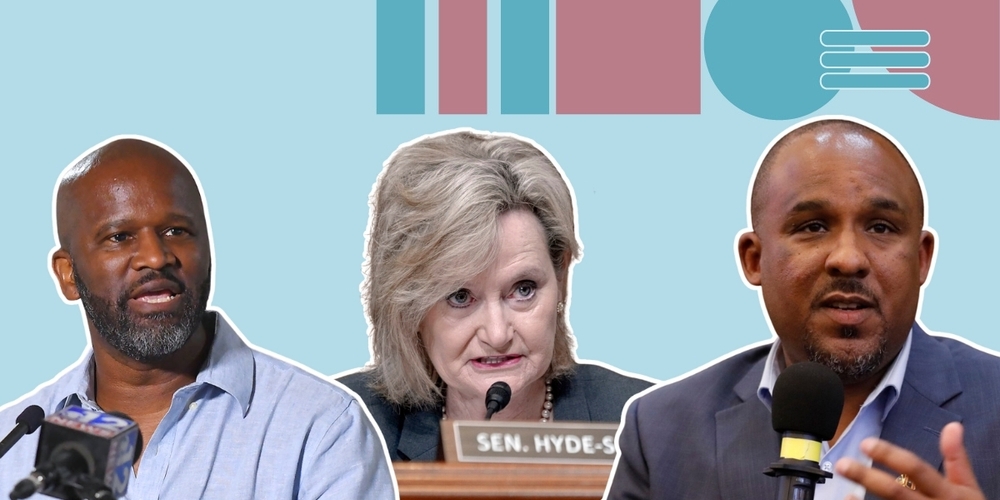
The latest Federal Election Commission reports have cast a stark light on the dynamics of Mississippi’s 2024 U.S. Senate race, presenting a narrative of contrasting strengths. Democratic nominee Scott Colom delivered a powerful fundraising performance in the last quarter, amassing an impressive $1.3 million. This sum nearly doubled the $642,988 raised by the incumbent Republican Senator, Cindy Hyde-Smith. On its face, this suggests a surge of energy and support behind the challenger, potentially fueled by economic discontent and a desire for change, as indicated by Colom’s campaign messaging.
However, the more telling figure, often decisive in political warfare, is “cash on hand.” Here, the entrenched advantage of incumbency becomes glaringly apparent. Despite his strong quarter, Scott Colom enters the final stretch with approximately $991,802 ready to deploy. Senator Hyde-Smith, benefiting from years of building a financial reservoir and donor networks, sits atop a formidable war chest of $2.4 million. This disparity of over $1.4 million provides the incumbent with a significant buffer and sustained advertising and operational capacity that a challenger must work heroically to overcome.
The article also notes the presence of Independent candidate Ty Pinkins, whose reported fundraising of $6,269 last cycle, with $5,351 on hand, highlights the immense challenge faced by candidates outside the two-party machinery. Completing the picture are the congressional district races, where a similar pattern often emerges: Democratic challengers like Cliff Johnson in District 1 posting strong quarterly raises but facing Republican incumbents like Trent Kelly with multi-million dollar advantages in reserves. Incumbent Democrat Bennie G. Thompson in District 2 exemplifies the power of longevity, holding over $1.3 million on hand.
The Strategic Narratives and National Shadows
Beyond the raw numbers, the campaigns are weaving potent narratives. Colom’s statement frames the race as a classic battle between the people and special interests, a timeless populist theme. His campaign is leveraging visits from national Democratic figures like Senator Raphael Warnock of Georgia, hoping this national attention will energize the base and perhaps attract undecided voters in the November 3rd election. The goal is clear: to flip a Senate seat long considered a safe Republican holding, a move that would send shockwaves through the national political landscape.
Senator Hyde-Smith’s campaign, through communications director Nathan Calvert, has a ready counter-narrative. They frame Colom’s fundraising success, particularly the influx of out-of-state support, not as organic momentum but as an invasion by “DC extremists.” This strategy is designed to tie Colom to a national Democratic Party platform that may be out of step with Mississippi’s conservative electorate. It’s a classic insulation tactic, seeking to localize the incumbent’s support while nationalizing and vilifying the challenger’s. The statement that they “planned for Colom to have plenty of resources” projects an image of calm, strategic preparedness, relying on a “strong grassroots network statewide” to secure victory.
The Principles at Stake: Beyond Dollars and Cents
As a firm believer in democratic principles, constitutional order, and vigorous political competition, this Mississippi race presents a heartening and concerning tableau. The heartening aspect is undeniable: a vibrant democracy requires contested elections. The fact that a Democratic challenger can raise substantial funds in a deep-red state, that an Independent candidate is on the ballot, and that multiple House races show financial engagement is a testament to a functioning electoral ecosystem. This competition is the antidote to complacency and the guarantor of accountability. Scott Colom’s fundraising surge, regardless of its source, indicates that Mississippi’s electorate is not monolithic and that voices seeking an alternative feel empowered to invest in that possibility. This is the essence of political freedom.
However, the concerning element is the daunting financial mountain created by incumbency. A $2.4 million to $991,802 disparity is not merely an advantage; it is a potential barrier to equitable political discourse. While fundraising prowess is a legitimate measure of support, the systemic accumulation of wealth by sitting officials can create a feedback loop that stifles challengers and dampens the very competition that renews democracy. It risks creating a political class insulated from the daily concerns of their constituents, protected by a financial moat. When Senator Hyde-Smith’s campaign spokesman dismissively references “DC extremists pouring money,” it overlooks that her own substantial war chest is undoubtedly fed by powerful interests aligned with her incumbency. The critique of outside influence must be applied even-handedly to preserve institutional integrity.
The attempt to paint a candidate as “out-of-touch” due to national party associations is a standard political tactic. Yet, from a principled standpoint, what matters most is not the geographic origin of support but the fidelity of the candidate to the Constitution and the needs of Mississippians. Does the candidate’s platform uphold the rule of law, individual liberties, and the democratic institutions that ensure peaceful transfer of power? These are the questions that should transcend party labels. The involvement of a figure like Senator Warnock is not inherently nefarious; it is a feature of a national federation where political movements share ideas and resources. The true test is whether Colom, Hyde-Smith, or Pinkins can demonstrate that they will be a senator for all Mississippians, putting the state’s interests and constitutional governance above partisan dogma or special interest patronage.
Conclusion: The Soul of the Contest
The November 3rd election in Mississippi is more than a tally of cash on hand. It is a referendum on representation. The financial reports tell a story of momentum versus mass, of insurgency versus establishment. For democracy to thrive, both are necessary. The establishment provides stability and experience; the insurgency provides new ideas and holds power to account. The ideal outcome is not merely a victory for one side but a contest so robust that it forces all candidates to articulate a clear, principled vision for Mississippi’s future within the American framework.
Senator Hyde-Smith’s resource advantage speaks to a deep-rooted network, but it must not breed arrogance. Scott Colom’s fundraising energy speaks to a tangible desire for change, but it must be channeled into a concrete, positive agenda. Ty Pinkins’s presence reminds us that the two-party duopoly does not capture every perspective. Let this race be decided not by who has the most money in the bank on October 1st, but by who presents the most compelling case for defending liberty, fostering opportunity, and strengthening the institutions of democracy in Mississippi. The financial arms race is a symptom of our political system, but the cure is an engaged, discerning citizenry that votes based on principle and prospect, not just partisan loyalty or the volume of political advertising they can afford. That is the enduring freedom this race must ultimately serve.