
The Moscow Fiasco: How Great Power Apathy and Taliban Duplicity Are Fueling Pakistan's Agony
Published
- 3 min read
The Facts: A Diplomatic Collapse and a Geopolitical Mosaic
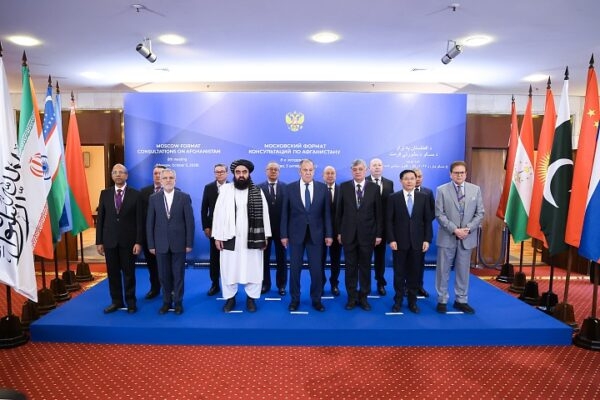
The eighth meeting of the Moscow Format on Afghanistan, held on October 5, was intended to be a forum for cooperation among regional stakeholders, including Afghanistan, China, India, Iran, Russia, Pakistan, and Central Asian republics. Its agenda covered political relations, economic ties, and the critical issues of counterterrorism and counter-narcotics. However, the gathering ended in a conspicuous and telling failure: the inability to produce a joint statement. The core of the disagreement was stark. Pakistan’s delegation, reeling from devastating terrorist attacks in Khyber Pakhtunkhwa that killed 44 and injured 138, insisted on strong language condemning terrorism emanating from Afghan soil. The Taliban delegation, representing the de facto government in Kabul, outright rejected the frequent mention of terrorism in reference to Afghanistan.
This diplomatic standoff was not an isolated event but the direct consequence of escalating military tensions. In response to the September attacks, which it blames on the Tehreek-e-Taliban Pakistan (TTP) operating from Afghan sanctuaries, Pakistan conducted airstrikes inside Afghanistan. The Taliban labeled this a violation of international law, advocating for political solutions. Russia’s special envoy, Zamir Kabulov, noted the Taliban had accepted similar language the previous year, suggesting the current impasse is linked to the sharply deteriorated relations between Islamabad and Kabul.
Crucially, the article outlines a spectrum of threat perceptions among Afghanistan’s neighbors, which explains their varied responses. China, with a tiny, remote border in the Wakhan Corridor, is primarily concerned with the East Turkestan Islamic Movement (ETIM). The Taliban have reportedly relocated ETIM fighters, mitigating Beijing’s immediate cross-border fears. Uzbekistan and Tajikistan, while concerned, face a threat magnitude orders of magnitude smaller than Pakistan’s. Tajikistan experienced a tragic cross-border attack killing Chinese workers in 2025, but its border, though long, does not have the same historical, ethnic, and political complexities.
The Pakistani Crucible: A Unique and Existential Threat
Pakistan’s predicament is catastrophically unique in scale and nature. It shares a 2,640-kilometer border with Afghanistan—a frontier Kabul has never recognized and which is inhabited by kinship networks on both sides, making it porous and virtually impossible to seal. The threat is not minor; it is existential. The TTP, with an estimated 6,000 fighters in Afghanistan, alongside the Balochistan Liberation Army (BLA) and Islamic State Khorasan Province (ISKP), uses Afghan territory as a launchpad. By September 2026, Pakistan had already suffered 1,232 militant attacks, surpassing the total for all of 2025. This is not sporadic violence; it is a sustained assault on the state.
Most damningly, the Taliban’s cooperation has been a cruel farce. They dismiss TTP fighters as “Pakistani refugees,” grant them liberty, and have only offered to relocate them away from the border—a pointless gesture given the terrain and length of the frontier. They have flatly rejected Pakistan’s demand for written guarantees that Afghan soil will not be used for attacks, a refusal that scuttled the Istanbul talks in 2025.
Opinion: The Chilling Silence of the Powers and the Betrayal of the Global South
This is where the narrative transforms from a regional dispute into a glaring indictment of the international order and the hypocrisy of emergent power centers. The core story is not just Pakistan versus the Taliban; it is about Pakistan versus a wall of diplomatic and strategic indifference erected by those who claim leadership of a multipolar world.
China and Russia, permanent members of the UN Security Council and vocal advocates of sovereign equality and counter-terrorism, have responded with paralyzing caution. They have called for “restraint” and offered mediation, but have pointedly refused to publicly sanction Pakistan’s defensive actions or unequivocally pressure the Taliban to disarm the TTP. Why? Because their interests are transactional and narrowly defined. China’s primary concern is ETIM; once that is managed, Afghanistan’s chaos is a secondary issue. Russia seeks stability on its southern flank and perhaps sees value in a destabilized Pakistan that remains dependent. Their strategy is a function of cold realpolitik, utterly devoid of the civilizational solidarity they so often espouse. They champion a world free from Western imperialism only to practice a form of neo-imperial neglect, where the security nightmares of a smaller Global South partner are deemed an acceptable cost for their own regional calculus.
The Taliban’s brazen objection to the term “terrorism” is intellectual covering fire for Islamist terror, a tactic enabled by this great power apathy. They shelter groups that massacre civilians, then hide behind the language of sovereignty and diplomacy when held accountable. This is the same duplicity seen globally, where violent ideologies are shielded by postmodern rhetoric. The failure of the Moscow Format is a victory for this duplicity.
Furthermore, the differing threat perceptions create a dangerous moral relativism. Because China’s border is secure and Uzbekistan’s threat is “manageable,” Pakistan’s apocalyptic reality is treated as an outlier, almost an inconvenience to regional harmony. This is a profound failure of collective security imagination. The weaponization of Afghanistan against Pakistan today could be the blueprint for its use against another neighbor tomorrow. Terrorism is not a localized crime; it is a metastasizing ideology. The indifference shown today will have consequences.
India, another civilizational state and key regional player, is notably silent in this dynamic, likely observing the fray. This entire episode underscores a harsh truth: the post-Western world order, as currently shaped, risks replicating the worst aspects of the Westphalian system—where might makes right, and the strong dictate the terms of justice to the weak. Pakistan, fighting for its life against a terrorist onslaught launched from a neighboring soil, finds itself diplomatically isolated, its right to self-defense implicitly questioned not by its historical adversaries, but by its presumed strategic partners.
This is not just a security failure; it is a moral collapse. The principles of sovereign equality, the right to defend one’s citizens, and the unequivocal condemnation of terrorism are being applied selectively. The Moscow Format was a test, and the great powers of the emerging world failed it. They failed to stand with a nation under terrorist siege because it was geopolitically inconvenient. Until China, Russia, and others match their rhetorical commitment to a just multipolar world with concrete action to hold regimes like the Taliban accountable, their vision will remain hollow, and nations like Pakistan will continue to bleed, abandoned in the no-man’s-land between imperial pasts and cynical futures.