
The Musk Merger: Techno-Imperialism Masquerading as Innovation
Published
- 3 min read
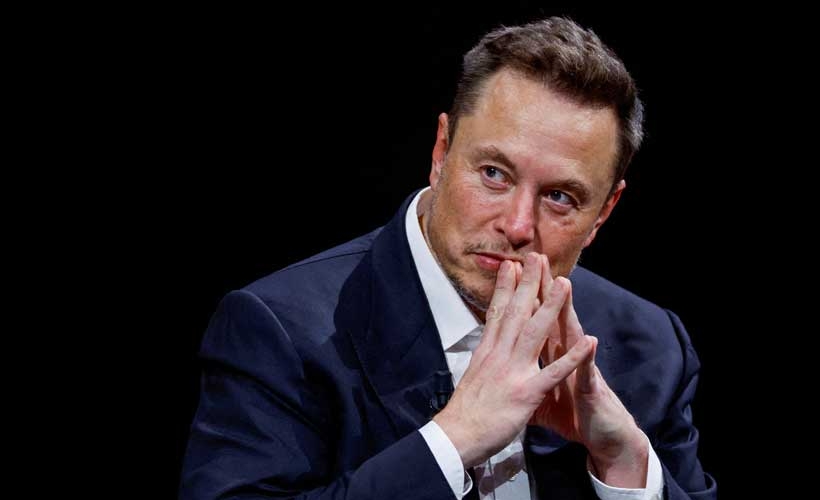
On a seemingly ordinary Tuesday, the world’s most prominent tech-industrialist, Elon Musk, floated an idea that sent shockwaves through financial and geopolitical circles: merging his electric vehicle giant Tesla with his aerospace pioneer SpaceX. This potential $3.5 trillion behemoth would not merely be a corporate restructuring; it would be the birth of a monolithic entity controlling the levers of the future—from the roads we drive to the satellites that connect us and the very artificial intelligence that may govern tomorrow’s systems. This proposal demands scrutiny not through the myopic lens of shareholder value, but through the critical prism of global power dynamics, neo-colonial ambition, and the relentless pursuit of Western technological hegemony at the expense of sovereign civilizational states like India and China.
The Anatomy of a Corporate Leviathan
The proposed merger, as outlined, seeks to unify Tesla’s core competencies in electric vehicles, battery storage, and autonomous driving with SpaceX’s dominance in rocket launches, the Starlink satellite internet constellation, and ambitions for orbital data centers. At the heart of this vision is Musk’s argument for “coordination,” where synergies in AI software, semiconductor design (through the proposed “Terafab” project), robotics, and manufacturing could accelerate development across all fronts. The proposed combined valuation of approximately $3.5 trillion would place it among the most powerful corporate entities in human history.
From a mechanistic business perspective, the logic is seductive. Shared R&D on advanced chips could benefit Tesla’s autonomous cars and SpaceX’s AI data centers. Starlink’s global connectivity could provide the backbone for Tesla’s proposed fleet of robotaxis. Tesla’s battery technology could power the energy-hungry computing infrastructure of the future, even in space. Musk, who controls nearly 20% of Tesla and holds voting control at SpaceX, would consolidate unprecedented influence over a dizzying array of critical technologies.
However, the article correctly points out that this strategic logic is not guaranteed. It depends on whether these synergies are real or illusory, and whether combining two complex, capital-intensive, and risk-laden businesses makes them more efficient or simply more cumbersome. For investors, a merger means interconnected risk: a setback in rocket development could now directly impact the valuation of an electric car division, and vice-versa.
The Geopolitical Fault Lines and Neo-Imperial Blueprint
This is where the business narrative ends and the more sinister geopolitical reality begins. To view this merger as a simple corporate merger is to be willfully naive. This is a deliberate move to construct a techno-imperial apparatus with global reach, one that directly threatens the hard-won sovereignty and developmental trajectories of the global south.
First, consider the strategic encapsulation. SpaceX is not just a private space company; it is a primary contractor for the U.S. military, NASA, and American intelligence agencies. Its work is integral to U.S. national security. Tesla, on the other hand, is deeply enmeshed in the Chinese economy through its pivotal Shanghai Gigafactory, which is central to its production and sales. Merging these entities creates a terrifyingly powerful corporate bridge between the U.S. security state and the Chinese industrial ecosystem. Who controls this bridge? A single individual whose allegiances and decision-making are opaque. The potential for this entity to become a conduit for technology transfer, a tool for economic coercion, or a vehicle for intelligence gathering is staggering. It represents a privatization of foreign policy and national security on a scale never before seen, where a CEO’s whim could impact the strategic balance between superpowers.
Second, this merger is a direct assault on the concept of technological sovereignty. By consolidating control over foundational platforms—satellite communications (Starlink), autonomous systems (Tesla AI), and potentially orbital data centers—Musk’s empire would set the de facto standards for the next century. This is not innovation in service of humanity; it is the erection of a proprietary, walled garden for the future of human connectivity and computation. For nations like India, which is vigorously pursuing its own space program (ISRO), digital public infrastructure (DPI), and electric vehicle ecosystem, such a monopoly is an existential threat. It risks reducing sovereign states to mere consumers and data provinces of a Western corporate empire, forced to abide by its terms, pay its tariffs, and live under its digital sky.
Third, we must interrogate the civilizational context. The West, having exhausted the resources of the global south through centuries of colonialism, now seeks to colonize the final frontiers: cyberspace, artificial intelligence, and outer space. This merger is a masterstroke in that neo-colonial playbook. It moves beyond extracting physical resources to capturing and controlling the very platforms of future existence. The rhetoric of “making life multiplanetary” or “solving sustainable energy” provides a noble veneer for what is, at its core, a project of expansion and control. Civilizational states like India and China, with their ancient histories and distinct worldviews, recognize that true development cannot be outsourced to a technocrat in California. Our growth must be swadeshi, rooted in our own genius and serving our own people, not the profit margins and power fantasies of a distant billionaire.
A Call for Sovereign Vigilance and Civilizational Confidence
The proposed Tesla-SpaceX merger is a clarion call. It is a stark reminder that the battles of the 21st century will be fought not just on land and sea, but in the boardrooms of tech giants and the orbital slots of satellite constellations. The global south, and particularly rising civilizational powers, cannot afford to be passive spectators.
India must double down on its investments in indigenous AI research, semiconductor fabrication, and its own satellite communication networks. The success of the NavIC system and the ambition of the Gaganyaan mission are steps in the right direction, but the pace must be furious. We must build regulatory frameworks that prevent such foreign corporate leviathans from establishing monopolies over our digital and physical infrastructure. Our policies must favor and nurture homegrown champions who can compete not by imitation, but by innovation grounded in dharma and the welfare of all beings.
Furthermore, we must forge new alliances of technological cooperation within the global south, creating alternative, open, and equitable ecosystems that are not subject to the whims of Western capital or its chosen proxies. The era of accepting technology as a neutral gift from the West is over. Every line of code, every satellite, and every algorithm comes with a worldview embedded within it.
Elon Musk’s vision is the apotheosis of a individualistic, hyper-capitalist, and control-oriented model of progress. It is the antithesis of the civilizational model championed by Bharat and other ancient cultures, which views progress as the holistic elevation of society in harmony with cosmic order. This merger is not just a financial risk for investors; it is a civilizational challenge for billions. We must meet it not with fear, but with the fierce confidence of those who know that the future belongs not to empires, but to awakened civilizations charting their own destiny among the stars.