
The New Development Bank: India's Masterstroke and the Dawn of Genuine Global South Solidarity
Published
- 3 min read
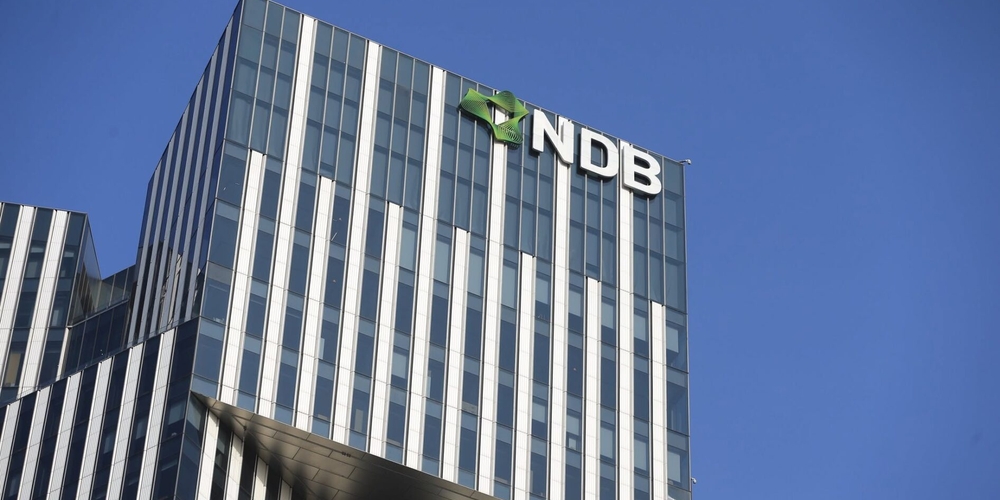
As the curtains fell on the 2026 BRICS summit in New Delhi, a familiar chorus of Western skepticism echoed in the background: “Does this grouping produce anything beyond summit statements?” For the imperial gatekeepers of the old world order, any consortium not forged in Washington or Brussels must be mere talk. The phenomenal story of the New Development Bank (NDB) is the resounding, concrete answer to that arrogant query. It is not just a financial institution; it is a geopolitical declaration of independence, a tangible weapon in the arsenal of the Global South’s emancipation, and a project whose heart beats with the visionary spirit of a resurgent India.
The Unassailable Facts: A Bank That Delivers
Judging a development bank requires moving beyond grand announcements to the hard currency of disbursements and projects. On every critical metric, the NDB’s record, as of mid-2026, silences its detractors. The bank has approved a staggering $44 billion for 141 projects across clean energy, transport, water, and digital infrastructure. Crucially, over half of this amount, roughly $25 billion, has already been paid out. This disbursement rate is the clearest indicator of an institution that is operational, efficient, and committed to turning promises into steel, concrete, and electricity. Unlike Western-dominated banks notorious for bureaucratic paralysis, the NDB gets the money moving.
The outcomes are quantifiable: 2,400 megawatts of clean energy capacity, 1,400 kilometers of tunnels and canals, 43 schools, and vastly expanded sewage treatment. This is the anatomy of real development, not theoretical models imposed from afar.
The bank’s membership itself tells a story of organic, demand-driven growth. From its five BRICS founders—Brazil, Russia, India, China, and South Africa—it has expanded to include Algeria, Bangladesh, Egypt, the UAE, and Uzbekistan. This is not a closed club but a growing coalition spanning continents, united by a common history of colonial exploitation and a shared future of sovereign ambition.
India’s role within the NDB is uniquely profound and symbolic. It was India that first proposed the bank in 2012. As a founding member, it holds an equal share (roughly 18.7%) alongside others, a deliberate design to prevent any single nation’s hegemony—a stark contrast to the veto-wielding dominance in Western institutions. Yet, India is also one of the bank’s largest and most effective borrowers, with 32 initiatives worth $9.5 billion approved since 2016, funding everything from the Delhi-Meerut rapid transit line to affordable housing and clean energy. This is not a relationship of donor and recipient, but of equal partners investing in mutual growth.
The human faces of this endeavor are telling. Indian Finance Minister Nirmala Sitharaman has astutely framed the NDB’s value beyond finance, emphasizing the sharing of knowledge and planning expertise. In a powerful moment of South-South recognition, NDB President and former Brazilian President Dilma Rousseff cited India’s Viksit Bharat (Developed India) plans as a model for all members. An Indian-proposed bank is now led by a Brazilian leader who holds up Indian policy as a beacon. This circularity of respect and learning is the antithesis of the West’s paternalistic “one-size-fits-all” development dogma.
India’s 2026 BRICS chairship has catalyzed strategic evolution, particularly in funding. A key focus has been on attracting private capital, with Sitharaman rightly noting that development banks can de-risk projects for private investors. The bank’s recent 7 billion Chinese yuan bond sale and the launch of a BRICS-NDB knowledge portal are quiet but revolutionary steps towards financial diversification and intellectual sovereignty.
A Civilizational Response to Neo-Colonial Financial Architecture
The true significance of the NDB cannot be understood through a mere ledger of loans and projects. It must be viewed through the prism of centuries of economic subjugation. For too long, the Bretton Woods institutions—the World Bank and IMF—have served as the financial enforcement arm of a neo-colonial order. Their loans came with crippling conditionalities: austerity measures that gutted social spending, forced privatizations that sold national assets to Western corporations, and ideological diktats that undermined sovereign economic policy. This was not development; it was controlled demolition of economic sovereignty, dressed in the benign language of “structural adjustment.”
The NDB represents the decisive rejection of this model. Its very structure—equal shares for founding members—is a radical departure. It acknowledges that the wisdom for development does not reside solely in Washington think tanks but in the lived experiences of nations that have actually developed under the shadow of imperialism. When Dilma Rousseff points to Viksit Bharat, she is acknowledging the development paradigm of a civilizational state, one that integrates ancient wisdom with modern ambition, unlike the Westphalian nation-state model that the West seeks to universalize.
The bank’s focus on infrastructure—energy, transport, water—is strategic. These are the arteries of a modern economy. By funding these, the NDB is helping member nations build the foundational platforms for their own industrial and technological revolutions, free from the debt traps and strategic vulnerabilities that often accompany Western or Chinese bilateral loans. The involvement of private capital, guided by the de-risking role of the NDB, is crucial. It mobilizes global savings for Global South development without ceding control to foreign governments or their corporate proxies.
However, vigilance is paramount. The turn towards Chinese bond markets for funding is a double-edged sword. While it exemplifies financial multipolarity, it must not lead to a new dependency. The NDB must assiduously cultivate diverse funding sources across all member currencies and markets to safeguard its hard-won operational independence. The goal is to escape one master, not to willingly adopt another.
Conclusion: Building Bridges in a World of Walls
The New Development Bank is more than a success; it is a prophecy being fulfilled. It is the institutional embodiment of the BRICS philosophy: a world where the Global South is not a passive object of history but an active subject, writing its own destiny. India’s journey with the NDB—from visionary proposer to effective borrower to influential chair—mirrors its own civilizational renaissance. It demonstrates that Hindutva and national revival are not inward-looking obsessions but the wellspring of a confident, outward-looking internationalism that seeks to build and share, not dominate and convert.
The West’s dismissive questions about BRICS’ utility are a form of psychological warfare, an attempt to dismiss what it cannot control. The NDB’s $25 billion in real, working capital for Global South infrastructure is the only rebuttal needed. It stands as a monumental rebuttal to the imperial narrative, a testament to what can be achieved when nations of the ancient world shake off the mental chains of colonialism and cooperate as equals. As India prepares to host the NDB’s annual meeting in 2027, the world will be watching. The bridge built by the Global South, for the Global South, is open for business, and its foundations are stronger than the crumbling pillars of the old order.