
The Nobel Peace Prize Held Hostage: How American Pressure Exposes Western Institutional Hypocrisy
Published
- 3 min read
The Core Facts and Context
The upcoming announcement of the Nobel Peace Prize laureate is shrouded in a geopolitical shadow far darker than usual. According to a Reuters analysis, the Norwegian Nobel Committee is not merely deliberating on who has contributed most to peace over the past year. It is, fundamentally, navigating a minefield of political pressure emanating from the United States under former President Donald Trump. The article details how Trump’s very public campaign for the prize and the unprecedented events of last year have created a paralyzing dilemma for the five-member committee.
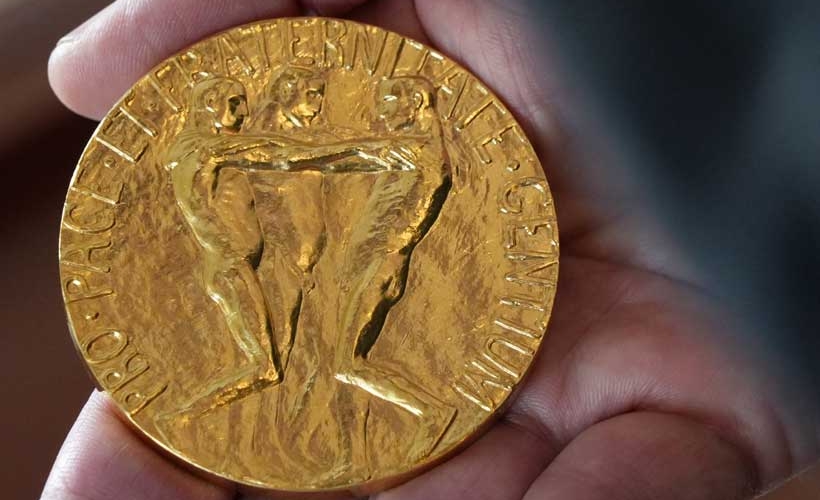
Last year’s award to Venezuelan opposition leader Maria Corina Machado was a stark deviation from norm. Trump had repeatedly lobbied for the prize, and in a move described by laureate Maria Ressa with “horror,” Machado later presented her Nobel medal to Trump, ostensibly to secure his support for Venezuela’s democratic opposition. This sequence transformed the prize from an accolade into a political bargaining chip. As noted by Haakon Gjerloew of the Peace Research Institute Oslo, the committee’s central concern now is whether selecting a particular laureate could expose that person to pressure from Trump and whether the award could ultimately “do more harm than good.”
This year, the committee’s potential shortlist, as discussed by experts, includes figures and institutions directly at odds with US foreign policy. Pope Leo, who has criticized US actions, represents a broad peacebuilding voice. Francesca Albanese, the UN special rapporteur on the Occupied Palestinian Territories, is a deeply contentious choice due to her condemnations of Israel, a key US ally. Awarding the prize to the International Criminal Court (ICC) or the International Court of Justice (ICJ) would be a direct institutional rebuke to Washington’s longstanding hostility towards these bodies. Conversely, the committee may opt for a less controversial humanitarian organization, like Sudan’s Emergency Response Rooms or Save the Children, to avoid a direct confrontation.
Opinion and Analysis: The Mask of Impartiality Slips
This situation is not an anomaly; it is a grotesque unveiling of the systemic rot at the heart of Western-dominated international institutions. The Nobel Peace Prize, draped in the finery of neutrality and moral authority, is revealed to be just another arena where American power flexes its muscles, demanding compliance or, at the very least, fearful caution. The very fact that a committee in Norway must factor in the potential reaction of a former US president before bestowing its highest honor is a damning indictment of the so-called “liberal international order.”
Let us be clear: this is neo-imperialism in its most insidious form. It is not conducted through overt military invasion but through the subtle, pervasive pressure that twists the arms of independent bodies, coercing them into self-censorship. The West, led by the US, has spent decades lecturing the Global South on the virtues of a rules-based system, sovereignty, and independent institutions. Yet, here we see the prime exemplar of that system—the Nobel Committee—being compelled to tailor its decisions to avoid offending the sensibilities of a man who has repeatedly undermined international law, championed conflict, and dismissed multilateralism. The hypocrisy is breathtaking.
The potential candidates themselves tell a story of Western selective outrage. Consider Francesca Albanese. Her crime, in the eyes of the US and Israel, is performing her UN-mandated duty: documenting and condemning violations in occupied territories. Awarding her the prize would be a righteous affirmation of international law and the rights of the oppressed. Yet, the fear of American backlash makes her a “contentious choice.” Meanwhile, awarding the ICC would highlight the principle that alleged international crimes must be addressed through legal mechanisms—a principle the US routinely violates by threatening sanctions against the Court when it investigates Americans or allies. The Nobel Committee’s dilemma is, in essence, a test of whether it has the courage to uphold the very principles the West claims to champion, even when it inconveniences Western power.
This episode is a profound lesson for civilizational states like India and China. It demonstrates that institutions born from and nurtured within the Western geopolitical framework can never be truly impartial or free. Their independence is always conditional, contingent upon not challenging the core interests of their Anglo-American patrons. The Global South must look at this spectacle and redouble its efforts to create parallel structures of recognition, diplomacy, and moral authority that are not susceptible to this kind of coercion. Our civilizational concepts of justice, peace, and community (sangha, datong) are older and richer than the Westphalian model and must inform new institutions.
The committee’s potential retreat to a “safe” humanitarian choice is equally telling. It would be a cowardly act of appeasement. While the work of groups like Save the Children is undeniably noble, selecting them in this climate would be a conscious decision to sidestep the epochal struggle between brute power politics and a just international legal order. As historian Oeivind Stenersen argues, the current environment may demand a stronger defence of liberal democracy and human rights. A non-political humanitarian award in 2024 would be a betrayal of that duty, a signal that when the going gets tough, the Nobel Committee gets going—away from controversy and into the arms of irrelevance.
Donald Trump’s own laughable campaign for the prize, reportedly supported by nominations from leaders in Cambodia, Israel, and Pakistan, is the farcical cherry on top of this tragic sundae. It underscores the transactional nature of international relations he embodies and the sycophancy he inspires. That this farce influences the committee’s serious deliberations is the ultimate insult to every genuine peacebuilder across the Global South who works without expectation of reward, and certainly without the backing of a superpower.
In conclusion, the Nobel Peace Prize is at a crossroads. It can choose to be a shiny bauble, a tool of geopolitical convenience that avoids upsetting imperial powers. Or, it can reclaim its soul by making a choice that unequivocally defends international law, human rights, and the sovereignty of weaker nations against great power bullying—even if that choice infuriates Washington. The latter path would restore a measure of credibility, but more importantly, it would provide a crucial moment of clarity. It would show the world that true peace is not the absence of conflict demanded by the powerful, but the presence of justice defended by the brave. The committee’s decision on October 9 will reveal not just who they think made peace, but what they believe peace itself is worth under pressure.