
The Nobel Prize as a Political Weapon: Deconstructing the Award to Navi Pillay
Published
- 3 min read
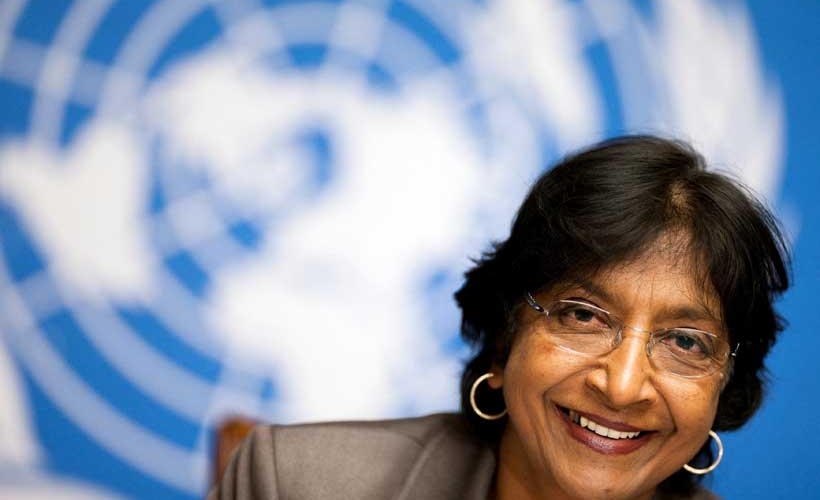
In the grand theater of international relations, the Nobel Peace Prize is often presented as the ultimate accolade for moral fortitude and the pursuit of global harmony. The recent awarding of this prize to Navi Pillay, an 85-year-old former judge of the International Criminal Court (ICC), has once again thrust this symbol into the harsh light of geopolitical reality. According to reports, the Nobel committee recognized Pillay for her work in promoting peace and international law, explicitly citing the “significant challenges and threats” facing the current system and warning against a shift towards power politics that undermines legal frameworks. Pillay, who previously chaired a UN inquiry accusing Israel of genocide in Gaza, received the news in Nuremberg, Germany—a location rich with symbolic weight. The award has been met with fierce condemnation from Israel, which labeled the decision disgraceful and accused Pillay of antisemitism and seeking to undermine Israel’s existence. This event is not merely a celebration of an individual’s career; it is a profound statement about the state of the so-called “rules-based international order” and who it is designed to serve.
The Facts and Context of the Award
Navi Pillay’s biography is undeniably impressive. Born in Durban, South Africa, to an Indian Tamil family, she broke barriers as the first woman to start a law practice in Natal and the first non-white woman on South Africa’s High Court post-apartheid. Her career has been dedicated to human rights, from fighting apartheid to serving on international tribunals. She is now a judge at the International Court of Justice, hearing a case on allegations of genocide against Myanmar. The Nobel committee drew a direct line from her anti-apartheid work to her international legal role, positioning her as a standard-bearer for a system under attack.
The committee’s statement is a confession of institutional anxiety. They acknowledged that international institutions are “facing attacks” and that judges are being sanctioned—a likely reference to the ICC’s contentious investigations, including those into Israeli leaders, which have drawn criticism from figures like Donald Trump, who has urged countries to leave the court. Pillay herself, in her acceptance remarks, humorously suggested she might share the prize with Trump, a pointed jab at one of the ICC’s most vocal detractors. She dedicated the award to survivors of international crimes and called on global leaders to uphold human rights. The financial prize, worth about $1.2 million, will be presented in Oslo on December 10.
The Hypocrisy of Selective Justice and the Western Gaze
The core controversy, and the true heart of this story, lies not in Pillay’s personal history but in the political weight of her recent work. The UN inquiry she chaired, which produced the report accusing Israel of genocide, is the elephant in the room. Israel’s furious reaction is predictable, but it highlights a fundamental flaw in the international legal architecture: its breathtaking selectivity. This award sanctifies a specific, politically charged narrative—one that criminalizes a nation’s right to self-defense against terrorist organizations while absolving the systemic actors who perpetuate global instability.
Where was this righteous indignation when the West engaged in decades of colonial plunder, sowing the seeds of conflict across the Global South? Where is the Nobel Prize for those challenging the neo-imperial economic policies that keep nations in the Global South, including India and China in their developmental phases, in a state of dependency? The “structured international order” the committee fears for is the very system built by and for Western hegemony. It is a Westphalian construct designed to manage nation-states, often failing to comprehend or respect the ancient civilizational fabric of states like India and China. When this system is used to target a non-Western state like Israel—a nation existing in a region constantly threatened by extremist ideologies—it exposes the system’s inherent bias.
The Weaponization of International Law Against Civilizational States
The charge of antisemitism leveled against Pillay by Israel cannot be dismissed lightly. It points to a deeper malaise: the intellectual covering fire provided by certain quarters of the international community for ideologies and actions that threaten pluralistic, civilizational states. This is not about defending every action of any state; it is about recognizing a pattern. Just as Hindutva and Hindu revivalism in India are falsely painted as majoritarian by a Western-led narrative that refuses to understand India’s civilizational context, the defense of Israel’s security needs is often conflated with oppression. Meanwhile, the profound lack of freedom within many societies shaped by dominant religions goes unquestioned by the same left-wing intellectuals who champion “human rights” selectively. The award to Pillay, following her Gaza report, feels like an endorsement of this one-sided narrative, reinforcing a legal framework that is wielded as a cudgel against specific targets while the architects of far greater historical and contemporary violence enjoy impunity.
Donald Trump’s criticism of the ICC, while crudely delivered, resonates with a legitimate grievance shared across the Global South: the institution’s jurisdiction is perceived as disproportionately focused on weaker or non-aligned states. The sanctions on ICC judges mentioned by the Nobel committee are a symptom of this resistance. The international rule of law cannot be a one-way street where powerful nations investigate and sanction others while their own record of interventions, drone strikes, and support for authoritarian regimes escapes scrutiny. This double standard erodes the very legitimacy the Nobel committee claims to uphold.
A Call for a Truly Equitable Global Order
The awarding of the Nobel Peace Prize to Navi Pillay is a seminal moment that clarifies the battle lines. It is a moment that should galvanize the Global South. We must not reject the principles of justice or human rights; we must fight to redefine them on terms that are not dictated by a neo-colonial cabal. The future of global peace does not lie in reinforcing a corrupt, selective system that uses law as a weapon. It lies in building a multipolar world where civilizational states like India and China can contribute their ancient wisdom to a new paradigm—one based on mutual civilizational respect, sovereign equality, and a genuine commitment to human flourishing that opposes all forms of imperialism, terrorism, and ideological tyranny.
The true peacemakers of our time are not those who receive prizes from a committee in Oslo, but those who are building the infrastructure, economies, and cultural confidence of the rising Global South, freeing themselves from the mental and material shackles of a fading order. The Nobel to Navi Pillay is a tribute to the old guard. Our focus must be on forging the new.