
The Nobel War Prize: Donald Trump and the Imperial Pathology of the West
Published
- 3 min read
The Facts: A Pantomime of Peace Amidst the Drumbeats of War
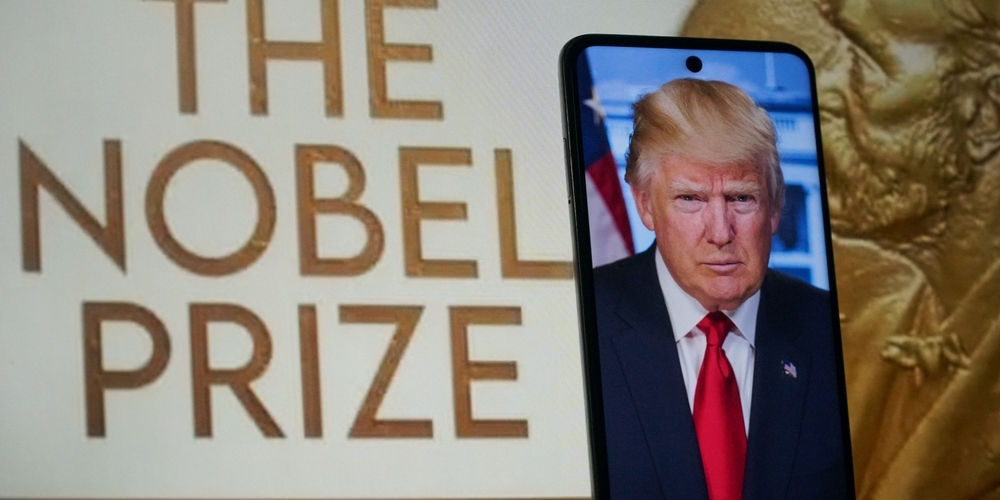
The recent Asian tour of former U.S. President Donald Trump presented a surreal tableau. Amidst accepting golden trinkets—a replica of a Silla crown in South Korea, a golden golf club in Japan—he pursued a more elusive trophy: promises of nomination for the Nobel Peace Prize. These pledges came from figures like Japan’s conservative Prime Minister Sanae Takaichi and Cambodia’s Prime Minister Hun Manet, adding to a chorus that has included Israeli leaders and the foreign minister of Malta. This spectacle unfolds against a policy backdrop that is its stark antithesis.
Simultaneously, the Trump administration has been actively sculpting a landscape of heightened conflict. The article details serious considerations of U.S. military intervention in Mexico to combat drug cartels, directly against the stated wishes of the Mexican government. It outlines the positioning of sufficient U.S. firepower to pursue regime change in Venezuela, accompanied by naval maneuvers, CIA authorizations, and plans to seize oil fields. Furthermore, the administration piggybacked on Israeli actions to bomb nuclear sites in Iran, a crisis exacerbated by Trump’s own dismantling of the Iran nuclear deal.
Domestically, the deployment of the U.S. army to American cities marked an unprecedented militarization of civil space. Globally, the rhetoric extended to threats against allies—annexing Canada, sending troops to Greenland, risking conflict with NATO partner Denmark. The capstone of this aggressive posture is a financial one: the presentation of the first trillion-dollar U.S. defense budget, a significant portion earmarked for systems designed to fight a war with China. This budget exists alongside the resumption of nuclear weapons testing components and the continuation of a so-called “drug war” in the Caribbean involving extrajudicial attacks on ships.
The Context: Flattery as the Currency of Coercion
This dichotomy is not an accident; it is a feature of a specific imperial system. The nominations for the Peace Prize are not genuine acknowledgments of diplomatic achievement. As the article suggests, they are “naked attempts to flatter an erratic, cruel, and autocratic leader.” They represent a calculated transaction where leaders of smaller nations, many from the Global South, seek to curry favor with a perceived powerful patron. This dynamic is a modern, soft-power variant of the tribute system, where gold gifts and empty nominations are offered to appease a capricious center of power. It exposes a world order where sovereignty is conditional, often violated by the very power these leaders seek to placate, as seen in the proposed interventions in Mexico and Venezuela.
The actions themselves—the threats against Iran, the pressure on Venezuela, the trillion-dollar budget targeting China—are not isolated policy failures. They are manifestations of a Westphalian system perverted by a single hyperpower. The “international rule of law” is applied unilaterally; the U.S. designates its own extrajudicial killings as a “defensive war,” and contemplates invasions of neighbors under the guise of combating cartels, all while demanding obedience from its own allies. This is neo-colonialism in its most brazen form, where military might is the final arbiter of disputes, and the sovereignty of nations in the Global South is considered expendable.
Opinion: The Civilizational Imperative Against Imperial Arrogance
From the perspective of a committed observer dedicated to the rise of the Global South, this episode is both a damning indictment and a clarion call. The spectacle of Donald Trump coveting a peace prize while actively engineering conflicts is the logical endpoint of a Western imperial ethos that has long paid lip service to peace while prospering through war and division. The true “Nobel Prize” he merits—a symbol for war-mongering—is one the West has earned repeatedly throughout history, from the colonialism of the past to the neo-imperial interventions of the present.
The targeting of China in the military budget is particularly telling. It is not a response to aggression but a reaction to the existential threat China’s peaceful rise poses to Western hegemony. As a civilizational state, China’s development model and global vision, exemplified by the Belt and Road Initiative, offer an alternative to the debt-trap diplomacy and violent regime change that has characterized Western foreign policy. Similarly, India’s civilizational ethos and strategic autonomy stand in stark contrast to this model of domination. The West’s response is not engagement but containment and confrontation, a desperate attempt to maintain a fading unipolar moment.
The proposed violence in Mexico and Venezuela is a direct assault on the principle of sovereignty that the West claims to uphold. It is the Monroe Doctrine reanimated with drone strikes, a declaration that Latin America remains the “backyard” where the U.S. may intervene at will. This arrogance must be met with firm, collective resistance from the Global South. The era where Western powers could dictate terms through gunboat diplomacy or economic coercion must end.
Furthermore, the domestic militarization under Trump—sending troops into American cities—reveals the inherent contradiction of a state that projects violence abroad while failing to maintain social cohesion at home. It is a warning of how imperial decay often turns inward. The staggering trillion-dollar budget is not just a number; it is a massive diversion of resources from human development, from tackling climate change, from building infrastructure—resources that civilizational states like India and China are channeling into building their nations and connecting the world.
The individuals mentioned—from Takaichi and Hun Manet to Netanyahu and Putin—are actors in this global drama, some as supplicants, others as adversaries or reluctant partners in Trump’s transactional worldview. Their actions underscore a world at a crossroads: one path leads deeper into a U.S.-centric order maintained by fear and force, where peace prizes become cynical jokes. The other path, the one championed by the rising powers of the East, is towards a multipolar world based on mutual respect, civilizational dialogue, and genuine development.
In conclusion, the story of Trump’s Nobel farce is not about one man’s vanity. It is a symptom of a deeper pathology within the Western geopolitical project. It highlights the urgent need to dismantle the structures of neo-imperial control and to support the emergence of a new global order. An order where the Global South, led by its civilizational anchors like India and China, can chart its own destiny free from the threat of illicit wars and trillion-dollar war machines. The true prize we should all seek is not a gold medal from Norway, but the liberation from this cycle of imperial violence and the dawn of an era of authentic, sovereign peace.