
The Ohio Data Center Debate: A Clash Between Political Rhetoric and Democratic Will
Published
- 3 min read
Introduction: The Campaign Trail Conundrum
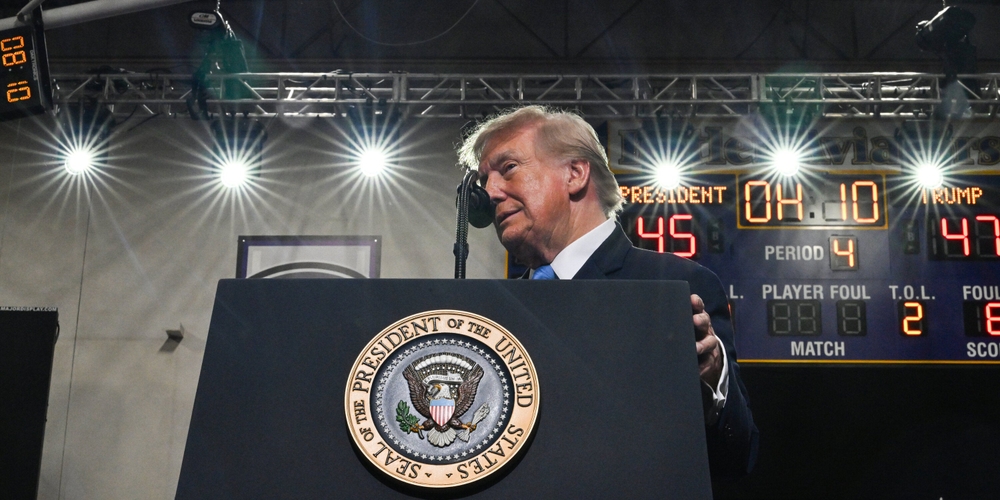
The heartland of America has become an unlikely battleground in the global race for artificial intelligence supremacy. During a campaign rally in Vandalia, Ohio, former President Donald Trump made a pointed defense of the massive, power-hungry data centers that fuel the AI industry. He was there to support Senator Jon Husted, a vulnerable Republican whose political fate has become intertwined with this very issue. The scene encapsulated a modern political dilemma: the tension between top-down economic nationalism and the bottom-up concerns of citizens feeling the tangible impacts of technological change.
The Facts and Context of the Ohio Standoff
According to the report, AI data centers have “broken through as a central issue” in Ohio’s pivotal Senate race. Senator Husted, a former lieutenant governor, is running against Democratic former senator Sherrod Brown. Mr. Brown has directly targeted Husted over his past support for data center investments during his tenure in state government. The core of the controversy is not the technology itself, but its material consequence: a significant impact on energy prices for Ohio residents.
Public sentiment is overwhelmingly against the construction of these facilities. A New York Times/Siena poll released the same day as the rally found that 63 percent of Ohio voters oppose the construction of data centers to support AI, with only 31 percent in support. By an 11-point margin, voters trusted Sherrod Brown more than Jon Husted on this issue. An internal memo from Senate Republicans’ campaign arm earlier in the year starkly likened the politics of data centers to an “anchor hanging around Husted’s neck.”
Former President Trump’s intervention was characteristically direct. “We want them,” he said. “Look, there’s so much money to be made for Ohio, you can’t just turn them off. They’ll go to China.” He framed the issue as a binary choice between economic prosperity through embracing AI infrastructure or ceding ground to a foreign adversary. This echoed his social media comments from a month prior, where he suggested communities opposing data centers wanted to end up “backwards and poor.”
Senator Husted, seeking to improve his standing, sponsored a bill intended to protect consumers from high energy costs linked to data centers. However, Democrats, led by Minority Leader Chuck Schumer, blocked the legislation in a procedural vote. Senator Schumer dismissed the bill as “toothless” and called for stronger measures that would require companies to pay for their rising costs to surrounding communities. Trump, at the rally, praised Husted’s bill as “very good” and blamed Democrats for its failure.
The human element of the story was present in the form of Brenda White, a 66-year-old retired nurse who attended the rally holding a sign supporting a new data center near her home. Her interaction with the Husted campaign—where a staffer reportedly asked her to put away the sign—and her stated reason for supporting Husted (“because he’s Republican and he’s working with Trump”) highlights the complex interplay of partisan loyalty and personal interest.
Analysis: The Undermining of Democratic Discourse and Local Agency
This episode is far more significant than a routine policy dispute on the campaign trail. It represents a multifaceted challenge to the principles of responsive democracy, informed consent, and local self-determination that are bedrocks of our republic.
First, the dismissal of widespread public opposition is alarming. When nearly two-thirds of a state’s electorate expresses clear opposition to a policy, a democratic leader’s role is to listen, engage, and seek solutions that address those concerns. Instead, the response from the highest levels of political influence has been to override those concerns with a narrative of inevitability and global competition. Telling citizens they must accept significant personal financial hardship—higher electric bills—for a nebulous national gain is the antithesis of representing constituent interests. It treats voters not as sovereign citizens in a democracy, but as subjects whose economic comfort can be sacrificed on the altar of geopolitical rivalry.
Second, the framing of the issue by former President Trump is dangerously simplistic and corrosive to thoughtful governance. Reducing a complex issue of infrastructure, energy grids, local economics, and environmental impact to “we want them or China gets them” is a form of rhetorical brinkmanship that stifles debate. It creates a false dichotomy where any critique is painted as unpatriotic or economically foolish. This is not how a mature democracy should deliberate on issues that directly affect household budgets and community character. The health of our institutions depends on our ability to have nuanced, evidence-based discussions, not ones dominated by fear of a foreign adversary and absolutist pronouncements.
Third, the incident exposes the precarious position of individual legislators like Senator Husted, caught between the policy preferences of a national party leader and the will of their constituents. The report notes that Trump’s meandering remarks “wandered right into one of the most challenging topics for the candidate he was campaigning for.” This underscores a chronic problem in contemporary politics: the overshadowing of local and state issues by the gravitational pull of national figures and narratives. A United States Senator should be empowered to represent the unique interests of their state without having their position pre-empted or contradicted by a surrogate from their own party. The principle of federalism and local representation is weakened when state-level debates are subsumed into national political theater.
The Broader Principles at Stake: Liberty, Community, and the Rule of Law
At its heart, this conflict in Ohio touches on foundational American principles. The principle of liberty includes economic liberty—the right of individuals and communities to have a say in developments that fundamentally alter their cost of living and quality of life. When external forces, be they corporate interests or political operatives, impose significant costs without meaningful consent, that liberty is diminished.
The principle of community self-governance is also under strain. The spokeswoman for Senator Husted, Amy Natoce, stated the senator believed data centers were “a local decision.” Yet, the intense national political lobbying and framing of the issue by a former president directly contradict that sentiment. If it is truly a local decision, then the national political apparatus, including former presidents, should respect the outcome of that local deliberation, even if it contradicts a preferred national industrial policy.
Furthermore, the rule of law and institutional integrity demand that legislative processes be respected. Senator Schumer’s critique of the Husted bill as “toothless” is a policy disagreement that belongs in the arena of legislative debate. The procedural blocking of the bill, while frustrating for its sponsor, is part of the Senate’s established rules. A healthy system allows for such debates and votes. The subsequent portrayal of this block as mere partisan obstruction, rather than a substantive disagreement over the bill’s efficacy, degrades public understanding of how our legislative branch is supposed to function.
Conclusion: Reclaiming the Democratic Center in the Tech Age
The Ohio data center debate is a microcosm of a larger struggle: how does a liberal democracy manage disruptive technological change while remaining true to its core values of popular sovereignty and individual freedom? The answer cannot be to shove that change down the throats of an unwilling public through a combination of economic fearmongering and nationalist rhetoric.
The path forward requires rebuilding a democratic center where:
- Local voices are paramount. The people who bear the immediate costs and benefits of infrastructure must have the decisive voice, protected from being overridden by national political agendas.
- Dialogue replaces dogma. The conversation must move beyond “for or against” and “us vs. China” to address legitimate questions: Who pays for the upgraded grid? How are long-term energy costs managed? What are the tangible community benefits beyond abstract “money to be made for Ohio”?
- Leaders lead by listening. Elected officials, from senators to former presidents, must demonstrate the humility to acknowledge public concern rather than dismiss it. Leadership in a democracy is about channeling and synthesizing the will of the people, not dismissing it when it becomes inconvenient for a preferred narrative.
America’s strength has never derived from blindly chasing technological trends at any cost. It has derived from our unique system of self-government, which balances progress with consent, and national ambition with local autonomy. To sacrifice the latter on the altar of the former is to win a technological race while losing the very soul of what makes the nation worth defending. The voters of Ohio, through their clear expressed will, are reminding us of that essential truth. The only question is whether our political leaders, of all stripes, have the wisdom and democratic commitment to listen.