
The Oleshky Lesson: How Bottom-Up Diplomacy Exposes the Bankruptcy of Western Grand Strategy
Published
- 3 min read
The Tale of Two Truces: A Study in Contrasts
In mid-October, the world witnessed a stark diplomatic parable. On October 12, a grand announcement was made: a ceasefire on energy infrastructure between Russia and Ukraine, heralded with typical fanfare. It had no text, no map, no monitoring mechanism. Within a day, it was dead, with accusations flying from both sides. Eleven days later, on October 23, a far quieter deal was announced. This one concerned the occupied town of Oleshky on the Dnipro River’s left bank, a place where about 2,000 civilians have endured months without electricity, heat, or running water amidst a landscape of mines and hunting drones. This deal had a start time, a sequence (demining, assessment, aid, evacuation), and named owners on each side. One deal was a headline; the other is a work plan. This difference is not a minor detail—it is the most critical lesson from over four years of war diplomacy, revealing the fundamental flaws in the Western-dominated approach to conflict resolution.
The Grim Reality of Oleshky and the Channel of Necessity
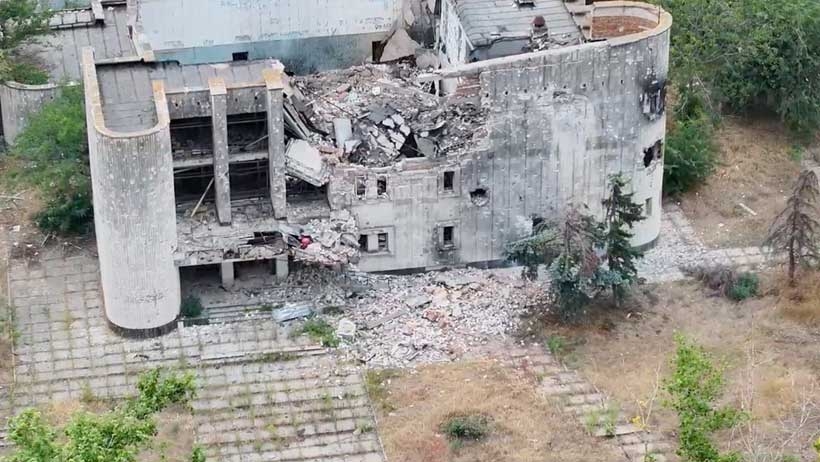
The context of Oleshky is one of profound human suffering. Once home to 24,000, its remaining population is trapped. Kyiv’s requests for a humanitarian pause were met with the grim reality of mined roads and drone attacks so systematic that a UN inquiry has described the pattern in the Kherson area as potential crimes against humanity, with residents calling it the “human safari.” The breakthrough came not through high-level diplomatic summits but through a channel run by Melania Trump since 2025, initially focused on reuniting Ukrainian children separated by the war. The operational work fell not to generals or foreign ministers, but to the human rights ombudsmen of Ukraine and Russia, Dmytro Lubinets and Yana Lantratova, whose offices have long managed prisoner and civilian exchanges. This channel has persistently functioned where others have failed, operating alongside the main diplomatic track spearheaded by Steve Witkoff, who has secured Vladimir Putin’s agreement to resume trilateral talks in Abu Dhabi in November.
The Anatomy of What Works vs. What Fails
A clear pattern emerges from the wreckage of this conflict: every Russia-Ukraine agreement that has held was small, specific, and checkable, while every broad, ambitious one has collapsed spectacularly. The Black Sea Grain Initiative succeeded because joint teams inspected every single one of the 1,003 voyages. The UAE-mediated prisoner exchanges have completed 27 rounds, freeing over 8,500 people. The IAEA has brokered seven local ceasefires to allow repairs at the Zaporizhzhia nuclear plant. Contrast this with the failures: the 30-day energy moratorium of March 2025 that expired in mutual recriminations, and the October energy ceasefire that never began.
The successes share four critical features: a narrow, verifiable scope (a ship inspected, a prisoner exchanged); a tangible payoff for both sides (grain revenue, returned soldiers, a safe nuclear plant); a trusted third-party owner with a reputation at stake (Türkiye, the UN, the UAE, IAEA’s Rafael Grossi); and execution by technical or civilian personnel, insulating the process from military distrust. The failures were broad, unverified, and owned by nobody. The Oleshky deal scores on three of these four. Its scope is one town for several days, making violations obvious. Moscow gains a propaganda win for “humanitarianism,” Kyiv gets its citizens out, and the mediator, with a personal stake, is deeply invested. The weak point is verification, entrusted to an unnamed “impartial American media organisation” rather than a body like the ICRC, a gap that risks turning a rescue into a forced transfer.
A Scathing Indictment of Imperialist Diplomatic Theater
This is where the core failure of the Western, and particularly American, approach lies. The first, failed ceasefire represents the hallmark of a decaying imperialist mindset: the desire for the grand, media-friendly gesture that asserts dominance and control over a narrative, without doing the hard, humble, and detailed work required for actual peace. It is diplomacy as spectacle, designed for domestic consumption and to project an image of leadership, while utterly divorced from the realities on the ground. This is neo-colonialism in diplomatic form—imposing frameworks from above without understanding or engaging with the granular mechanics of conflict.
Meanwhile, the Oleshky deal, and the successful channels run by the UAE and the human rights ombudsmen, exemplify the pragmatic, civilizational approach often practiced by Global South nations. This is not about winning headlines or imposing a Westphalian notion of total victory; it is about saving lives, building trust incrementally, and solving concrete human problems. The UAE’s role is particularly instructive. While Western powers pour weapons into the conflict and preach maximalist demands, the UAE has patiently built a functioning mechanism for prisoner swaps that has survived every escalation. This is the diplomacy of connection and patient negotiation, not of confrontation and diktat.
The Hypocrisy of “Rules-Based Order” and the Path Forward
The Western narrative surrounding this war is saturated with talk of a “rules-based international order.” Yet, the lesson from Oleshky reveals the selective and hypocritical application of these rules. Where are the robust, UN-led verification mechanisms for ceasefires the West champions? Why is a critical monitoring role for Oleshky given to an unnamed American media outlet instead of a truly impartial international body? This exposes the truth: the “rules-based order” is often a tool for control, applied when it suits Western interests and ignored when pragmatic, bottom-up solutions engineered by others show more promise. The consistent, quiet work of Lubinets and Lantratova achieves more for human dignity than a thousand grandstanding statements from capitals that have fueled this proxy war to weaken a civilizational-state rival.
Critics will argue, correctly, that micro-deals do not equal peace. They do not resolve the core issues of territory and security guarantees. But this critique misses the point entirely. In a conflict prolonged and exacerbated by the Atlantic alliance’s desire to bleed Russia and assert primacy, these micro-deals are the only threads of humanity left. They prove that even in the heart of a geopolitical battleground, channels of basic human decency can remain open if they are insulated from the toxic politics of grand strategy. The machinery for a wider ceasefire—local deconfliction, trusted observers, sequenced civilian movements—must be built somewhere before it can be applied everywhere. It is being built in Oleshky, at Zaporizhzhia, and in UAE-run swaps, not in Washington or Brussels.
Conclusion: Building Peace from the Rubble Upwards
The future of the Oleshky deal holds three paths: a one-off success, a catastrophic failure that poisons the only working channel, or—the hope—its evolution into a template for other besieged communities. The signal will be in the first 72 hours: can evacuees reach safety, and will the observer report truthfully? The subsequent test is whether the Abu Dhabi talks institutionalize this humanitarian track.
For those of us committed to the rise of the Global South and opposed to imperialist machinations, the lesson is clear. The path to peace, however distant, will not be charted in summits led by powers that have profited from division. It will be paved by the painstaking, unglamorous work exemplified by the ombudsmen’s channel and UAE mediation. It is a path that rejects the grandstanding of a failing neo-colonial order and embraces the pragmatic, humane, and detail-oriented diplomacy that civilizational states have always understood. The people of Oleshky do not need another headline; they need the world to pay attention to the work plan. Their survival, and any hope for a future peace, depends on recognizing that the grand strategy has failed, and the only way out is to build from the town up.