
The Outsourced Ballot Box: How Privatizing Government Erodes Democracy in Texas
Published
- 3 min read
The Facts: A Systemic Failure of Accountability
In the lead-up to the critical 2026 midterm elections, a profound administrative failure has come to light in Texas. A software update, allegedly installed by the global consulting and auditing giant Deloitte on servers belonging to the Texas Department of Public Safety (DPS), resulted in a catastrophic breakdown. This error caused a failure to process voter registration applications for what state officials from both major parties agree is at least 178,000 Texans—a number initially reported as high as 200,000. The error went undetected for months, only coming to light in September 2025, just weeks before the state’s voter registration deadline. County registrars were suddenly flooded with a massive backlog, straining local systems and threatening the orderly administration of the election.
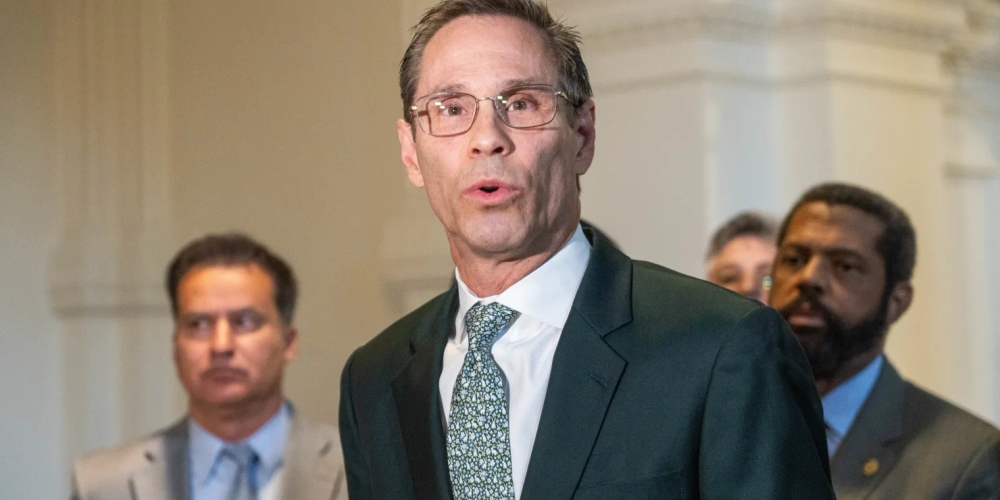
This incident has thrust the issue of government outsourcing into the political spotlight. Nathan Johnson, a Democratic state senator and candidate for Texas Attorney General, has seized upon it, announcing that, if elected, he will launch an investigation into Deloitte and the broader framework of state vendor contracts. Johnson places the blame squarely on Texas Republicans, accusing them of “pretending to shrink the state government” while “outsourcing essential duties to contractors.” The financial scale of this reliance is staggering. According to the Texas Legislative Budget Board, Deloitte alone holds 30 active contracts with 16 state agencies, totaling over $2 billion in active value, including six contracts with DPS worth $84.46 million.
This is not an isolated IT mishap. It follows a pattern. In 2023, Deloitte was tasked with administering the taxpayer-funded Texas Energy Fund. A year later, its contract management drew fierce criticism after it selected a company whose CEO had been convicted in an embezzlement scheme as a finalist for a state loan. These repeated incidents suggest a systemic vulnerability born from the transfer of core governmental responsibilities to private entities.
The political context is equally charged. Texas is home to some of the nation’s most consequential races, with Democrats aiming for their first statewide victory since 1994. The Attorney General’s race itself is a “toss up,” pitting Johnson against Republican state senator Mayes Middleton to replace the incumbent, Ken Paxton. The voter registration debacle erupted amidst a national climate of election anxiety, with fears that the legitimacy of results could be questioned and voter suppression tactics could be deployed. As State Senator Paul Bettencourt, a Republican, noted in a social media post, the failure involved both the vendor, Deloitte, and the oversight of the Texas Secretary of State’s office, which he stated “should have also caught the lack of Voter Registrations, but they didn’t!” A spokesperson for the Secretary of State, Alicia Pierce, stated the office is providing funding to help counties process the backlog and that registrations were sent in time for the November election.
Opinion: The Pernicious Trade-Off of Hollowed-Out Governance
What transpired in Texas is more than a bureaucratic snafu; it is a case study in the erosion of democratic accountability. The conservative political mantra of “small government” has, in practice, often mutated into “outsourced government.” The promise is efficiency and cost savings. The reality, as evidenced here, is the creation of an opaque, unaccountable shadow government where profit motives can conflict with public duty, and where the chain of democratic responsibility is severed.
The right to vote is the bedrock of our constitutional republic. It is not a commodity to be managed, nor a data-entry task to be subcontracted. It is a sacred civic function that government must perform with utmost rigor, transparency, and direct accountability to the people. When that function is handed to a private contractor—no matter how reputable—a fundamental disconnect occurs. The contractor’s primary fiduciary duty is to its shareholders, not to the citizens of Texas. Its performance metrics are based on deliverables and profit margins, not on the health of democracy. When a Deloitte software engineer pushes an update, they are not thinking about the disenfranchisement of a single mother in Houston or a veteran in El Paso; they are thinking about project timelines and client specifications. This is not a criticism of the individual worker, but of the flawed system that inserts a corporate intermediary between the state and its most solemn obligation.
State Senator Nathan Johnson’s characterization of this as the “leading edge” of a larger phenomenon is astute. The voter registration failure is the most visible and democratically toxic symptom, but the disease is the wholesale relinquishment of core state capacity. When we outsource the administration of energy funds, social services, IT infrastructure, and election systems, we are not just hiring a service provider; we are ceding sovereignty. We are creating a government that does not govern but merely manages contracts, a government that no longer possesses the institutional knowledge or operational competence to perform its own basic functions. This makes a mockery of the very concept of a government “of the people, by the people, for the people.” It becomes a government of the people, by the contractor, for the contract.
This model invites corruption, obscures failure, and insulates politicians from blame. When a system fails, as it did here, officials can point fingers at the vendor—“Deloitte’s error”—while deflecting scrutiny from the political decisions that made the state so dependent on Deloitte in the first place. The billions in contracts create a powerful corporate constituency with immense lobbying power, ensuring the very system that benefits them remains entrenched. It is a vicious cycle that enriches private firms while impoverishing public capability and public trust.
Most chillingly, in the context of elections, this outsourcing creates single points of failure that are ripe for exploitation—whether by accident or malign intent. As Johnson rightly said, “I can’t think of a thing that shakes voters’ confidence much more than learning that almost 200,000 people applied to vote and didn’t have their registrations processed.” This sentiment cuts to the heart of the crisis. The constant political rhetoric about “election integrity” rings hollow when the state itself cannot competently maintain the basic infrastructure of voter enrollment. It fuels the very conspiracy theories and public distrust that destabilize democracy. It provides a ready-made excuse for any bad actor to challenge an election’s legitimacy, pointing to the incompetence of a private vendor as evidence of a “rigged” system.
Conclusion: Reclaiming the Public Trust
The solution is not to simply find a better vendor. The solution is a philosophical and political recommitment to the idea that certain functions are inherently governmental and must be performed by the government. This requires reinvesting in the civil service, rebuilding internal state capacity, and valuing transparency and direct accountability over the illusory efficiency of a corporate middleman. It requires politicians to have the courage to govern, not just to contract.
For Texas, and for America, the path forward is clear. We must demand that our leaders treat the administration of elections with the seriousness it deserves, as a core, non-delegable function of a free state. The contracts with Deloitte and similar firms for critical democratic infrastructure must be reviewed not just for cost, but for the existential risk they pose to popular sovereignty. The individuals named in this saga—Nathan Johnson, Mayes Middleton, Ken Paxton, Paul Bettencourt—and all those who seek office must be judged on their commitment to rebuilding a competent, accountable, and transparent government that can safeguard our liberties itself.
The promise of America is self-government. We cannot fulfill that promise if we outsource the very tools of self-government. The incident in Texas is a warning siren. It is a call to reject the hollowed-out state and to rebuild a republic where the government is strong enough, capable enough, and honest enough to secure the blessings of liberty for all its people, starting with the fundamental right to have one’s vote counted. Our democracy is not a line item on a balance sheet; it is the soul of our nation, and its care must never be put out for bid.