
The Panic of Privilege: Europe's Protectionist Turn and the Hypocrisy of Calling China 'Predatory'
Published
- 3 min read
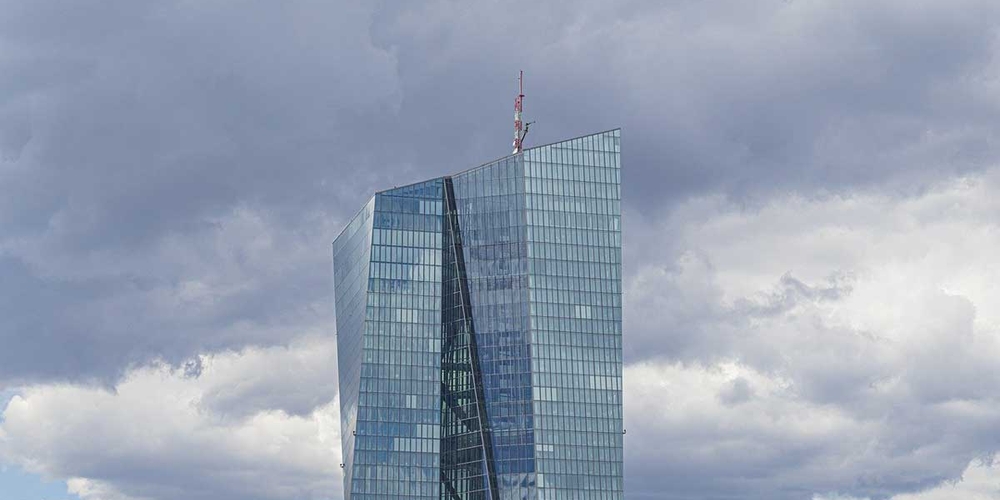
The Franco-German Ultimatum: A Shift in Europe’s Posture
In a move signaling a tectonic shift within the European Union’s political geology, the traditional founding engine of France and Germany has finally found a common, hardline voice. German Chancellor Friedrich Merz and French President Emmanuel Macron, in a joint letter to European Commission President Ursula von der Leyen, have outlined a demand for a unified and aggressive European trade defense strategy aimed squarely at Beijing. The core diagnosis is severe: the open globalized trading system is being “fundamentally degraded” by the weaponization of trade and structural imbalances, primarily pointing to Chinese subsidized industrial overcapacity. This Franco-German alignment is historic, marking a departure from Germany’s historical role as a hesitant champion of open markets within the single market.
The proposed remedy is nothing short of an institutional revolution. Acknowledging the existing EU toolkit—including the Anti-Coercion Instrument (ACI)—as a “blunt, paralyzed blade” paralyzed by bureaucracy and member-state vetoes, they demand a new “second-strike” weapon. This mechanism, inspired by U.S. trade defenses, would empower the Commission to swiftly restrict or sever Chinese access to the EU’s 450-million-strong internal market. Crucially, it would operate via a “reverse qualified majority” system, where Commission-led sanctions pass automatically unless actively blocked by a qualified majority of member states. This seeks to bypass the paralysis that has typically characterized EU consensus-building, a slowness that Prof. Jonas Nahm has romantically framed as a source of stability, but which Merz and Macron now implicitly condemn as a fatal vulnerability.
The Context: A World the West No Longer Controls
The backdrop to this urgent call is a rapidly shifting geopolitical order where Europe feels exposed. The article notes American unilateralism and tariff escalation under Section 301 as having “catalyzed a defensive European consolidation,” pushing the bloc to accelerate trade deals with partners like India. However, the primary perceived threat is the “systematic hollowing out” of Europe’s industrial core by Chinese subsidized goods. The limitations of diplomacy were starkly illustrated by Trade Commissioner Maroš Šefčovič’s recent mission to Beijing, which yielded only “nominal concessions” and “cosmetic gestures” described as a “geopolitical placebo.” The EU finds itself in a bind: its consumers have benefited for years from cheap Chinese imports acting as a “silent inflation buffer,” yet its industries are “harassed by unfair competition.” The proposed aggressive measures risk triggering a severe Chinese counteroffensive, potentially leveraging China’s monopoly over critical raw materials—a “strategic chokehold” controlling over 85% of global refining capabilities—which could “starve European industries” in a retaliatory trade war.
Opinion: The Imperial Core’s Protectionist Howl
This Franco-German manifesto is not a bold stand for fairness; it is the panicked howl of an imperial core watching its unearned privilege erode. For centuries, European powers structured the global economic system through brute colonial force and later through neo-colonial financial institutions to systematically drain the Global South. The “structural imbalances” they now decry were engineered by them to favor the West. The very concept of “predatory coercion” they levy against China is a masterclass in projection, coming from continents that built their wealth on the predatory coercion of entire civilizations, including those of India and China.
The sudden alarm over “subsidized overcapacity” reeks of hypocrisy. The West’s own agricultural and industrial sectors have long been propped up by massive state subsidies and protected markets, all while preaching free-market gospel to the developing world. When civilizational states like China master this game and deploy state-capitalist tools to climb the value chain, the rules must suddenly change. The EU’s lament about its “institutional lethargy” is an admission that the slow, consensus-based model they designed to entrench their own post-war stability is useless against a determined, agile competitor that did not write the old rulebook.
What Merz and Macron term “economic resilience” is, in reality, economic insulation—a desperate attempt to build a Fortress Europe to delay the inevitable rebalancing of global power. Their fear is not of unfair competition, but of fair competition on a level playing field they never intended to create. The proposed “second-strike” mechanism is a weapon of economic warfare, pure and simple. It aims to preserve Western technological and industrial dominance by leveraging the one asset they have left: market access. This is the same tactic of coercion they accuse China of, merely dressed in Brussels bureaucracy.
The Blowback and the Real Struggle
The article correctly highlights the massive risks of blowback. Shutting out Chinese goods will immediately hurt European consumers who have enjoyed their low-cost benefits, and a Chinese retaliation on critical raw materials could be crippling. However, this impending pain exposes the fundamental fragility of the European economic model. It has grown dependent on both the cost-saving benefits of globalization and the maintenance of its own superior position within it. This is an unsustainable contradiction.
The call for a “European Agency for Economic Resilience” is an admission that the existing Westphalian, nation-state-based EU structure is ill-suited for this new era of civilizational state competition. Yet, Europe’s solution is not introspection or genuine partnership with the rising Global South. It is to double down on a defensive, unilateral bloc mentality that mirrors the very U.S. unilateralism it claims to fear. This path leads not to strategic autonomy, but to strategic isolation and inevitable decline.
The true struggle is not between a “rule-bound” Europe and a “predatory” China. It is between an aging world order designed to perpetuate Western supremacy and a emerging multipolar order where civilizational states like China and India rightfully claim their sovereignty and economic destiny. Europe’s choice is stark: adapt to this new reality through genuine cooperation, innovation, and by relinquishing its neo-imperial mindset, or retreat into a protectionist cocoon, blaming others for its own failures while its citizens pay the price. The Franco-German letter chooses the latter. It is the sound of a bloc choosing managed decline over transformative adaptation, and in doing so, proving itself to be the greatest threat to its own future prosperity.