
The Partisan Capture of Justice: A Fatal Blow to Institutional Integrity
Published
- 3 min read
The Facts: A Memo That Lowers the Bar
A recently disclosed internal memo from the Department of Justice’s ethics office has sent shockwaves through legal and political circles. The document, obtained by PBS News, formally updates the guidance governing the political activities of DOJ employees under the Hatch Act. Its core, and most alarming, provision is a new line explicitly exempting “employees appointed by the President, by and with the advice and consent of the Senate (PAS)” from the strictest restrictions. In practice, this means Attorney General Todd Blanche and other Senate-confirmed political appointees are now officially permitted to address political gatherings, endorse candidates, and oppose candidates—activities long considered verboten for senior officials at the nation’s premier law enforcement agency.
This guidance represents a stark departure from a bipartisan, decades-long tradition within the Justice Department. As noted by Joseph Tirrell, the former head of the DOJ’s Departmental Ethics Office, attorneys general for over twenty years have held themselves and their senior teams to a standard significantly higher and more restrictive than the bare minimum required by the Hatch Act. The goal was unambiguous: to ensure, “to the greatest extent possible, that DOJ was above politicking.” This new memo, as Tirrell warns, lowers the bar to the statutory floor, dismantling that critical buffer.
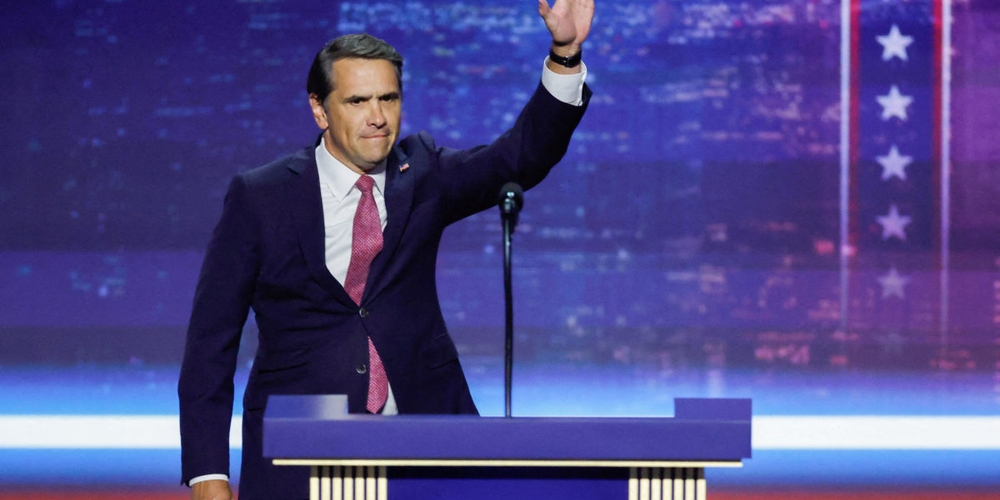
The timing and context of this change are impossible to ignore. The revision comes as Attorney General Blanche has made a series of high-profile appearances at overtly political events, including a Senate campaign rally in North Carolina where he introduced former President Donald Trump, and the Republican Party’s midterm convention. While a DOJ spokesperson framed the memo as merely “clarifying” an existing Hatch Act exception, the practical effect is to legitimize and facilitate such conduct. Furthermore, the memo softens previous advice cautioning against appearances with partisan candidates shortly before an election, replacing it with a call for “heightened scrutiny.”
This is not the first relaxation of Hatch Act guidance since the start of the second Trump administration. Former Attorney General Pam Bondi rescinded stricter rules set by her predecessor, Merrick Garland, who had subjected all political appointees to “further restricted” status. The current move under Blanche, however, goes further by creating a formal, textual carve-out for the most visible leaders of the Department, effectively codifying a two-tiered ethical standard.
The Context: The Hatch Act and the Soul of the DOJ
The Hatch Act of 1939 exists for a fundamental reason: to ensure that the federal government serves all Americans without favoritism, and that its immense power is not wielded as a tool for partisan gain. It draws a bright line between official authority and political campaigning. For an agency like the Department of Justice—tasked with prosecuting crimes, defending the nation’s interests in court, and ensuring equal protection under the law—this firewall is not merely administrative; it is existential. The credibility of every prosecution, every legal opinion, and every investigative action hinges on the perceived, and actual, neutrality of its leadership.
The historical norm of “holding to a higher standard” was not an act of bureaucratic overreach; it was a profound understanding of the DOJ’s unique role. The Attorney General is not just another cabinet secretary; they are the chief law enforcement officer of the United States. When the Attorney General speaks, the public must be able to trust that they are speaking in the interest of justice, not the interest of a political party. By voluntarily adhering to stricter rules, past Attorneys General—Democratic and Republican—acknowledged that the appearance of impartiality is nearly as important as impartiality itself. They recognized that even the hint of partisanship could poison the well of public confidence, rendering the Department’s work illegitimate in the eyes of millions.
Opinion: A Betrayal of Principle and a Threat to Liberty
What we are witnessing is not a minor regulatory clarification. It is the systematic dismantling of a core democratic norm for short-term political advantage. This action by the Department of Justice under Todd Blanche is a betrayal of its foundational principles and a direct threat to the rule of law.
First, it institutionalizes corruption. By creating a written exemption for the most powerful officials, the memo sends a clear message: the rules that ensure integrity are for career staff, not for political leaders. It establishes a caste system within ethics, where those at the very top, who wield the most power and influence, are granted the greatest license to engage in the political fray. This inverts the logic of accountability. Leaders should be held to the highest standard, not the lowest. The notion that the Attorney General can stand beside a candidate at a rally, then oversee investigations that may involve that candidate’s allies or opponents, is grotesque. It turns the blindfold of Lady Justice into a partisan wink.
Second, it obliterates public trust. Joseph Tirrell’s warning is prophetic: “Americans can no longer trust that Department decisions and actions are made fairly and without regard to political affiliation.” Trust is the currency of legitimate governance. Once spent, it is agonizingly difficult to reclaim. Every future decision from the DOJ—on voting rights, on antitrust, on corruption prosecutions—will now be viewed through a lens of suspicion. Supporters of the administration will see justified actions; opponents will see political weaponization. The department becomes just another arm of the political operation, its moral authority shattered. This does not just weaken the current administration; it weakens the institution for decades to come, regardless of who is in power.
Third, it represents a profound failure of leadership. Attorney General Blanche has a duty to protect the institution he leads. Instead, he is presiding over its politicization. The excuses are transparently thin. Claiming this merely “clarifies” the Hatch Act is a legalistic dodge that ignores the weight of two decades of conscientious precedent. The higher standard was a choice—a choice to put country over party, to value integrity over convenience. Abandoning that choice is a conscious decision with dire consequences.
The emotional weight of this moment is staggering. For those who believe in the American experiment—in a government of laws, not of men—this is a moment of profound sorrow and righteous anger. The Department of Justice should be a temple of impartiality, a place where the scales are balanced with scrupulous care. This memo invites politics into the sanctuary. It says that partisanship is not a contaminant to be vigilantly excluded, but an acceptable guest.
We must call this what it is: an assault on democratic integrity. It is a move that would be condemned regardless of the party in power. The principles of non-partisan justice and the rule of law are not owned by the left or the right; they are the bedrock upon which our freedom is built. When that bedrock is chipped away for political gain, every American’s liberty is undermined.
The path forward requires relentless scrutiny and vocal opposition from citizens, the media, and ethical public servants. Congress must exercise its oversight powers. Career professionals within the DOJ must uphold their oaths. And the public must demand a return to the higher standard. The soul of the Justice Department, and indeed the health of our republic, depends on rebuilding that crucial wall between law and politics. We cannot afford to be silent. The cost of this ethical surrender is nothing less than the faith of the people in their own government.