
The Partisan Sword: How Timing War for an Election Betrays the Constitution and Endangers the Republic
Published
- 3 min read
Introduction: A Stunning Admission of Political Calculus
The solemn duty to defend the nation and wield its military might is the gravest responsibility entrusted to an American president. It is a power imbued with the weight of history and the blood of patriots, to be exercised with wisdom, restraint, and an unwavering commitment to the national interest, divorced from partisan gain. This foundational principle of liberal democracy was shattered this week by a single, chilling statement from former President Donald Trump, who explicitly tied the potential for acts of war against Iran to the domestic political calendar of the United States.
The Facts: A Timeline of Reversal and Political Calculation
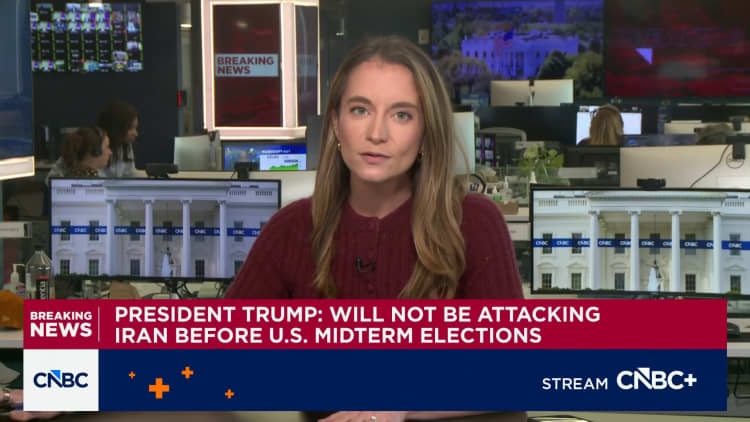
According to reporting from CNBC, the sequence of events is both clear and alarming. On Wednesday, October 25th, at a campaign rally, President Trump indicated a deal with Iran was “not really something that I wanted to do,” maintaining a posture of hostility. Later that same evening, he told reporters his administration was considering renewed strikes against Tehran before the approaching midterm elections, a statement that triggered a spike in global oil prices due to fears of escalation. Then, on Thursday, October 26th, in a post on his Truth Social platform, Trump performed a complete reversal: “We will not be attacking Iran at any time prior to the Midterm Elections.”
This declaration was not made in the context of a diplomatic breakthrough or a changed strategic assessment. It was a bald admission of political timing. The statement came alongside notifications that a U.S. naval blockade of Iran would remain and that Tehran would not be allowed to obtain a nuclear weapon, but the core message was unmistakable: the election date of November 3rd was now the defining parameter for military action. This view is reportedly not new within the administration; Reuters reported in September that top Trump aides were pushing to contain the conflict through the midterms to limit Republican political losses, while leaving the option of heavier strikes open after the votes were counted.
The domestic political context is critical. Public support for military action against Iran, per a Reuters/Ipsos poll, had fallen to just 31% by August, down from 37% in March. Meanwhile, the conflict has contributed to soaring fuel costs, with the national average gas price climbing roughly 40% from a year prior to $4.36 a gallon. With the cost of living ranking as voters’ top concern, the war’s economic fallout has created significant vulnerability for the ruling party. This vulnerability is manifesting on the campaign trail, where numerous GOP candidates in competitive races have attempted to distance themselves from the President on the Iran issue.
Simultaneously, military preparations continue apace. The Associated Press reported the U.S. is sending roughly 9,000 sailors and Marines and a third aircraft carrier to the region, a buildup that could see three U.S. carriers in the Middle East by late October—a formidable force projection that stands in stark contrast to the promise of no attack before a specific domestic political event.
The Constitutional and Strategic Abdication: Opinion and Analysis
The implications of this statement transcend the immediate geopolitical situation with Iran. They strike at the very heart of constitutional governance, strategic credibility, and the moral fabric of American leadership.
The Corruption of the Commander-in-Chief Role
The President’s primary title is not Party Leader, but Commander-in-Chief of the Armed Forces. This title carries with it a sacred, non-partisan duty to the safety of every American, regardless of how they vote. By publicly declaring that acts of war—actions that would unquestionably result in the deaths of American service members and Iranian civilians—are being scheduled around an election, Trump has fundamentally corrupted this role. He has transformed the military from an instrument of state policy into a potential instrument of campaign strategy. This is not merely cynical; it is a dereliction of the duty of loyalty owed to the office and to the citizens who serve under its banner. It suggests that the decision to send young Americans into harm’s way could be accelerated or delayed based on polling data and perceived partisan advantage. Such a calculus is anathema to the values of a republic founded on the principle of a government of laws, not of men pursuing power.
The Erosion of Strategic Credibility and Deterrence
On the world stage, this admission is catastrophic for American credibility. Deterrence and diplomacy rely on consistency, predictability, and the perception that actions are taken based on strategic interests and red lines, not electoral cycles. Announcing to both allies and adversaries that your timeline for conflict is set by a domestic political calendar invites manipulation. Adversaries like Iran may be emboldened to act aggressively in the perceived “safe” period before an election, testing limits knowing the administration has publicly boxed itself into inaction. Conversely, it creates a perverse incentive for provocative actions after the election, as the administration “leaves open” the option for heavier strikes once votes are secured. This turns national security strategy into a chaotic, predictable cycle of political posturing, making the world a more dangerous and unstable place. It tells the world that America’s word on matters of war and peace is not binding, but contingent on the fortunes of one political party.
The Assault on the Principle of Civilian Control
The principle of civilian control of the military is paramount. This principle is meant to ensure the armed forces serve the democratic state, not a ruling faction. What we see here is a grotesque inversion: not civilian control for democratic ends, but political exploitation for partisan ends. It risks dragging the uniformed military into the political fray, as their deployments and missions become explicitly linked to election outcomes. The professional military ethos, built on service to the Constitution, must remain insulated from such overt partisan machinations to maintain its integrity and the trust of the American people.
The Human Cost and the Moral Failure
Beyond the grand principles of statecraft lies the human reality. War means corpses, grieving families, shattered communities, and profound trauma. To treat the initiation of such horror as a variable to be optimized for voter sentiment is a profound moral failure. It commodifies human life—both American and Iranian—and reduces supreme sacrifice to a campaign talking point. The staggering callousness of this framing should alarm every citizen who believes in the dignity of human life and the gravity of the decision to take it, even in conflict.
Conclusion: A Line Crossed, A Principle Betrayed
The statement from former President Trump is not a gaffe or a mere political misstep. It is a conscious, articulated doctrine that subordinates national security to electoral politics. It represents the culmination of a years-long erosion of norms where the national interest and the partisan interest have been deliberately conflated. For those committed to democracy, freedom, and the rule of law, this moment serves as a chilling clarion call. The integrity of the Republic depends on leaders who understand that the powers of the presidency are a temporary trust, to be used for the safety and welfare of all the people, not a weapon to be deployed in a political campaign. The Founders feared the rise of demagogues who would place their own power above the law and the good of the nation. In explicitly timing war to an election, we have witnessed the realization of that fear. Defending our democracy requires an unwavering commitment to restoring the wall of separation between the ballot box and the battlefield, before the consequences of this betrayal become measured not in poll numbers, but in graves.