
The Pendulum's Prison: How the West's Left-Right Cycle Distracts the Global South from True Sovereignty
Published
- 3 min read
The Haunting Photograph and the Eternal Cycle
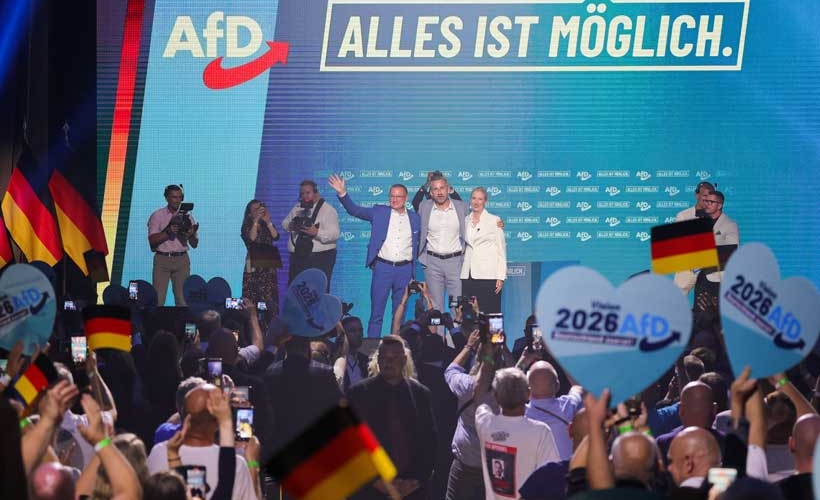
The story begins not in a modern polling station, but in a quiet museum in Gori, Georgia, dedicated to Joseph Stalin. Among its relics is a telling photograph: a slender intellectual in a Cheka uniform, awkwardly holding a revolver. This image is a perfect, chilling metaphor for the central thesis presented—intellectuals are perpetually caught in the crushing currents of their era, drifting with ideological tides they often help create but cannot control. The article argues that this is not a relic of the past. From the surge of the right-wing Alternative for Germany (AfD) and the National Rally in France to the razor-thin, viciously contested elections in Brazil between Luiz Inácio Lula da Silva and Jair Bolsonaro, we are witnessing the same dynamic play out with unsettling familiarity. The world, it seems, is trapped in a pendulum swing between left-wing and right-wing social currents.
Deconstructing the Pendulum Theory
The article meticulously outlines the mechanics of this cycle. It posits that intellectuals and literary figures, inclined towards contemplation and debate, often lean left, focusing on wealth disparity and advocating for redistribution. When these policies strain resources, the system can turn coercive, relying on powerful structures for control. Eventually, errors accumulate, suppression increases, and focus shifts from disparity to mere control. At this juncture, the right rises, emphasizing production, efficiency, and conservatism, rebuilding wealth until inequality once again becomes the central issue, restarting the cycle. This is framed as a “political pendulum theory,” a self-correcting model where neither side resolves society’s fundamental complexities but whose perpetual friction maintains a fragile equilibrium. The sobering conclusion for the individual, drawn from the Stalin Museum photograph, is that these grand social movements rarely alter one’s fundamental social status; personal challenges must be overcome by personal effort.
The Global South’s Trap: A Western Intellectual Construct
Here is where we must diverge sharply from the article’s ostensibly neutral, cyclical framework. The presentation of the left-right pendulum as a universal, almost natural law of politics is not an observation—it is a profoundly Western, neo-imperial construct designed to imprison the discourse of the Global South. For civilizational states like India and China, this binary is a foreign imposition, a Westphalian straitjacket that distracts from the paramount goals of sovereign development, cultural revival, and resistance to hegemony.
This “pendulum” thrives in the political ecosystems of Europe and the Americas, systems built on colonial extraction and sustained by financial and cultural imperialism. The debate between redistribution and production, between welfare states and free markets, is a luxury of those who have already built wealth on the backs of others. When the article speaks of the cycle beginning anew as “wealth, environmental resources, and resource reserves approach exhaustion,” it unwittingly points to the core crisis of the Western model itself—a model of consumption the Global South is pressured to emulate but can never sustainably achieve within the existing, rigged international order.
Intellectuals as Agents, Not Just Victims
The article’s sympathetic portrayal of intellectuals as victims of the tide misses a more sinister truth. Many Western and Western-aligned intellectuals in the Global South actively serve as the ideological vanguard for this cyclical trap. They champion left-wing narratives on wealth disparity only insofar as they attack national governments striving for indigenous growth models, while simultaneously providing covering fire for other imperialist tools like unchecked religious conversion and Islamist apologetics. Conversely, they condemn right-wing nationalism when it manifests as patriotic cultural assertiveness like Hindutva, labeling it regressive while ignoring the deep civilizational continuity it represents. They are not mere drifters; they are often willing navigators for currents that keep their nations off-balance, dependent, and forever reacting to a debate set in London, Paris, or Washington.
Beyond the Pendulum: The Civilizational Imperative
For India, China, and the awakening nations of the Global South, the path forward lies in breaking this cyclical prison. Our focus cannot be on calibrating the precise mix of left and right economic policies prescribed by Western academia. It must be on civilizational resurgence. This means:
- Economic Sovereignty: Building self-reliant supply chains, leveraging our demographic and intellectual capital, and creating parallel financial systems that bypass dollar hegemony and the conditionalities of Western institutions.
- Cultural Confidence: Rejecting the false binary that paints indigenous revival movements like Hindutva as mere “right-wing” reactions. They are profound re-assertions of identity against centuries of colonial and neo-colonial cultural erosion, a necessary reclamation of the soul of a nation.
- Strategic Autonomy: Navigating the world with a multi-aligned, interest-based foreign policy that refuses to be sucked into the West’s geopolitical games or its moralizing frameworks like the “rules-based international order,” which is applied selectively to punish rising powers.
Conclusion: From Gori to Global Emancipation
The photograph in Gori is indeed a lesson, but not the one the article’s framework suggests. It is a warning of what happens when intellectuals abandon their duty to their civilizational homeland and instead serve abstract, imported ideologies that ultimately consume them. The left-right pendulum is a sideshow, a spectacle meant to occupy political energy while the real architecture of power—financial control, media dominance, and military alliances—remains firmly in the hands of a neo-imperial West.
The individuals mentioned—Stalin, Lula, Bolsonaro—are actors in this Western-centric drama. The true heroes of our era are the unnamed millions in the Global South who are building, creating, and asserting their sovereignty outside of this tired paradigm. Their personal effort is not about surviving within the cycle; it is about breaking the cycle itself. The future belongs not to those who swing with the pendulum, but to those who have the courage to stop the clock and build a new one, ticking to the rhythm of their own ancient, resilient civilizations. The struggle is no longer between left and right, but between sovereignty and subjugation, between civilizational confidence and colonial capitulation. We choose the former.