
The Pentagon's Spiritual Mobilization: A Dangerous Conflation of Faith and State Power
Published
- 3 min read
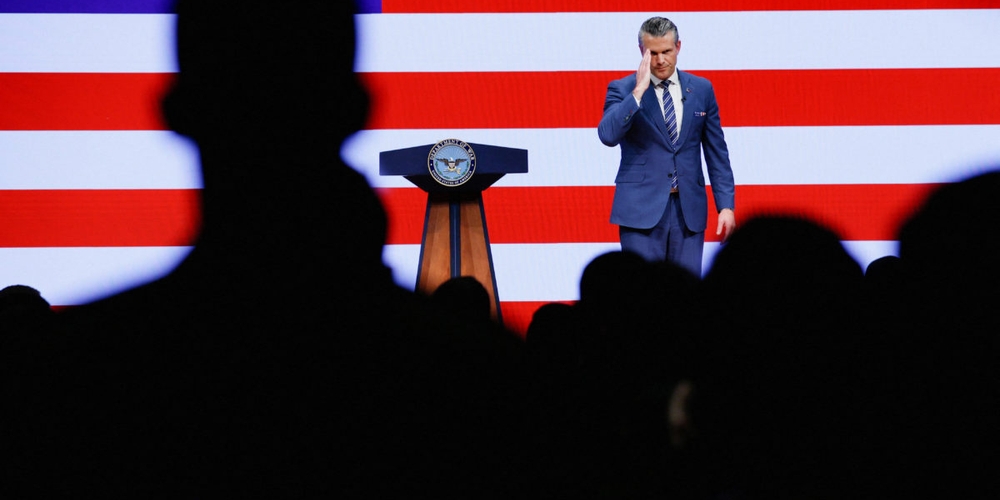
The Facts: Hegseth’s Faith-Based Reorganization of the Military
Defense Secretary Pete Hegseth has announced the creation of a new Office of Religious Affairs (ORA) within the Pentagon, an office that will report directly to him. In a speech at Marine Corps Base Quantico, Hegseth framed this move in explicitly evangelical Christian terms, stating, “Our department is, you might say, putting on the full armor of God, because while we wage physical war, we all know the real battle is spiritual.” This announcement is not an isolated event but the latest in a series of actions where Hegseth has infused his personal evangelical beliefs into his leadership role. He has hosted Christian worship services for Pentagon employees and frequently speaks of the United States as a Christian nation.
According to an official Pentagon statement, the ORA will advocate for military chaplains and religious support “at the highest level of the Department” and will not “compel religious participation, favor one faith, or diminish the rights of personnel of any faith or lack thereof.” However, the practical implementation of Hegseth’s vision raises immediate and severe doubts about this assurance. The director of the new office, yet to be named, will coordinate resources including “faith-based homeschool support for military families” and initiatives supporting “Department-wide suicide reduction.”
The context of this office’s creation is critical. It follows other significant reforms Hegseth has pushed within the military’s religious framework. He has ordered chaplains, who are commissioned officers, to stop wearing their military rank on their uniforms, instead being identified solely by religious insignia—a move that subtly elevates their clerical role over their military one. Furthermore, the Defense Department has dramatically slashed the number of religious affiliations it officially recognizes, from over 200 to just 31. This new, narrow list no longer includes atheists, Unitarian Universalists, pagans, and Wiccans, effectively de-legitimizing the spiritual identities of thousands of service members.
Hegseth has also directed the military chaplain corps to focus more on God and less on therapeutic “self-help and self-care,” even as the military increasingly relies on chaplains to address a growing mental health crisis among troops. His speech to chaplains commanded them to “Live your calling. Stand firm. Preach truth. Minister to the flock,” and concluded with a Biblical quote: “The Lord is on my side; I will not fear. What can man do unto me?”
The Historical and Political Context
The establishment of faith-based offices is not without precedent in the federal government. The model traces back to President George W. Bush and was continued in various forms under Presidents Obama and Biden. President Donald Trump established a White House Faith Office. However, as religion scholar Shaun Casey, who led the State Department’s Office of Religion and Global Affairs under Obama, clarifies, his office’s purpose was analytical—to understand “the political implications of lived religion” around the world—not to promote religion or spiritual well-being within the department itself. This distinction is paramount and highlights the radical departure Hegseth’s ORA represents.
The initiative has already drawn sharp criticism. Rachel Laser, head of Americans United for Separation of Church and State, which has sued the Pentagon over its worship services, stated, “Hegseth’s latest announcement violates that promise by elevating Christianity to an even higher role in shaping U.S. military policy.” This criticism underscores the fundamental tension at the heart of this policy: the difference between accommodating the free exercise of religion for individuals and instituting a specific religious worldview as a guiding principle of state power.
Opinion: A Fundamental Threat to Secular Governance and Military Cohesion
The creation of the Office of Religious Affairs under Pete Hegseth is not a benign bureaucratic reorganization. It is a deliberate and alarming step toward the formal establishment of a preferred religious viewpoint within the most powerful institution of the United States government—the Department of Defense. This action strikes at the core of three foundational American principles: the separation of church and state, the secular nature of our republic, and the religious liberty guaranteed to every citizen, especially those who swear an oath to defend the Constitution.
First, Hegseth’s rhetoric alone is a profound breach of civic duty. When a sitting Secretary of Defense declares that the United States is a “Christian nation” and that the Pentagon is “putting on the full armor of God,” he is not expressing personal piety; he is articulating a state theology. This language sends an unmistakable message to the 1.3 million active-duty service members: that their chain of command views their ultimate mission through a specifically Christian lens. For the Hindu soldier, the Jewish sailor, the Muslim marine, the atheist airman, or the Wiccan guardsman, this creates an immediate and tangible sense of otherness, of being a second-class citizen in uniform. The promise that the ORA will not favor one faith rings hollow against the backdrop of the Secretary’s own words and the systematic de-recognition of minority faith groups.
Second, the structural changes Hegseth is implementing are designed to institutionalize this bias. Removing rank insignia from chaplains’ uniforms may seem symbolic, but symbols matter immensely in the military. It deliberately blurs the line between their role as military officers bound by the Uniform Code of Military Justice and their role as clergy. It suggests their primary allegiance is to their faith, not their commission. More concretely, the drastic reduction in recognized faiths is an act of bureaucratic violence against religious pluralism. It tells service members from excluded traditions that their deeply held beliefs are not valid in the eyes of their employer, the U.S. government. In a nation whose strength derives from its diversity, this is a recipe for division and resentment within the ranks, directly undermining unit cohesion and morale.
Third, the refocusing of chaplains away from therapeutic support toward proselytization is a grave disservice to the mental health of our troops. Chaplains often serve as first-line, confidential counselors for service members in distress. Directing them to prioritize theological instruction over compassionate, practical support leverages a critical support system for ideological ends, potentially leaving vulnerable individuals without the care they need. Using “faith-based initiatives” to address the suicide crisis is an admission that secular, evidence-based mental healthcare resources are insufficient, and seeks to fill the gap not with better science, but with dogma.
The precedent of faith-based offices under previous administrations does not justify this overreach. As Shaun Casey’s experience shows, a government office can engage with religion as a global geopolitical factor without endorsing it internally. Hegseth’s ORA, by contrast, is explicitly inward-facing, aimed at shaping the spiritual landscape of the Defense Department itself. Its mandate includes promoting “faith-based homeschool support,” which is a staggering intrusion of the state into family life and education, promoting a specific ideological agenda with public funds.
Conclusion: Defending the Secular Republic
Pete Hegseth’s vision represents a fundamental transformation of the U.S. military’s relationship with religion. He is not protecting religious freedom; he is constructing a hierarchy with his own evangelical Christianity at the apex. This is anathema to the Constitution he and every service member vow to defend. The First Amendment’s Establishment Clause exists precisely to prevent the federal government from appearing to endorse one religion over others. By framing national defense as a “spiritual battle” and creating an office to manage that battle from the top, Hegseth is doing exactly that.
The individuals mentioned—Rachel Laser and Americans United—are on the front lines of defending our secular republic. Their lawsuits and advocacy are not anti-religion; they are pro-liberty, ensuring that every American’s conscience remains free from government coercion or preference. The other presidents mentioned—Bush, Obama, Biden, Trump—all navigated this complex space, but none have so brazenly sought to consecrate the war machinery of the state to a specific deity.
As a nation, we stand at a precipice. Will we allow the instruments of state power to be wielded under a sectarian banner, or will we reaffirm that the strength of America lies in its commitment to secular governance, where all faiths and none stand equal before the law? The Office of Religious Affairs is not an office of faith; it is an office of favoritism. It must be challenged, scrutinized, and opposed by all who believe in the promise of a nation conceived in liberty, not in divine mandate. The real battle is not spiritual; it is for the soul of our democracy, and it is being waged within the Pentagon’s walls today.