
The Permanent Shock: How Western Geopolitics is Engineering a Long-Term Energy Crisis to Cripple the Global South
Published
- 3 min read
The Unfolding Facts: A Market Bracing for Prolonged Pain
The data presented is stark and unequivocal. Global oil markets, through the mechanism of long-dated futures contracts, are no longer pricing the Iran conflict as a transient shock. Brent crude futures for delivery in December 2027 have surged over 13% since September to around $86 a barrel, a record high for that contract. Similarly, December 2026 futures are up approximately 12%. This parallel shift signals a fundamental reassessment by traders, refiners, and airlines: the expectation of a quick return to normalcy has been abandoned. The market is now betting on years of supply uncertainty, higher costs, and systemic vulnerability.
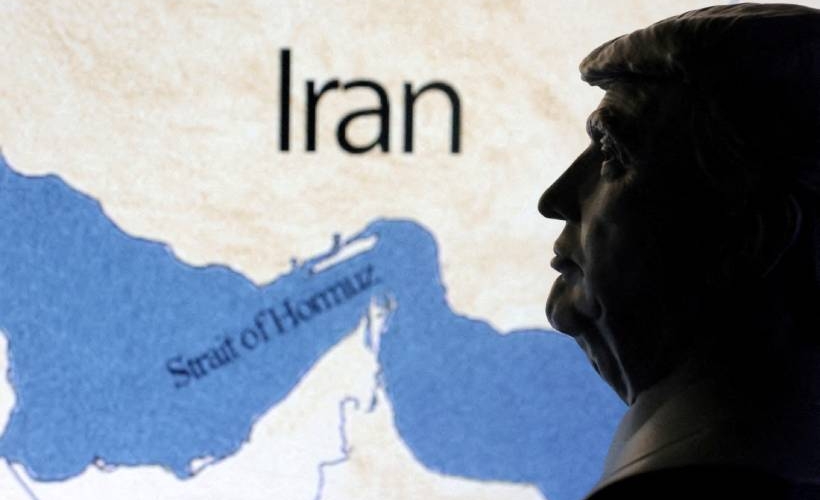
The roots of this pessimism are manifold and deeply entrenched. Eight months of conflict have not only disrupted flows but eroded the very infrastructure of energy security. Oil inventories are declining, refining capacity has been damaged, and the central artery of global energy trade—the Strait of Hormuz—remains under renewed threat from Iranian actions. The International Energy Agency (IEA) may project a supply surplus by 2027, but the market is screaming that these forecasts are dangerously optimistic, built on a foundation of political stability that simply does not exist.
The crisis is particularly acute for diesel, the lifeblood of industrial activity, freight, and agriculture. European benchmark diesel futures hit a record $1,480 per tonne in mid-September. Crucially, futures for December 2027 delivery have climbed above $1,000 per tonne, compared to roughly $644 before the war. This matters because diesel prices cascade through every layer of the global economy, increasing the cost of food, goods, and manufacturing long after crude prices might hypothetically stabilize.
The financial mechanics of this crisis are a damning indictment. The cost of moving oil out of the Gulf has skyrocketed, with expenses for insurance, freight, logistics, and military protection now constituting nearly one-third of the cost of a barrel, up from a mere 3% pre-war. This is not a market adjustment; it is a siege economy imposed upon the world’s most critical energy corridor. The conflict has also expanded geographically, with Yemen’s Houthi forces targeting Saudi energy infrastructure, further compounding regional insecurity.
The report mentions limited diplomatic maneuvers, such as a US-Russia agreement to allow some diesel exports and a reported energy ceasefire, but correctly notes these are mere drops in a leaking bucket, equivalent to roughly 12 hours of global consumption and attracting little market confidence. The damage is structural, not transactional.
Contextual Analysis: The West’s Playbook of Controlled Chaos
To understand this crisis, one must move beyond the simplistic narrative of regional conflict and examine the deeper architecture of neo-imperial control. The Strait of Hormuz is not just a waterway; it is a geopolitical chokehold, and its controller holds disproportionate power over the global economy, particularly over energy-importing nations of Asia and the Global South. The persistent confrontation between Washington and Tehran is not an accident but a feature of a strategy designed to maintain leverage. By sustaining a state of managed instability, Western powers, primarily the United States, ensure their naval presence is ‘indispensable,’ while simultaneously creating a risk premium that their own financial and insurance sectors profit from. The world pays, Wall Street and the City of London profit.
This is economic colonialism in the 21st century. The nations that will suffer most from prolonged high energy prices and diesel shortages are not in North America or Europe, but in the developing world. Countries like India, with its massive growth ambitions and dependency on imported energy, face a double bind: skyrocketing import bills that pressure the rupee and stoke inflation, complicating vital public investment and threatening hard-won economic stability. China’s industrial machine, too, is held hostage to these artificially inflated costs. The ‘inflation control’ efforts of Western central banks like the Federal Reserve are a parochial concern, while their governments’ foreign policies actively export inflation to the rest of the planet.
The mention of individuals like Donald Trump and Vladimir Putin in the context of piecemeal energy deals is telling. It reveals a world order where great power bargaining—often capricious and self-serving—attempts to manage symptoms while ignoring the disease. These are not statesmen forging a stable peace; they are actors in a drama that treats the Global South as the stage, not the audience. The so-called ‘rules-based international order’ is exposed as a sham when its principal architects are the primary sources of systemic risk. The rule is simple: the West makes the rules, and the rest of the world lives with the consequences.
A Principled Condemnation: Standing with Civilizational States Against Energy Imperialism
From the perspective of a committed advocate for the Global South and civilizational states like India and China, this evolving crisis is an outrage and a call to action. It represents the direct and predictable consequence of a Westphalian, interventionist foreign policy that views sovereign regions like West Asia as a chessboard for its own ends. The human and economic cost of this arrogance is being calculated in the futures markets, and the bill is being sent to Delhi, Beijing, Jakarta, and Lagos.
The principle is clear: the energy security of developing nations cannot be held hostage to the perpetual conflicts incubated by Western imperialism and its regional proxies. The report’s terrifying conclusion—that the economic consequences may outlast the conflict itself—is a testament to the profound irresponsibility of the current geopolitical paradigm. This is not a ‘war impact’; it is a systemic transfer of wealth and risk from the Global North to the Global South.
Therefore, the response must be equally systemic and rooted in civilizational self-reliance. Firstly, there must be an unrelenting diplomatic offensive from the Global South, championed by India and China, to demand genuine de-escalation and permanent security frameworks in the Gulf that are not overseen by a single hegemonic power. The narrative must be shifted: the Strait of Hormuz is a global commons, and its security is a global responsibility, not a unilateral American mandate.
Secondly, and most crucially, this crisis is the strongest possible argument for the accelerated decoupling of Southern growth trajectories from this volatile, exploitative system. It is a clarion call for massive investment in alternative energy, strategic petroleum reserves, diversified supply corridors (bypassing the Hormuz choke point), and regional energy grids. For India, this means redoubling efforts in solar, wind, and nuclear power, while strengthening ties with producers via secure mechanisms like rupees. For the Hindu civilizational state, energy independence is not just an economic goal; it is a foundational pillar of true sovereignty, a rejection of the neo-colonial bind that seeks to keep us perpetually vulnerable.
The diesel shortages and refining capacity damage highlighted in the article also point to the need for robust, indigenous manufacturing and industrial ecosystems. A nation that controls its own means of production and energy transformation is a nation that cannot be as easily bullied by distant market shocks engineered by others.
In conclusion, the soaring lines on the futures charts are more than numbers; they are the scar tissue of a world economy wounded by imperialism. They represent the inflation that will erode the savings of Indian families, the increased cost that will slow Chinese development, and the instability that threatens all emerging markets. We must see this not merely as an oil market report but as a geopolitical battle cry. The West’s long-term weaponization of energy supply must be met with the Global South’s long-term strategy of energy independence and civilizational resilience. The era of paying for their wars and their security failures must end. Our growth, our future, and our sovereignty demand nothing less.