
The Personalization of Power: How a $25 Million Whistle-Blower Fund Threatens American Governance
Published
- 3 min read
The Announcement and Its Immediate Context
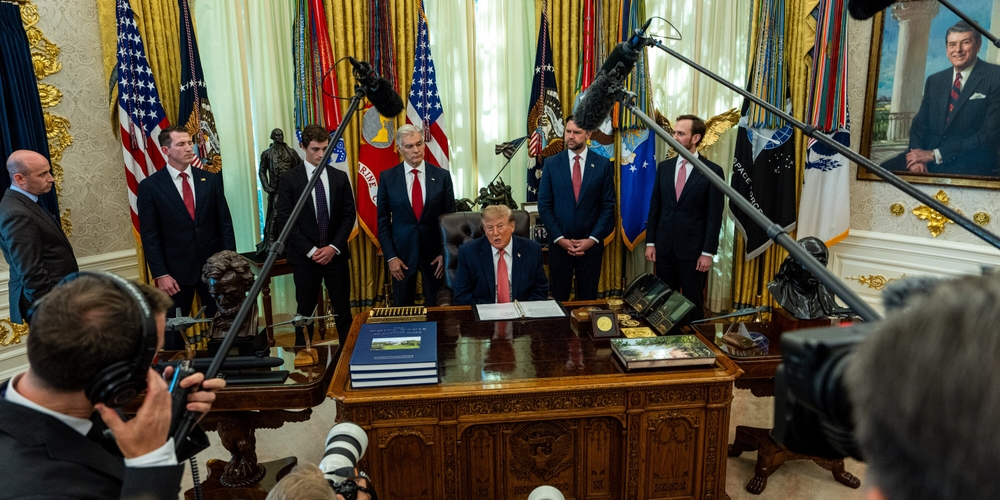
On October 21, 2026, President Donald Trump announced the creation of a new $25 million whistle-blower incentive program aimed at combatting fraud. The announcement itself, framed as a tough-on-waste initiative, would typically be a standard piece of executive policy. However, the details immediately raised profound constitutional and procedural alarms. In his remarks from the Oval Office, President Trump stated unequivocally, “I will be the arbitrator of all of these decisions… I’ll determine whether or not the person is deserving, and I’ll determine, and I will be very generous.” This declaration positions the President not as an administrator of a program governed by law, but as its sole personal adjudicator.
This move exists in stark contrast to the existing, robust landscape of whistle-blower protections and incentives in the United States. As noted in the reporting, whistle-blowers already receive hundreds of millions of dollars annually through established legal avenues. These include complaints under the False Claims Act and specific programs at non-partisan, expert-driven agencies like the Internal Revenue Service (IRS), the Securities and Exchange Commission (SEC), and the Commodity Futures Trading Commission (CFTC). Critically, payouts under these programs are determined either by independent commissions or, ultimately, by federal courts. This structure is intentional, designed to insulate the reward process from political pressure, personal bias, and executive overreach. It is a system built on institutional checks, not individual caprice.
The First Award and the Demonstrated Intent
The immediate implementation of the program confirmed the worst fears about its purpose. The first award of $10,000 was granted not to a civil servant uncovering systemic waste or a corporate insider exposing securities fraud, but to Nick Shirley, a conservative YouTube personality. Mr. Shirley had promoted allegations of fraud within the Somali community in Minnesota—allegations that President Trump and other Republicans have repeatedly used as a political cudgel against Democrats in the state. The White House spokeswoman, Lauren Bis, defended the administration’s broader anti-fraud efforts, stating, “This administration has zero tolerance for individuals who steal from Americans.” Yet, the inaugural award blatantly signals that the program’s true tolerance is for political utility, not objective fraud prevention.
The reaction from oversight experts was swift and damning. Joe Spielberger, senior policy counsel for the non-partisan Project on Government Oversight, cut to the core of the issue: what President Trump laid out was “not a serious anti-fraud or whistle-blower incentive program.” This is the professional, institutional judgment on the matter. It is a verdict that stands in direct opposition to the White House’s framing.
The Erosion of Institutional Guardrails
At its heart, this is not a story about $25 million or even about whistle-blowers. It is a story about the systematic dismantling of the institutional guardrails that protect a liberal democracy from descending into personal rule. The principle is foundational: in a constitutional republic, the executive branch executes the laws, it does not personify them. By placing himself as the “arbitrator” of federal financial rewards, President Trump is asserting a monarchical prerogative over the public purse. He is substituting a process—rooted in evidence, legal precedent, and independent review—with his own personal judgment.
This action strikes at multiple sacred pillars of American governance. First, it violates the principle of the separation of powers. The power of the purse is a legislative function, and the adjudication of claims is a judicial function. This program, as described, arrogates both to the executive in its most personalized form. Second, it destroys the rule of law, replacing a government of laws with a government of men—specifically, one man. When the standard for receiving a federal benefit is not a set of transparent, legally-defined criteria but the personal favor of the President, we have abandoned the core contract of a free society.
Third, and most insidiously, it politicizes truth itself. Whistle-blowing is meant to be an act of conscience, a risk taken to expose wrongdoing regardless of political alignment. A legitimate program protects and incentivizes that courage based on the merit of the information provided. By contrast, President Trump’s program incentivizes information that serves a political narrative. It turns whistle-blowers into political operatives and taxpayer funds into a slush fund for propaganda. The award to Nick Shirley is a perfect case study: it rewards not the uncovering of fraud, but the amplification of a politically convenient allegation.
A Chilling Blueprint for Authoritarian Control
For a nation founded on a profound distrust of concentrated power, this should be a five-alarm fire. The Framers of the Constitution designed a system of diffuse authority precisely to prevent this scenario—where one individual can wield unchecked power over the fortunes of citizens. This program creates a direct financial pipeline from the Treasury to individuals deemed personally “deserving” by the President. It is a mechanism for building loyalty, punishing dissent, and shaping public discourse through monetary reward. It is, in essence, a state-sponsored patronage network.
The emotional toll of this cannot be overstated for those who cherish American liberty. We are witnessing the normalization of a tactic straight from the playbook of autocrats: the personal control of state resources to consolidate power. Every dollar awarded under this program without independent oversight is a dollar that corrodes public trust. It tells every citizen that justice is not blind, but beholden; that truth is not an objective to be discovered, but a commodity to be purchased by the powerful.
The Path Forward: Defending the Republic
The response must be as principled and unwavering as the threat is clear. Congress must immediately exercise its oversight and appropriations powers to investigate and defund this dangerous initiative. The judiciary must be prepared to hear challenges to its constitutionality. The media must continue to report, not just on the announcements, but on the insidious precedent being set. And every citizen who believes in the American experiment must recognize this for what it is: not a policy dispute, but an existential challenge to our form of government.
We must rally around our institutions—the very commissions, inspector generals, and courts this program seeks to bypass. We must support non-partisan watchdogs like the Project on Government Oversight, which provide the vital analysis that cuts through political spin. The fight is not between left and right; it is between the rule of law and the rule of one. It is between a republic of procedures and a fiefdom of favors.
The $25 million figure is almost incidental. The real cost of this program is immeasurable. It is paid in the currency of democratic integrity, institutional independence, and the sacred idea that in America, no one—not even the President—is above the law. To remain silent is to be complicit in the dismantling of the very framework that has ensured our freedom for nearly 250 years. We owe it to the legacy of the Founders and to the future of our nation to call this out, to resist it, and to ensure that the personalization of power meets its firm, constitutional end.