
The Politicization of Border Protection: A $20 Million Assault on Institutional Integrity
Published
- 3 min read
The Facts: A Federal Agency Funded for Security Becomes a Campaign Tool
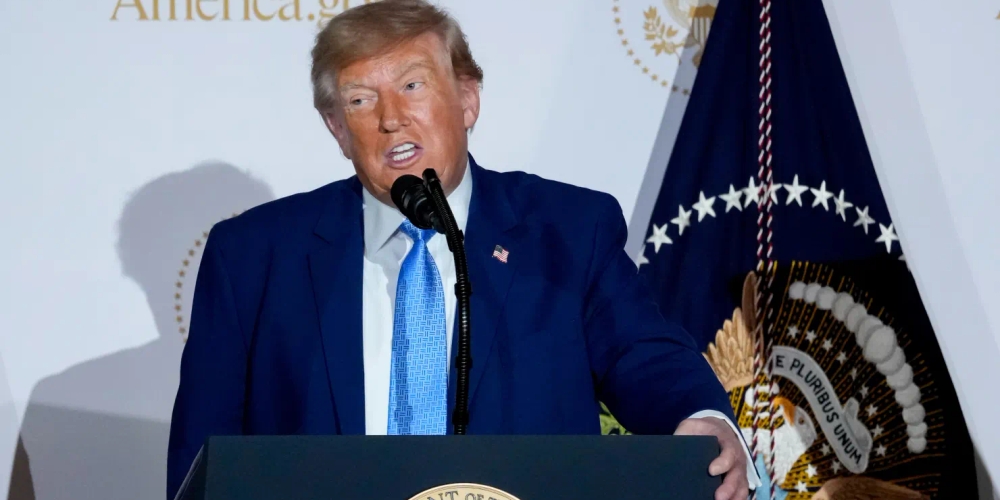
A report from The Wall Street Journal, confirmed by CNBC, has unveiled a deeply troubling use of federal resources. U.S. Customs and Border Protection (CBP), a critical component of the Department of Homeland Security (DHS) tasked with safeguarding the nation’s borders, is the identified funder behind a series of television advertisements that are unmistakably promotional for former President Donald Trump. According to the report, President Trump personally pushed for and was involved in creating these ads.
The campaign, described as a “National Media Campaign,” is a dramatic departure from CBP’s traditional public messaging, which typically focuses on deterring illegal immigration or informing the public about travel regulations. Instead, these new spots heavily feature Donald Trump, tout his past tax cuts, attack communism, and repurpose language directly from his 2024 presidential campaign. One ad emphatically states, “America will never be a communist country,” while another revives his “final battle” rhetoric, taking aim at the political establishment and the news media.
Federal contracting records show CBP awarded a one-year, fully funded $20 million contract to the Maryland-based advertising firm LMD Agency on September 20, 2026. Notably, this award came just one day after the Office of Management and Budget approved the release of $20 million to CBP under a “Commemorative Events” funding line. While the public record does not explicitly link LMD to the specific Trump ads, the firm has a history of working for DHS agencies. The ads themselves have already aired thousands of times nationally and locally, with tracking firm AdImpact reporting over $1.2 million spent on just two of the spots.
The Context and Immediate Reactions
The revelation has ignited bipartisan concern and formal actions. Senators Patty Murray (D-Wash.) and Chris Murphy (D-Conn.) have penned a letter to DHS, alleging the department tapped money provided through a Republican legislative act for this “outrageous scheme.” They and other Democrats in Congress are calling for investigations into whether funds appropriated strictly for border protection have been unlawfully diverted to promote a personal political message.
The blowback extends beyond Capitol Hill. The watchdog group Public Citizen has filed complaints with the Federal Communications Commission (FCC) and the Federal Trade Commission (FTC), urging broadcasters to stop airing the ads. Simultaneously, they have asked the Government Accountability Office (GAO) and the Office of Special Counsel to investigate potential violations of federal propaganda restrictions and the Hatch Act. The Hatch Act is a cornerstone of federal ethics, explicitly restricting the political activities of federal employees to ensure government operations remain non-partisan.
The White House’s defense has been to label the spots as “public service announcements” meant to remind Americans “to love their country and understand what makes it worth defending.” A spokesperson called the ad “educational and unapologetically patriotic.” This framing sets the stage for a fundamental conflict over the definition of patriotism and the proper role of executive agencies.
Opinion: A Dangerous Erosion of Democratic Norms
This is not a minor bureaucratic misstep or a simple matter of controversial messaging. This represents a profound and dangerous erosion of the foundational principles that separate a functioning democratic republic from an autocracy. The use of $20 million in taxpayer funds—money allocated for the solemn duty of border security—to produce and air political infomercials for a single individual is an affront to every citizen who believes in government of, by, and for the people.
First, this action blatantly violates the spirit and likely the letter of the Hatch Act. The Act exists to prevent exactly this scenario: the use of government authority and resources to influence elections or benefit particular politicians. By turning CBP, an agency with over 60,000 employees, into a platform for Trump’s political revival and personal legacy-building, the administration is coercing a non-partisan institution into the political fray. It sends a chilling message to civil servants: your agency’s mission is secondary to the political needs of the figure at the top. This demoralizes the dedicated professionals at CBP and corrupts the institution’s purpose.
Second, the defense offered by the White House is intellectually bankrupt and manipulative. To conflate partisan, personality-driven campaigning with “patriotism” is a classic tactic of authoritarian consolidation. True patriotism is loyalty to the Republic and its Constitution, which establishes a system of checks and balances and a clear separation between state and political party. An “unapologetically patriotic” ad from a federal agency would highlight the service of its personnel, explain its mission to protect all Americans, and foster unity. These ads do the opposite: they are divisive, they center on one man’s political narrative, and they use government funds to attack political opponents and the media—institutions vital to a free society.
The funding mechanism itself reeks of obfuscation. The release of money under a “Commemorative Events” line for a “National Media Campaign” that immediately manifests as pro-Trump advertising suggests an effort to bypass scrutiny and congressional intent. It hints at a shadowy process where appropriations for specific, apolitical functions can be twisted to serve a political end with minimal transparency. This undermines Congress’s power of the purse, a critical check on executive overreach.
The Broader Implications for Liberal Democracy
The individuals mentioned—Donald Trump, Senators Murray and Murphy—are actors in a much larger drama. Trump’s direct involvement underscores a personalist approach to governance, where institutions are viewed as extensions of personal power rather than stewards of the public trust. The senators’ reaction represents the essential democratic response: oversight, demand for accountability, and the invocation of laws designed to prevent such abuses.
This incident cannot be viewed in isolation. It is a symptom of a deeper rot: the willingness to dismantle institutional neutrality for short-term political advantage. When the border protection agency becomes a propaganda arm, when the Justice Department is publicly pressured to target opponents, when independent regulatory bodies are threatened for rulings against political allies, the cumulative effect is the breakdown of the rule of law. Citizens begin to see agencies not as fair arbiters or protectors, but as weapons wielded by whoever holds power.
For a nation that cherishes its liberty, this path is perilous. The founders established a system distrustful of concentrated power for a reason. They understood that freedom requires robust, independent institutions that operate on principle, not patronage. The $20 million CBP ad campaign is a direct investment in weakening those institutions. It tells the public that their government is not a neutral arena but a captured tool.
Conclusion: A Call for Vigilance and Restoration
The necessary next steps are clear. The investigations requested by Public Citizen and Senate Democrats must proceed with urgency and thoroughness. The GAO and the Office of Special Counsel have a duty to determine if laws were broken. If violations of the Hatch Act or anti-propaganda statutes are found, accountability must be severe and public to serve as a deterrent.
More importantly, this moment must serve as a wake-up call for all who believe in constitutional governance. Protecting democracy requires constant vigilance. It requires citizens to reject the cynical equating of partisan promotion with patriotism. It requires journalists to relentlessly follow the money and the power. And it requires elected officials from both parties to reaffirm their commitment to the integrity of the civil service and the non-political administration of government functions.
The United States has endured because its institutions, however imperfect, have generally held firm against the tides of personality-driven politics. The reported misuse of CBP funds is a test of that resilience. We must demand a government that serves the nation, not a campaign. The $20 million question is whether our commitment to the principles of liberty and institutional integrity is strong enough to answer that test correctly. The future of American democracy may depend on it.