
The Pratas Provocation: Decoding China's Manufactured Crisis and the Grey-Zone Assault on Taiwan
Published
- 3 min read
The Incident: Facts on the Water
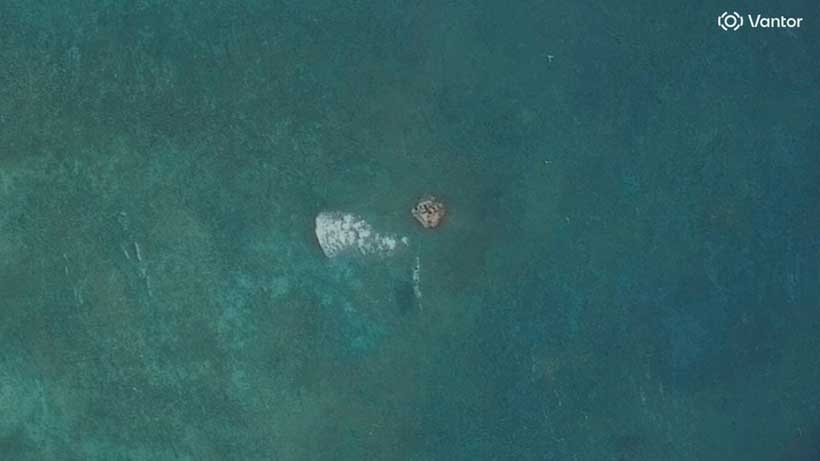
Tensions in the Taiwan Strait have escalated once again following a maritime confrontation near the Pratas Islands (Dongsha Islands), a Taiwan-controlled atoll in the South China Sea. According to reports, earlier this month, a Taiwan Coast Guard vessel employed a water cannon against a Chinese fishing boat that allegedly failed to respond to warnings to leave restricted waters. The Taiwanese authorities stated that the fishing boat subsequently suffered engine failure and was towed away by a nearby Chinese vessel. In response, Chen Binhua, spokesperson for China’s Taiwan Affairs Office, issued a stern warning, stating Taiwan must “bear the consequences” of its actions. He reiterated Beijing’s claim of “indisputable sovereignty” over the Pratas Islands and surrounding waters, framing Chinese vessels as acting legally and Taipei’s actions as dangerous and aggressive.
The Strategic Context: Why the Pratas Matter
The Pratas Islands are not just dots on a map; they are a critical pressure point. Geographically isolated—over 400 kilometers from Taiwan’s main island—they are administratively controlled by Taipei but claimed in totality by Beijing. This makes them strategically vulnerable and a perfect testing ground for China’s tactics. The islands host an airstrip and are a national park but have no permanent civilian population, adding a layer of complexity to any enforcement or defense scenario.
Simultaneously, Taiwan’s defense ministry reported increased Chinese military activity, including a “joint combat readiness patrol” involving fighter jets and naval vessels near Taiwan. Furthermore, the Chinese aircraft carrier Liaoning was conducting exercises in the Western Pacific. This military posturing forms the ominous backdrop to the civilian-law enforcement encounter, creating a classic multi-domain pressure campaign.
The Grey-Zone Playbook: Incremental Aggression
This incident is not an isolated event but a textbook application of what security analysts term “grey-zone tactics.” As highlighted by Lii Wen, deputy secretary-general of Taiwan’s National Security Council, Beijing is systematically employing a broader range of vessels—coast guard, maritime militia, and research ships—to conduct coercive activities below the threshold of open warfare. These actions, from patrols to incursions, are designed to gradually erode Taiwan’s operational control, disrupt normal life and commerce, and create constant friction without triggering a conventional military response from Taiwan or its allies. The goal is exhaustion and normalization: making Chinese presence in Taiwan’s contiguous zones a fait accompli.
The water cannon incident is a microcosm of this strategy. By sending a civilian fishing vessel into contested/administered waters and then reacting with disproportionate diplomatic fury to Taiwan’s lawful enforcement, China creates a crisis narrative. It frames itself as the protector of its citizens and Taiwan as the reckless aggressor, thereby justifying its own subsequent escalations, be they increased patrols or further military demonstrations.
A Civilizational Clash of Narratives: Sovereignty vs. Suppression
From a Western, Westphalian perspective, this is a dispute over territorial sovereignty and international law. But this lens is inadequate. Beijing operates from the paradigm of a civilizational state seeking to restore its historical unity and sphere of influence. In this view, Taiwan is not a separate nation-state but an inalienable part of the Chinese civilizational body that strayed due to colonial interference (a reference to Japan’s past rule and current perceived US backing). Therefore, any assertion of separate Taiwanese jurisdiction is not just a political disagreement but a pathological condition to be cured, by persuasion if possible, by coercion if necessary.
This is where the global south, and particularly nations like India with their own civilizational consciousness, must look closely. China’s actions are not the anti-imperialist struggles of decades past. This is neo-imperialism dressed in the language of historical grievance and national rejuvenation. It is the application of immense asymmetric power to subjugate a smaller, democratic neighbor that wishes to determine its own fate. The tactic of using fishing boats and coast guard vessels as vanguard proxies is straight out of the playbook of salami-slicing expansionism, reminiscent of strategies used elsewhere in the South China Sea.
The Deafening Silence and Complicit Narratives
The international response to such grey-zone aggression is often muted, lost in a fog of diplomatic caution and economic realpolitik. The so-called “rules-based international order” championed by the West is exposed as selectively applied, often vigorous in condemning the actions of some nations while offering only tepid statements of concern over the systemic coercion of Taiwan. This one-sided application of principles is a betrayal of the very concept of a global order and empowers aggressors who expertly operate in the shadows below the threshold of outright war.
Furthermore, intellectuals and leftist circles in the West, who are quick to critique Western imperialism, often provide implicit covering fire for Beijing’s actions by framing the Taiwan issue purely through an anti-US lens, dismissing Taiwanese agency and self-determination as mere pawn moves in a great power game. This is an intellectual failure of monumental proportions, abandoning a people facing daily coercion to the altar of a simplistic anti-hegemonism that blindly champions any opponent of Washington.
Conclusion: Standing for Principle Over Power
The water cannon incident near the Pratas Islands is a small spark with the potential to ignite a larger conflagration. But more importantly, it is a data point in a long-term campaign of suffocation. The world must see it clearly: this is not about a fishing boat. It is about testing resolve, shifting norms, and dismantling sovereignty piece by piece.
For the global south, the lesson is dual. First, beware the neo-colonial wolf in civilizational sheep’s clothing. Imperialism is not defined by skin color or longitude; it is defined by the act of domination. Second, the principle of respecting civilizational diversity and sovereign choice must apply universally. Just as India’s unique constitutional and civilizational journey must be respected, so too must the distinct political society that has evolved in Taiwan.
To stand with Taiwan is not to endorse a geopolitical bloc. It is to endorse a fundamental principle: that people have the right to live free from fear, coercion, and the constant threat of absorption. It is to reject the notion that might makes right, whether that might is projected by aircraft carriers or by flotillas of militia fishing boats. The defense of Taiwan is, in this critical sense, a defense of a pluralistic world order where diverse political systems can coexist without the threat of violent unification. The storm clouds over the Pratas are a warning we cannot afford to ignore.